



Anyone who’s taken kratom for a while has run into the same two choices. Toss and wash works fast but tastes awful. Capsules hide the flavor but mean swallowing a handful of pills every session. There’s a third method that’s been around for a while and is starting to catch on among kratom users looking for something in between.
Oblate discs let you avoid the taste without the pill count.
What Exactly Are Oblate Discs?
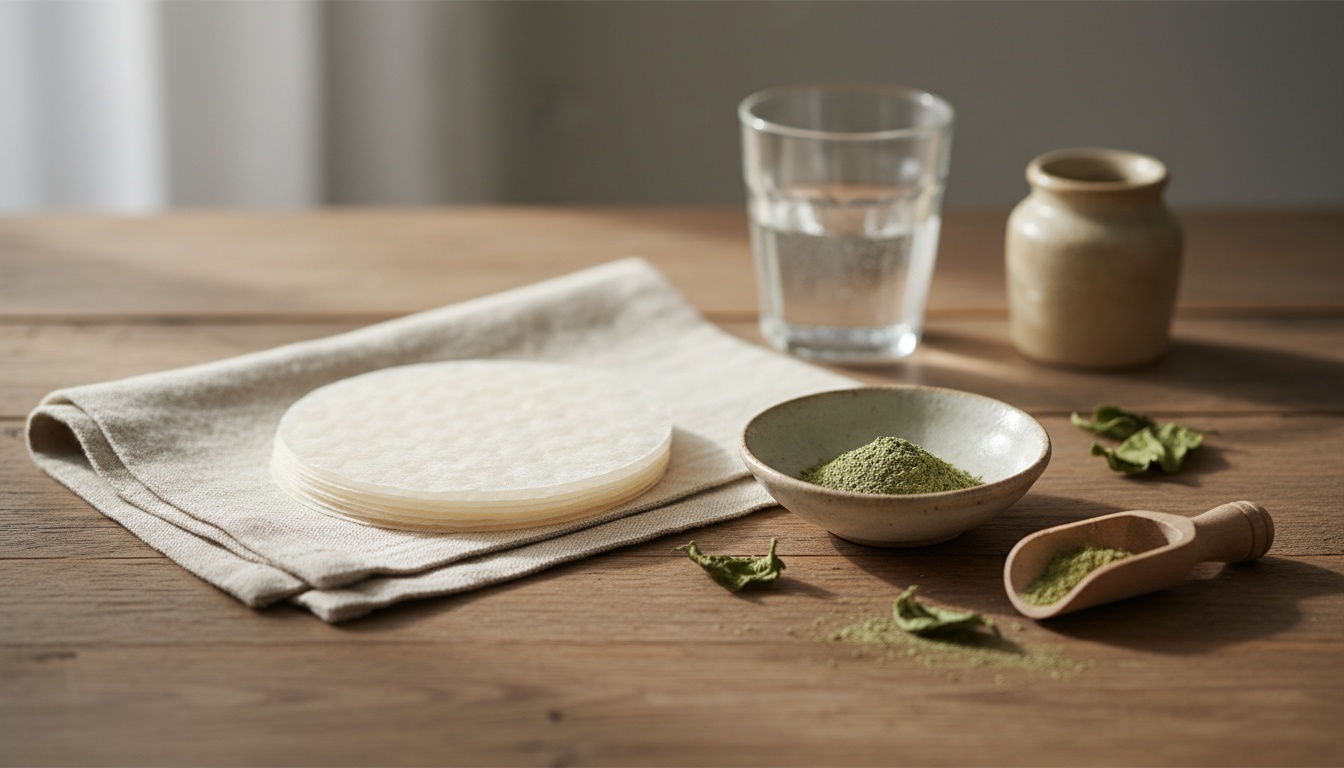
Oblate discs are thin, edible wrappers made from vegetable starch. They date back to 19th-century Japan, where they were first used to wrap bitter medicines so people could swallow them more easily.
The idea is straightforward: put your kratom powder in the middle of the disc, fold the edges together, seal it shut, and swallow the whole thing with some water.
It’s basically edible wrapping paper for powder.
Once it hits your stomach, the starch film breaks down fast, releasing the kratom without you ever tasting it — no bitterness, no chalky mouthfeel, no aftertaste hanging around.
Most discs are made from potato starch, rice starch, or something similar. They’re generally vegan, gluten-free, and made from little more than starch and water.
Why Kratom Users Are Switching to Them
The appeal boils down to three things.
No taste, period. The powder stays sealed inside the film until it reaches your stomach, so you skip the flavor, smell, and texture entirely. If the bitterness of kratom has been a dealbreaker, this is the fix.
Slightly quicker than capsules. Because the film is so thin, it breaks down in stomach acid faster than a capsule shell. Onset tends to be a little quicker than capsules, though still not quite as fast as toss and wash.
More powder per wrap. A typical kratom capsule holds around 500mg. A 4-gram dose means eight capsules; 6 grams means twelve. Oblate discs can hold up to 5 grams in one wrap, so one or two discs cover most doses. If you take larger amounts, that’s a real difference in how many things you’re swallowing.
How to Actually Use Them
Once you get the hang of it, the whole process takes about half a minute.
- Measure your dose. Weigh your kratom as usual. Stick to under 3 grams for flat discs; pouch-style versions can handle up to 5 grams.
- Place the powder in the center of the disc. Lay the disc flat on your palm or a plate and add your dose.
- Fold and seal. Bring the edges up around the powder to form a small pouch, then twist to close it. The moisture on your fingers helps the starch stick together.
- Dip it in water briefly. Just a quick dip to soften the outside — don’t soak it.
- Swallow right away. Put it on your tongue, take a drink, and swallow like a large vitamin. Don’t let it linger in your mouth — saliva starts dissolving the film almost immediately.
The first attempt might feel clumsy or the pouch might seem too big. By the third or fourth try, it’s routine.
The Catch: They Don’t Store Well
This is the biggest downside compared to capsules.
Prepared oblate discs are very sensitive to moisture. Even a bit of humidity in the air will start breaking down the film over time. If you live somewhere humid, or you like prepping a week’s doses ahead of time, capsules are still the better bet.
For same-day use, oblate discs are reliable. But they’re not made for sitting in a bag or a drawer for days. Keep unused discs sealed in their original packaging, and only fill what you’re about to take.
When They Make the Most Sense
Oblate discs shine in certain situations and fall short in others.
They work well if you’re taking kratom at home, want faster onset than capsules, or take larger doses and don’t want to swallow a dozen pills at once.
They’re less convenient if you need something portable, travel often with pre-measured doses, or want doses that can sit around for a while before use.
A lot of users end up keeping both on hand — capsules for travel and busy days, discs for home use when speed and fewer pills matter more.
What to Look for When Buying
Not every oblate disc is suited to kratom.
Discs made for supplements are usually 10–20 micrometers thick. Thicker ones, around 40 micrometers, are made for wrapping candy and don’t dissolve nearly as fast in your stomach — so look specifically for supplement-grade discs.
Check the ingredients. It should just be starch and water, nothing else. Most quality discs are vegan and gluten-free with no added fillers.
You’ll typically find two formats: flat discs, which need folding, and pre-formed pouches, which are ready to fill. Both work fine — it’s really a matter of preference.
How Oblate Discs Stack Up Against Other Methods
Versus toss and wash: Discs are a touch slower but remove the taste entirely. If you can tolerate the bitterness, toss and wash is still quickest. If you can’t, discs solve that problem with barely any tradeoff in speed.
Versus capsules: Discs generally kick in a little faster since the film dissolves quicker than a capsule shell, and they hold more powder per unit. The tradeoff is shelf life — capsules win for portability and storage.
Versus mixing into a drink: Discs are quicker to prepare and don’t require finishing a full glass of kratom-flavored liquid. Mixing works fine at home if you don’t mind the extra step, but discs are more practical if you want something fast you can take anywhere.
Which method wins depends on what matters most to you — speed, taste, convenience, or portability. None of them is universally better; they each solve a different problem.
Mistakes Worth Avoiding
A handful of small errors make this method harder than it needs to be.
- Overfilling the disc. Too much powder and it’ll tear when you seal it. Stay at 3 grams or under for standard discs, up to 5 grams for pouch versions.
- Letting it sit in your mouth. The film starts dissolving on contact with moisture, so get it down quickly.
- Soaking too long in water. A quick dip is all it needs — leave it in longer and it’ll start falling apart before you swallow.
- Trying to store filled discs. Once filled, use them within a few hours. Air moisture will degrade the film and make it prone to tearing or sticking.
Bottom Line
Oblate discs give kratom users a practical way to skip the taste without swallowing a dozen capsules. They’re not flawless — they don’t store well once filled, and they take a bit more hands-on effort than popping capsules — but for home use, they strike a good balance between speed and convenience.
It takes a few tries to feel natural, but most people get comfortable with it fast. If the bitterness of toss and wash or the pill fatigue from capsules has been bothering you, oblate discs are worth a shot. They won’t replace every method, but they might become the go-to for certain situations — once you know what you’re optimizing for, the right choice becomes pretty obvious.
Frequently Asked Questions
Are oblate discs safe to use with kratom?
Yes. They’re made from vegetable starch and commonly used to wrap supplements. They’re vegan, gluten-free, and dissolve safely in the stomach.
How long do they take to dissolve?
Usually just a few minutes once swallowed — faster than standard capsule shells, since the film is so thin.
Can I prepare them ahead of time?
You can, but they don’t hold up well. Use filled discs within a few hours, since the starch is moisture-sensitive and breaks down with humidity.
How much kratom fits in one disc?
Standard flat discs hold up to about 3 grams safely. Larger pouch-style versions can handle up to 5 grams without tearing.
Do they work faster than capsules?
Generally yes, though the difference is often small. The thinner film dissolves quicker than a capsule shell, so effects may start a bit sooner.
Where can I find them?
They’re available through supplement retailers, kratom vendors, and general online marketplaces. Look for ones labeled for supplement use rather than candy wrapping.