

That first taste of kratom catches almost everyone off guard. It’s bitter in a way that’s hard to describe — earthy, sharp, and lingering — and plenty of newcomers give up right after that initial sip. The good news is that the flavor doesn’t have to be a dealbreaker. With a few smart preparation tricks, kratom can go from something you tolerate to something you actually look forward to.
Interest in kratom has grown fast, with estimates suggesting the number of American users jumped from around 1.7 million in 2021 to nearly 20 million by 2024. That kind of growth means a lot of people have figured out how to work around the taste rather than just push through it. The recipes below are a starting point for anyone who wants kratom to feel less like medicine and more like something they’d choose to drink or eat anyway.
Why Kratom Tastes the Way It Does
Bitterness is your body’s built-in warning system — it’s how we evolved to avoid eating things that might hurt us. Unfortunately, that same instinct kicks in with kratom, even when the product is clean, lab-tested, and perfectly safe.
The compounds responsible for kratom’s effects — mitragynine and 7-hydroxymitragynine — are also the reason it tastes so strong. Higher alkaloid content generally means a more potent product, but it also means a more intense flavor. Kratom that’s wild-harvested and processed in GMP-certified facilities tends to have a somewhat cleaner taste, but even top-shelf kratom benefits from some kind of flavor strategy.
The American Kratom Association has pointed out that sourcing and preparation both play a real role in how palatable — and how safe — kratom ends up being. So the fix isn’t fighting your taste buds; it’s working with ingredients that naturally cover bitterness.
A Few Ground Rules Before You Start
Buy good kratom. Lab-tested powder from a reputable source simply tastes better than the questionable stuff. Poor processing or contamination adds off-flavors on top of the natural bitterness. Amazing Botanicals carries a range of tested strains that hold up well in recipes.
Reach for citrus. Orange juice, lemon, and grapefruit do double duty — the acidity may help your body absorb the alkaloids, and the strong citrus flavor does a great job masking bitterness.
Warm it up, but don’t boil it. Warm liquid helps kratom powder dissolve and cuts down on that gritty texture. Just don’t use boiling water — high heat can degrade the alkaloids you’re trying to preserve.
Mix it well. Clumps of undissolved powder are where the worst bitterness hides. A small whisk or a milk frother works far better than stirring with a spoon.
Recipes to Try First
Orange Juice, the Classic
This is the go-to for a reason — it’s simple and it works.
You’ll need:
– 2–3 grams kratom powder
– 6–8 ounces fresh orange juice
– 1 teaspoon honey (optional)
How to make it:
1. Pour the juice into a glass.
2. Sprinkle in the kratom powder while stirring.
3. Stir hard for about 30 seconds.
4. Let it sit for five minutes so the powder fully dissolves.
5. Give it one more stir and drink right away.
The natural sugar cuts the bitterness, and the acidity may help your body process the alkaloids more efficiently. A lot of users say this combination feels smoother overall, not just easier to swallow.
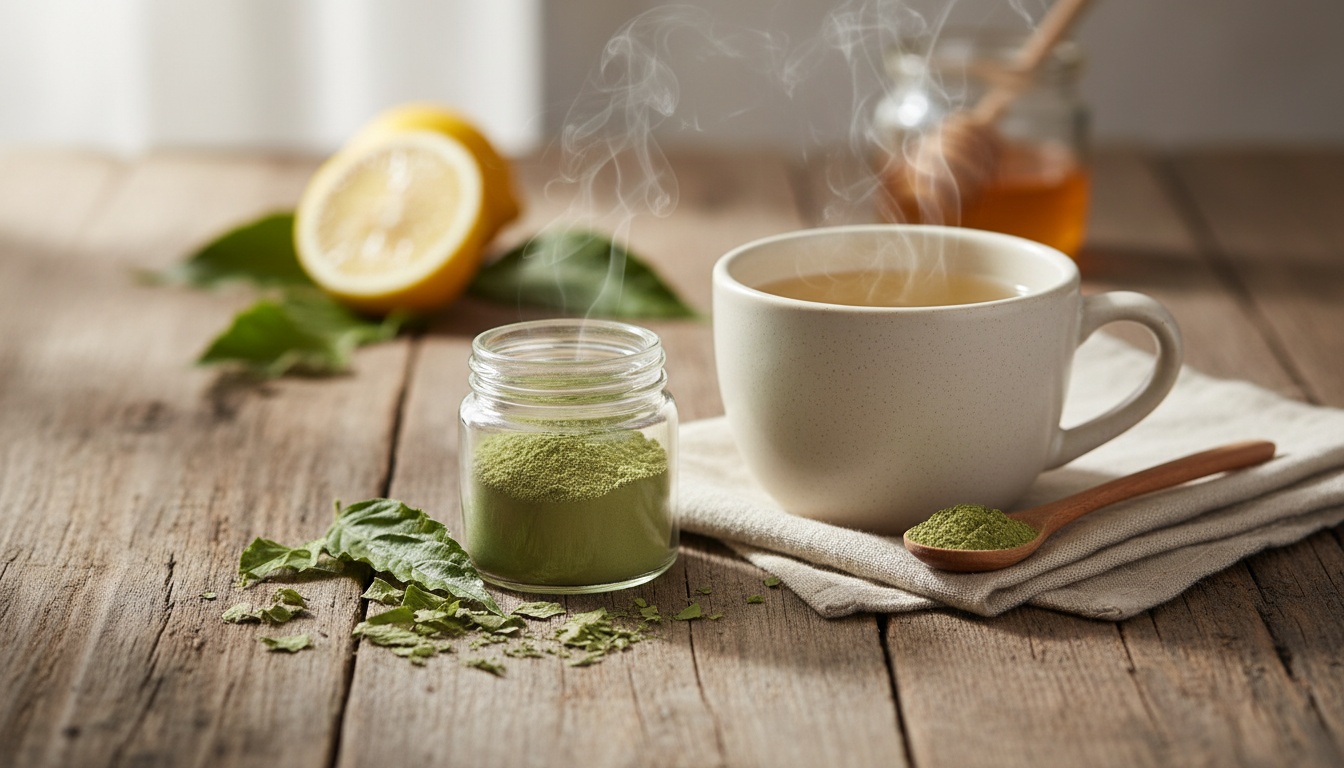
Honey Lemon Tea
A cozy option, especially when it’s cold out.
You’ll need:
– 2–3 grams kratom powder
– 8 ounces hot (not boiling) water
– 2 tablespoons fresh lemon juice
– 2–3 teaspoons honey, adjusted to taste
How to make it:
1. Heat water until it’s steaming, not bubbling.
2. Stir in the kratom powder.
3. Add the lemon juice and honey.
4. Let it steep for 3–5 minutes, stirring occasionally.
5. Stir once more before drinking.
Go heavier on the honey than seems necessary at first. You can dial it back later once you’re used to the taste.
Tropical Smoothie
This one buries the kratom flavor almost entirely.
You’ll need:
– 2–3 grams kratom powder
– 1 cup frozen mango
– ½ cup pineapple chunks
– ½ cup coconut milk
– 1 tablespoon lime juice
– 1 teaspoon honey (optional)
How to make it:
1. Add everything to a blender.
2. Blend on high for 60–90 seconds.
3. Add more coconut milk if it’s too thick.
4. Pour and drink right away.
The mango and pineapple are strong enough to override kratom’s earthiness completely, and some users find mango pairs especially well with it.
Once You’re Comfortable: A Few More Options
Chocolate Peanut Butter Shake
This turns kratom into something closer to a treat than a supplement.
You’ll need:
– 2–4 grams kratom powder
– 1 cup almond milk
– 2 tablespoons natural peanut butter
– 1 tablespoon cocoa powder
– 1 frozen banana
– 1 teaspoon vanilla extract
– Ice, if you want it thicker
How to make it:
1. Blend everything until smooth.
2. Add ice for a thicker texture if you like.
3. Pour into a large glass and drink promptly.
This shake works particularly well with red vein strains, which tend to be milder and are often used in the evening. If you prefer capsules, you can open them and stir the powder into recipes like this one instead of using loose powder.
Kratom Energy Balls
These are easy to make ahead and take with you.
You’ll need:
– 6–8 grams kratom powder (makes 8–10 balls)
– 1 cup pitted dates
– ½ cup mixed nuts
– 2 tablespoons cocoa powder
– 2 tablespoons coconut oil
– 1 teaspoon vanilla extract
– Shredded coconut for rolling
How to make it:
1. Pulse the dates and nuts in a food processor until finely chopped.
2. Add the kratom, cocoa, coconut oil, and vanilla, and process until it holds together.
3. Roll into balls about the size of a walnut.
4. Roll each one in shredded coconut.
5. Refrigerate for 30 minutes before eating.
Each ball has roughly 0.7–0.8 grams of kratom. They’ll keep in the fridge for about a week.
Greek Yogurt Parfait
A morning option that fits into a regular breakfast.
You’ll need:
– 2–3 grams kratom powder
– 1 cup Greek yogurt
– 2 tablespoons honey
– ¼ cup granola
– ½ cup mixed berries
– 1 tablespoon chopped nuts
How to make it:
1. Stir the kratom powder into the honey until smooth.
2. Mix the honey-kratom blend into the yogurt.
3. Layer with granola and berries.
4. Top with nuts and a few extra berries.
5. Eat right away for the best texture.
Between the creaminess and the fruit, this tastes like a normal breakfast that happens to have kratom in it — not the other way around.
Tips That Make a Real Difference
- Start low. Two grams is a reasonable starting point. Increase gradually as you learn your tolerance and preferences.
- Don’t skimp on quality. When kratom is the main flavor in a recipe, cheap or poorly processed powder stands out immediately.
- Know your strains. White and green vein kratom tend to taste more bitter than red vein varieties, so factor that into which recipe you try.
- Give it time to dissolve. Letting kratom sit in an acidic liquid for 5–10 minutes before drinking can improve both taste and effect.
- Keep notes. Track ratios and results so you know what worked and what didn’t.
- Ease off the masking over time. Many longtime users start with heavily flavored recipes and gradually simplify as their palate adjusts.
Where to Go From Here
Pick one recipe that sounds appealing and get comfortable with it before moving on to something more involved. Pay attention to how different strains behave with different masking ingredients — Green Maeng Da tends to shine in citrus drinks, while Red Bali works nicely in chocolate-based recipes. If you want something stronger without adding bulk, kratom extracts can be used in smaller amounts while still delivering a similar effect.
Kratom has come a long way from a niche botanical to something people are actively building recipes around — not unlike what happened with adaptogenic lattes or CBD drinks. If you’re curious about branching out, kava and blue lotus can be worked into similar preparations.
The real goal here isn’t just making kratom taste better. It’s building a routine that fits naturally into your day instead of feeling like a chore. With decent sourcing and a little preparation, that first bitter shock can turn into something you actually look forward to.
Common Questions
How much kratom should a beginner use?
Two to three grams is a solid starting point for most recipes. You can increase the amount gradually as you get more familiar with how it affects you.
What’s the easiest recipe to start with?
The orange juice method. It needs almost no prep, covers the bitterness well, and is hard to get wrong.
Can I prep these in advance?
Solid recipes like energy balls keep well in the fridge for about a week. Liquid recipes are best made fresh — kratom can settle and taste worse if it sits too long in a drink.
What’s the best way to mix kratom powder?
A small whisk or milk frother. Spoons tend to leave clumps that turn into bitter pockets.
Why does my kratom taste worse than I expected?
It might be the quality — poorly processed or contaminated kratom tastes noticeably worse. It could also be the strain, since white and green veins are naturally more bitter than red.
Which strains work best in recipes?
Red strains like Red Bali are milder and pair well with chocolate. Green strains like Green Maeng Da do well with citrus. White strains are the most bitter and usually need a strong smoothie to mask them.
Can I use extracts instead of powder?
Yes, but use less — around 0.5 to 1 gram of extract compared to 2–3 grams of powder, since extracts are more concentrated.
How long until I feel the effects?
Liquid preparations tend to kick in within 30–60 minutes. Solid foods like energy balls may take a bit longer, often 45–90 minutes.
What should I avoid combining with kratom?
Alcohol is best avoided, and it’s worth being cautious with large amounts of caffeine. Stick with simple, natural ingredients, and always check for interactions with any medications or supplements you’re taking.
Why do some recipes claim stronger effects with certain ingredients?
Citrus fruits contain compounds that may help the body absorb kratom’s alkaloids more efficiently, which is why a lot of users notice a stronger effect when pairing kratom with orange juice or similar acidic drinks.