



Walk into any wellness forum or health food store lately and you’ll likely hear these two names mentioned in the same breath. Kava and kratom both get pitched as plant-based options for easing stress or sharpening focus, but that’s about where the similarities end. They come from different parts of the world, act on the body in different ways, and sit in very different places legally. If you’re weighing one against the other, here’s what actually separates them.
Where They Come From
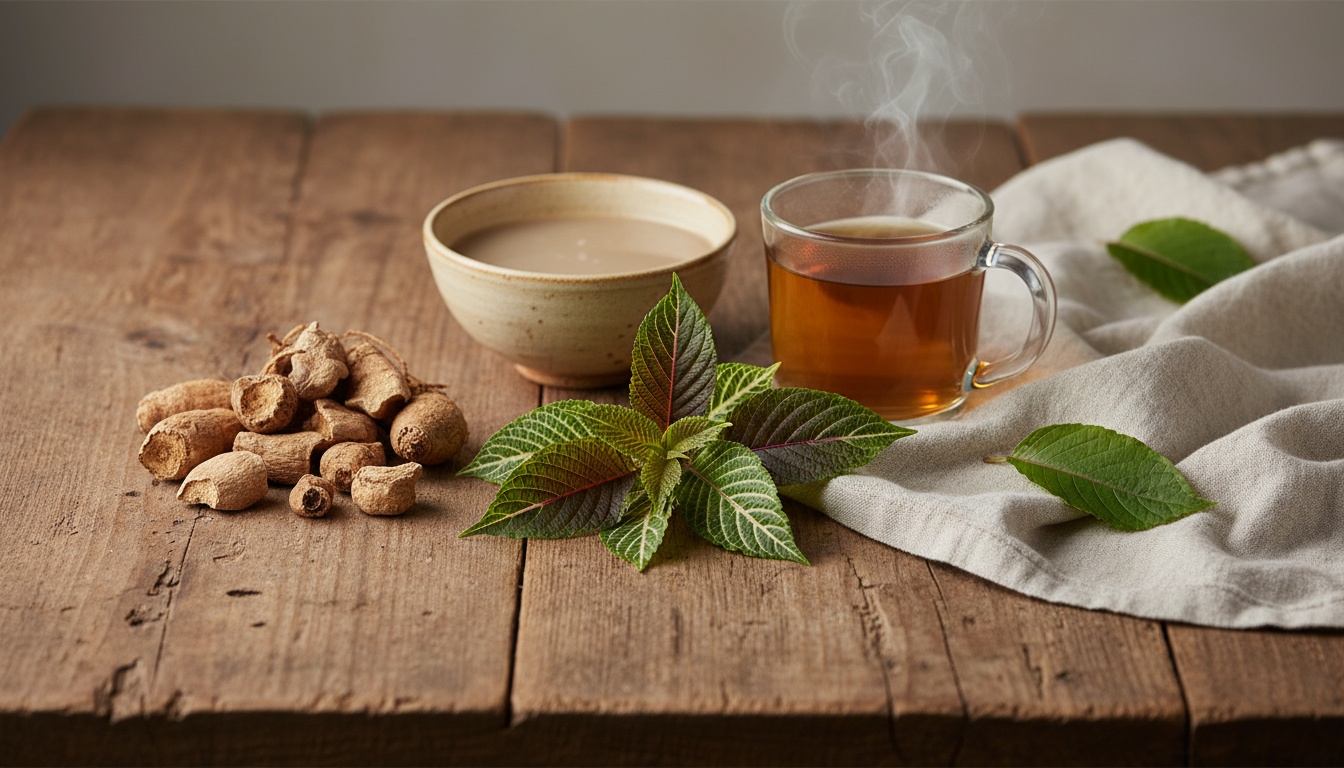
Kava has roots — literally and culturally — in the Pacific Islands. People there have prepared it for social and ceremonial gatherings for hundreds of years. The plant itself, Piper methysticum, is a member of the pepper family, and its root is dried, ground, and traditionally mixed with water to make a drink.
Kratom’s history runs through Southeast Asia instead. It comes from the leaves of Mitragyna speciosa, a tree related to coffee, and has long been part of daily life in Thailand, Indonesia, and Malaysia.
Despite getting lumped together in wellness conversations, these two plants aren’t botanically related at all.
Different Plants, Different Experiences
Kava is best known for producing a sense of calm. In small amounts it can bring on a mild lift, but push past that dose and the effect shifts firmly toward relaxation. There isn’t much room to stay in that energized zone — it fades quickly as you take more.
Kratom behaves differently, largely because of strain variation:
- Red vein strains lean toward calming, relaxing effects.
- Green vein strains tend to sit in the middle, offering a more balanced feel.
- White vein strains are usually linked to alertness and mental clarity.
That range means kratom users can pick a strain based on what they need at the moment — something kava’s narrower effect profile doesn’t really allow for.
The Legal Picture Is Not Even Close
This is where the two botanicals diverge most sharply.
Kava is legal across the entire United States. It’s sold openly in cafes, bars, and shops, and the market backs that up — industry estimates put kava’s value at $1.76 billion in 2024, with projections reaching $7.24 billion by 2034 as more people look for natural ways to manage stress.
Kratom’s legal footing is far shakier. It remains legal in most states but is currently banned in seven: Alabama, Arkansas, Indiana, Rhode Island, Vermont, Wisconsin, and Louisiana. Certain cities and counties impose their own restrictions on top of that, even in states where kratom is otherwise permitted.
Many of these bans trace back to contaminated or adulterated products rather than the plant itself, along with a fair amount of misinformation. Groups like the American Kratom Association have pushed back through advocacy and public education, arguing for clearer regulation instead of outright prohibition. That effort has started paying off — Rhode Island became the first state to reverse its kratom ban in July 2025, with the new law set to take effect in April 2026.
How People Actually Take Them
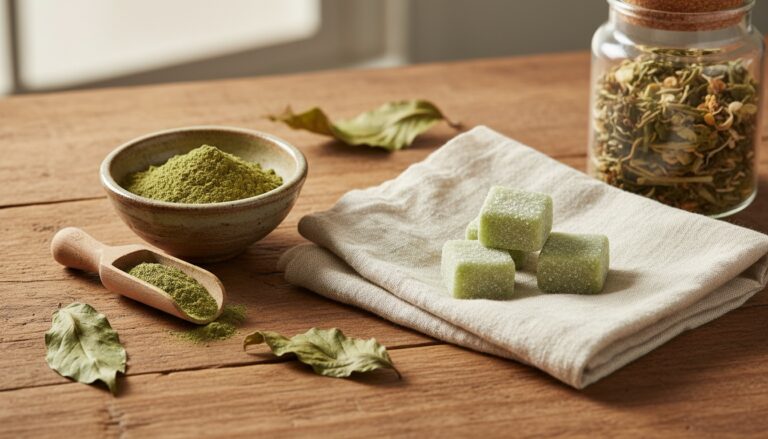
Both plants typically show up as powders, and the ways people consume them overlap quite a bit: mixed with water and swallowed directly (often called “toss and wash”), pressed into capsules, wrapped in oblate discs, or steeped as tea. Kratom also comes in edible and candy forms for people who’d rather skip the powder altogether.
Kava has built out its own social scene, with dedicated kava bars serving prepared drinks much like a coffee shop or juice bar would. Kratom lounges exist too, but they’re less common — regulatory hurdles have kept that side of the business smaller.
Preparation method matters more than people realize. Traditional kava is extracted with water alone, while some commercial versions use alcohol or acetone-based processing instead. That difference can change both the experience and the safety profile of the final product.
Quality Is the Real Deciding Factor
Regardless of which botanical you choose, not every product on the shelf is trustworthy.
Look for brands that publish third-party lab results — testing that confirms potency, screens for contaminants, and verifies the product is what it claims to be. Sourcing transparency matters just as much as the lab report itself.
For kratom in particular, wild-harvested leaf processed in GMP-certified facilities tends to offer more consistency and accountability. That kind of oversight is exactly what’s been missing in cases where tainted products triggered health scares and, in turn, fueled state-level bans.
Choosing Between the Two
Start with your local laws. If kratom is banned where you live, the decision is already made.
If both are legal options for you, think about what you actually want. Kava gives you a more predictable, calming experience without much variation. Kratom gives you more flexibility, letting you match a strain to your mood or goal on any given day.
If you’re new to kratom, sample packs are a low-commitment way to test different strains before buying in bulk. That way you can figure out what actually works for you rather than guessing.
Both plants have carved out a real place in natural wellness routines. Which one makes sense for you comes down to your goals, where you live, and how much you value having options.
Quick FAQ
Can I combine kava and kratom?
Some people do, but it’s not something beginners should try. Each plant produces distinct effects, and mixing them makes it much harder to figure out how your body responds to either one on its own.
Which one is stronger?
That’s not really the right comparison. Kratom’s effects vary by strain, while kava delivers a more uniform calming experience. Actual strength comes down to dosage and how your body reacts.
Is kava the safer legal choice?
Legally, yes. Kava is permitted nationwide, while kratom is banned in seven states and restricted in some local areas. Check your state and local laws before buying either one.
How long do the effects last?
Kava generally lasts 2 to 4 hours. Kratom tends to run a bit longer, around 3 to 5 hours, though this depends on the strain, dose, and the individual.
Which one should a beginner try first?
It depends on where you live and what you’re after. If kratom is legal in your area and you want variety, a sample pack is a good starting point. If you’d rather ease in with something more predictable and widely accepted, kava may be the simpler choice.