
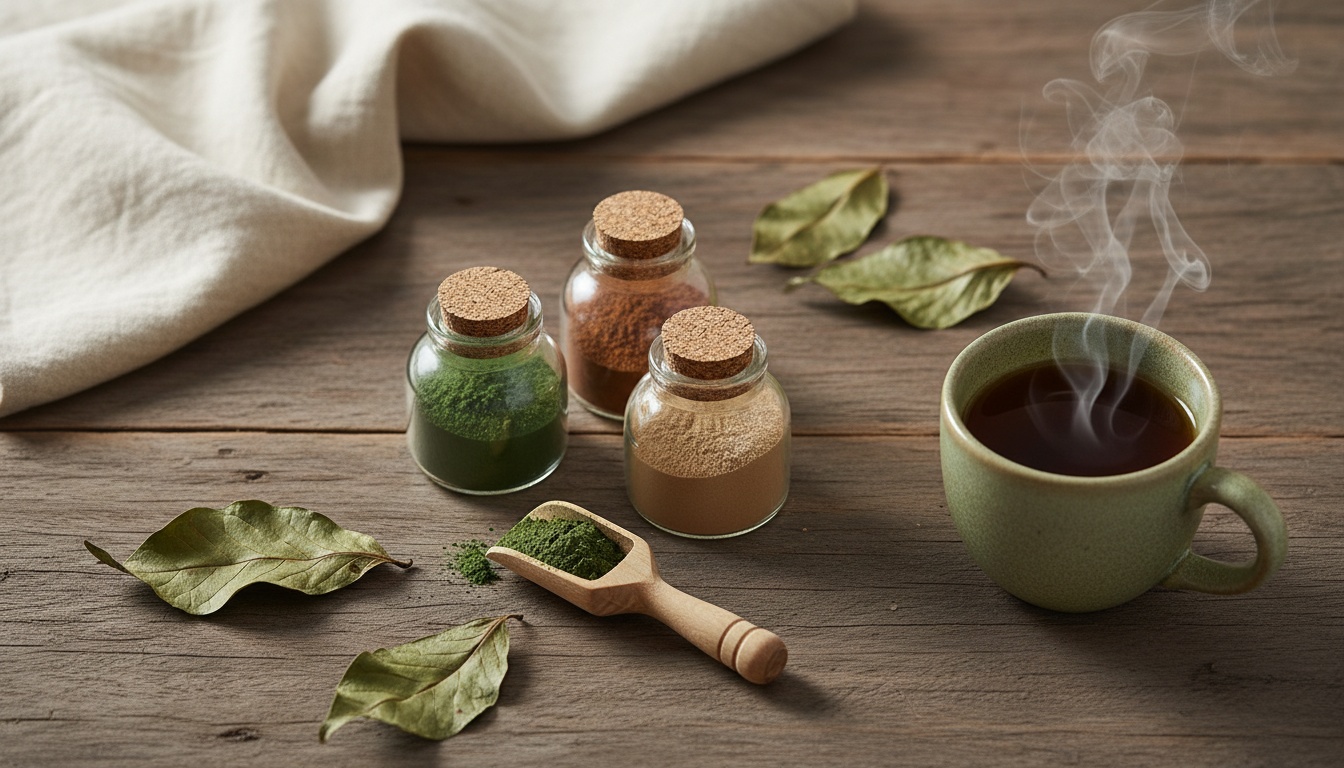
A single strain like Red Bali or Green Maeng Da can only take you so far. Blended kratom mixes different strains, vein colors, and growing regions to produce effects that no single strain can replicate on its own. Whether you’re working with loose powder or capsules, knowing how blends are built and why they’re built that way can change how you use kratom entirely. The problem is that most people treat blends the same way they treat single strains — and that’s a mistake.
Why Blends Exist
Blending grew out of a simple, practical issue: single-strain kratom is inconsistent. Weather, soil, harvest timing, and drying methods all shift the alkaloid content from batch to batch. A bag of Red Bali that felt calming last month might feel stimulating this month, even from the same farm.
Blenders solve this the same way coffee roasters do. A single-origin coffee bean has character, but master roasters mix beans from different regions to get a flavor that tastes the same cup after cup. Kratom blending follows the same logic — just with alkaloid content standing in for flavor.
The Three Main Types of Blends
Vein color blends mix different colored veins, sometimes from the same region and sometimes not. A common morning mix might be 60% white vein and 40% green, balancing energy with a smoother feel. You’ll see these in both loose powder and capsule form.
Regional blends combine strains grown in different parts of Indonesia. Pairing Borneo’s calming reputation with Sumatra’s more energizing profile produces something neither region delivers alone.
Effect-targeted blends are built around a goal rather than an origin story. An evening blend leans into relaxation; a focus blend leans into clarity and steady energy.
Each type suits a different kind of user and a different part of the day.
Popular Vein Color Combinations
White-green blends usually run 50–70% white vein with 30–50% green. These tend to give clean energy without the edge that pure white sometimes carries. The green rounds off the intensity while keeping the alertness intact — a common pick for mornings or midday slumps.
Green-red blends typically sit at 60–80% green with 20–40% red. This mix aims for balance: steady energy and mood support from the green, calming undertones from the red. Many people describe these as flexible, all-day blends that shift slightly depending on what they need in the moment.
Full-spectrum blends bring all three vein colors together in varying ratios. The goal is to capture more of kratom’s alkaloid range — kratom is known to contain over 40 different alkaloids depending on genetics and processing, so a full-spectrum blend can offer a broader profile than any single vein color.
Regional Blend Characteristics
Borneo-Sumatra blends pair Borneo’s more relaxing reputation with Sumatra’s stimulating edge. The combination tries to keep the strengths of both while smoothing over their individual downsides.
Thai-Malaysian blends bring together two long-established kratom regions. Thai strains are known for potency and staying power, while Malaysian strains tend to be gentler and smoother. Together, they aim for strength without harshness.
Multi-regional blends pull from three or more growing areas. These try to capture a wider range of alkaloid profiles shaped by different soils, climates, and traditional processing across Southeast Asia.
Choosing a Blend Based on Your Goal
For morning energy, look at white-and-green combinations — roughly 60–70% white to 30–40% green. These tend to support clarity and motivation without the letdown that can follow later in the day. Skip anything with heavy red content if you’re trying to stay alert through the afternoon.
For afternoon balance, green-dominant blends work well — around 70–80% green, with a small amount of white or red to fine-tune the feel. This tends to keep productivity up without overstimulating you before bedtime.
For evening wind-down, red vein should dominate — typically 60–80%, with white or green mixed in to keep it from being overly sedating.
How Ratios Change the Effect
The ratio matters as much as the strains themselves. A blend that’s 90% red and 10% white behaves nothing like one that’s 60% red and 40% white. The first keeps most of red’s relaxing character with a touch of lift; the second is a genuinely different, more balanced experience.
This is why professional blenders spend time testing ratios rather than guessing. Shifting a green-red blend from 70/30 to 60/40 can move the whole feel from “energized with a calm edge” to “relaxed but alert.” That precision is also why well-made blends tend to cost more than a rough mix of two powders.
What to Look for in a Quality Blend
Blends only work if the source material is consistent and well-tested. Industry data suggests that somewhere between 15% and 25% of kratom entering the U.S. fails microbial testing, which makes sourcing a real concern — not a minor detail.
When evaluating a supplier, check for:
- Batch-specific testing on each strain used in the blend
- Published alkaloid content, including mitragynine and 7-hydroxymitragynine levels
- Ratios that stay consistent from batch to batch
- Production in a GMP-certified facility
Steer clear of sellers who slap the word “blend” on whatever inventory happens to be sitting around. That’s not a blend — it’s leftovers.
Rotating Between Blends
Sticking with one blend indefinitely can lead to your body adapting to that alkaloid profile, which is part of why moderation matters generally. Many regular users rotate on a weekly basis — an energizing white-green blend on Monday, a balanced green-red mix later in the week, for example.
You can rotate by:
- Vein dominance — alternating white-heavy, green-heavy, and red-heavy weeks
- Region — cycling between Borneo-based, Sumatra-based, and multi-regional mixes
- Purpose — moving through energy, balance, and relaxation blends in turn
Keeping simple notes on what you tried and how it felt makes it much easier to find a rotation that actually works for you.
Mistakes People Make With Blends
The biggest one is timing. Taking an energizing white-green blend at night, or a relaxing red-dominant blend in the morning, works against the blend’s whole design.
Ignoring ratios is another common issue. A 90/10 blend and a 60/40 blend made from the same two strains will feel different — treating them as interchangeable leads to inconsistent results.
Mixing low-quality, untested powders on your own rarely produces anything reliable. And skipping over your own response pattern is a mistake too — everyone’s biochemistry handles alkaloid combinations differently. Older adults in particular should take extra care and look into general safety guidance before experimenting with blends.
Building Your Own Blend Approach
Start with single strains before jumping into blends. Get a feel for how pure Red Bali, Green Maeng Da, and White Borneo affect you individually — that baseline makes it much easier to predict how a blend might feel.
From there, try simple two-strain mixes at 70/30 or 60/40 before moving to anything more complex. Keep track of what you used, in what ratio, at what time, and how it felt. Precise measurement matters here — small changes in ratio can shift the whole experience, so consistent tracking pays off.
Where Blending Is Headed
Kratom blending is trending toward more scientific precision. A full alkaloid panel typically costs $100–$200, and that kind of testing lets suppliers formulate blends around actual alkaloid content instead of just strain names.
Some suppliers are already moving this direction — describing a blend by its mitragynine and 7-hydroxymitragynine percentages rather than calling it “Red Bali plus Green Maeng Da.” It’s a shift from botanical tradition toward something closer to a standardized product.
Getting Started
Well-made blends cost more because they require real investment — testing, sourcing, and quality control at every step. Suppliers who do this right can tell you exactly what’s in their product and why.
Look for sellers who disclose their ratios, sources, and testing results upfront. If a supplier won’t tell you what’s in a blend or how it was tested, that’s reason enough to look elsewhere. Transparency isn’t a marketing extra — it’s the baseline for a product you’re actually putting in your body.
Frequently Asked Questions
Can I mix kratom strains myself at home?
Yes, though commercial blends tend to be more consistent since they’re built on tested ratios. Home mixing is fine for experimenting, but don’t expect the same reliability.
How do I find the right ratio for me?
Start simple — a 70/30 mix — and adjust from there based on how you feel. Tracking your results over time makes this much easier.
Are blends stronger than single strains?
Not necessarily. They’re usually more balanced rather than more potent, combining different alkaloid profiles for a more rounded effect.
Should I rotate blends regularly?
Most experienced users do, often weekly or biweekly, to avoid their body adapting too much to one profile.
What separates cheap blends from premium ones?
Premium blends use tested, consistent source material with deliberate ratios. Cheap ones are often just mixed leftover inventory with no real quality control behind them.
Is it okay to use the same blend every day?
You can, but many people find better long-term results by switching things up rather than sticking with one combination indefinitely.