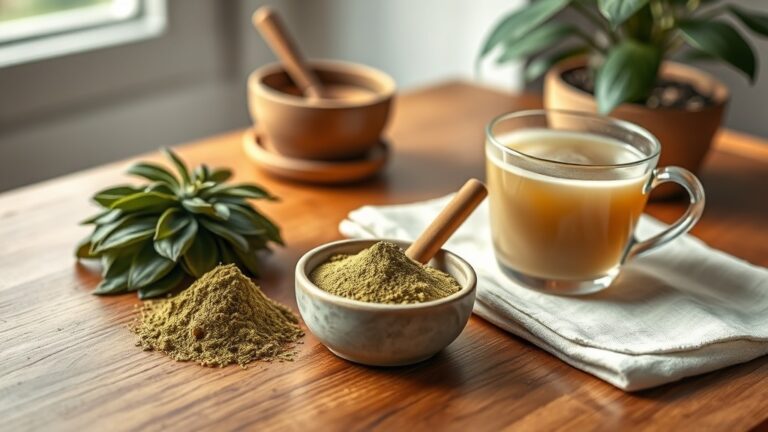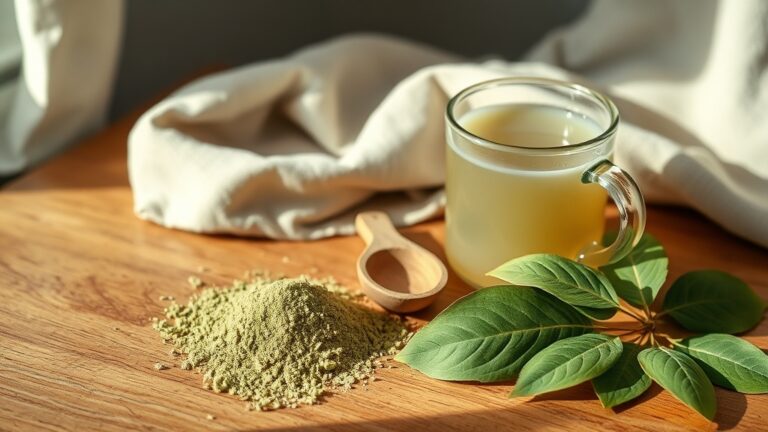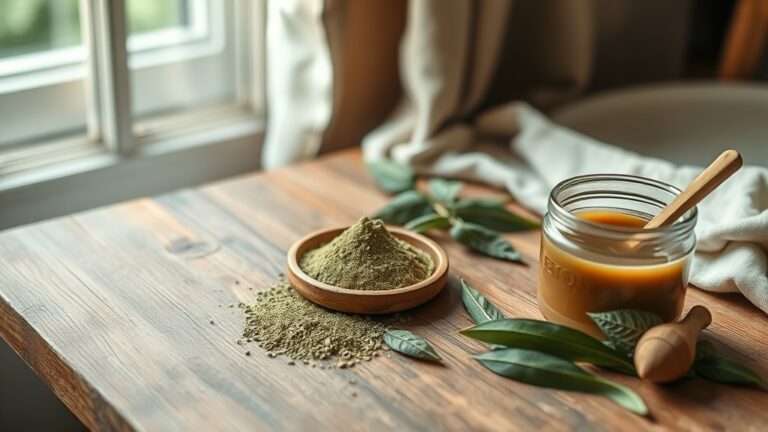




Curious about kratom but not sure where to begin? Start small: 1–2 grams of a green vein powder or capsule from a lab-tested vendor, then wait a full 45 minutes before deciding how you feel. That single habit prevents most of the problems new users run into.
This guide walks through how kratom works, which product format makes sense for a first try, how much to take, and the mistakes that trip up nearly everyone starting out. Kratom is a complicated plant with a complicated pharmacology, and most beginner advice online skips over the details that actually matter.
A quick disclaimer: this article is educational, not medical advice. Kratom has no FDA approval for treating any condition. Talk to a healthcare provider before trying it, especially if you take prescription medication or have existing health concerns.
What Is Kratom, and How Does It Work?
Kratom (Mitragyna speciosa) is a tropical tree native to Southeast Asia, particularly Indonesia, Thailand, and Malaysia. It’s part of the coffee family, botanically speaking, and for generations, laborers in the region chewed the fresh leaves or brewed them as tea to fight fatigue and manage pain.
The leaves contain more than 40 alkaloids. Two of them — mitragynine and 7-hydroxymitragynine — have received the most research attention. Both act on mu-opioid receptors, the same receptor family targeted by morphine and codeine, though they bind differently, a pattern researchers call “biased agonism.” At low doses, kratom’s effect on adrenergic receptors tends to dominate, producing stimulant-like alertness. Push the dose higher, and opioid receptor activity takes over, shifting things toward sedation and pain relief.
This shift from stimulant to sedative isn’t a matter of degree — it’s a change in character. Taking more kratom doesn’t just make the same effect stronger; it can produce an almost different experience altogether. A 2022 clinical review in Frontiers in Pharmacology, written for healthcare providers who see kratom-using patients, frames this clearly: small doses feel coffee-like, moderate doses feel more like a mild opioid, and overshooting that transition point is the most common mistake beginners make.
Why Do People Use Kratom?
A widely cited 2017 survey of more than 8,000 self-identified kratom users, led by researcher Oliver Grundmann, found the most common reasons people gave for use were pain management, mood support, energy and focus, anxiety relief, and tapering off opioid medications. A qualitative study from 2015 found similar themes — users describing kratom as helpful for chronic pain and mood, often while trying to cut back on prescription opioids. Follow-up research in 2022 broke these motivations into clearer categories: pain, mood, energy, and, for a smaller group, substitution for opioids.
It’s worth being clear-eyed about what this data does and doesn’t show. These are self-reports from surveys, not clinical trial results. Kratom isn’t approved to treat any medical condition, and survey responses reflect what people believe helped them — not proof that it works. What the data does tell us is that kratom users have varied goals, which is exactly why picking the right format and dose matters so much at the start.
Choosing a Format as a Beginner
Kratom comes in several forms, and they differ a lot in how fast they kick in, how easy they are to dose accurately, and how forgiving they are for a first try.
| Format | Onset | Dose Control | Beginner Rating |
|---|---|---|---|
| Powder | 20–40 min | Excellent (needs a scale) | Good value, requires a scale |
| Capsules | 30–60 min | Excellent (pre-measured) | Easiest starting point |
| Crushed leaf tea | 30–50 min | Moderate (brewing varies) | Milder, good ritual |
| Extracts / shots | 15–30 min | Poor (very potent, no gram baseline) | Not for beginners |
| Gummies | 45–90 min | Moderate (fixed per gummy) | Convenient, slower onset |
Capsules are the simplest way to start — no taste, no measuring, consistent dosing. If you want more flexibility and better value per dose, powder plus a digital scale works well too. Skip extracts entirely at first. They can be five to fifty times more concentrated than plain leaf powder per gram, which makes safe dosing almost impossible for someone with no baseline.
Understanding Vein Colors
Kratom products are typically sorted by the color of the leaf’s central vein at harvest, which correlates with the alkaloid mix and gives a decent preview of what to expect.
| Vein Color | Harvest Stage | Effects | Best For |
|---|---|---|---|
| White | Young leaves | Stimulant-leaning: energy, focus | Morning, productivity |
| Green | Mid-maturity | Balanced: mild energy + mild relaxation | Beginners |
| Red | Mature leaves | Sedative-leaning: calm, pain relief | Evening, relaxation |
| Gold/Yellow | Processing variant | Usually between green and red | After some experience |
The second word in a strain name — Maeng Da, Bali, Borneo, Malay — refers to a regional origin or traditional cultivar, and matters less than vein color for predicting effects. A green Maeng Da and a green Bali from the same vendor will feel more alike than either would compared to a red or white from that same vendor.
For a first try, stick with green. Green Maeng Da and Green Bali are common, balanced, and forgiving of the variability every new user experiences.
How Much Should Beginners Take?
There’s no official dosage chart for kratom — the FDA hasn’t approved it for any use, so what follows draws on self-reported survey data and general harm-reduction principles.
| Experience Level | Powder | Capsules (~0.5g each) | Likely Effects |
|---|---|---|---|
| First time (day 1) | 1.5–2 g | 3–4 | Subtle, mostly informational |
| Early beginner (weeks 1–4) | 2–3 g | 4–6 | Clear stimulant-type effects |
| Moderate/experienced | 3–5 g | 6–10 | Balanced energy/relaxation |
| High (not recommended) | 6+ g | 12+ | Heavy sedation, nausea risk, faster tolerance |
A few rules apply no matter your experience level:
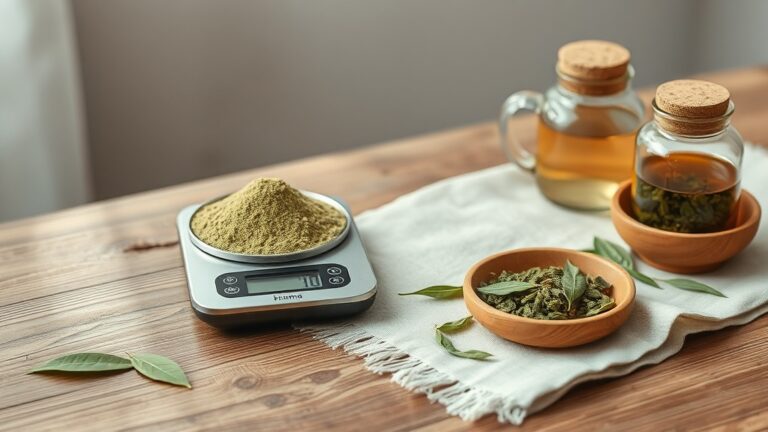
- Use a scale, not a spoon. A level teaspoon of kratom can weigh anywhere from 1.8 to 3.2 grams depending on how finely it’s ground — that’s a huge margin of error at a 2-gram starting dose. A $15 digital scale accurate to 0.1g solves this.
- Don’t redose mid-session. Onset can take 45 minutes or more, especially with capsules. Taking more before that window closes is the fastest way to overshoot your intended dose.
- Adjust between sessions, not during one. If 2g felt too mild, try 2.5–3g next time — move up in half-gram steps.
Running Your First Session
A little structure goes a long way toward getting useful information from your first try, and lowers the odds of an uncomfortable experience.
- Pick your format. Capsules for simplicity, powder if you have a scale. Skip extracts.
- Choose a green vein. Green Maeng Da or Green Bali are safe, reliable starting points.
- Start at 1.5–2g (3–4 capsules). This is about gathering information, not chasing an effect. Mild results are normal and expected.
- Eat something light beforehand. A completely empty stomach raises nausea risk above 3g; a heavy meal can blunt peak effects by 40–60%. A small snack 30–60 minutes ahead works well.
- Drink water. Kratom has a mild diuretic effect, and dehydration is a common, avoidable cause of headaches.
- Wait out the full onset window. 20–40 minutes for powder, 30–60 for capsules. Set a timer — don’t assume nothing’s happening at the 25-minute mark.
- Don’t redose on your first try. The point is information, not intensity. Even a mild result teaches you something.
- Keep notes. Strain, gram amount, time taken, whether you ate, and how you felt over the next few hours. This log becomes genuinely useful after two or three sessions.
- Repeat the same strain two or three times before switching. Batch differences, sleep, hydration, and tolerance all shift the experience — one session isn’t enough to draw conclusions from.
Research using real-time tracking of kratom users (rather than after-the-fact recall) has found meaningful differences in onset and peak timing across product types — which is part of why waiting out the full window before judging an effect matters more than it might seem.
What to Look for in a Kratom Vendor
Because kratom isn’t federally regulated, product quality varies enormously from one seller to the next. A few signals separate a trustworthy vendor from a risky one:
- Third-party lab testing. Every batch should be tested by an independent lab for alkaloid content, heavy metals, microbial contamination, and adulterants, with a Certificate of Analysis (COA) tied to a batch number. No COA is a reason to walk away.
- AKA GMP certification. The American Kratom Association’s Good Manufacturing Practice program audits vendors on quality control, labeling, and safety. It’s currently the most credible third-party quality signal in the market.
- Mitragynine percentage on the label. Reputable vendors list alkaloid content per product rather than a vague “kratom powder” label. Decent quality powder usually runs 1.2–1.8% mitragynine.
- Clear sourcing information. Good vendors disclose where the kratom comes from (much of the highest-quality product originates in Kalimantan, Indonesia). Vague marketing language without specifics is a red flag.
- A real return or satisfaction policy. A vendor confident in their product will stand behind it.
Common Beginner Mistakes
- Starting with extracts. These are concentrated products meant for people who already know their tolerance. Starting here is one of the most reliable ways to have a bad first experience.
- Taking too much, too soon. Higher doses don’t just intensify the effect — they shift it from stimulant-dominant to sedative-dominant, and raise the risk of nausea substantially.
- Measuring with a spoon. As noted above, a teaspoon’s weight swings widely depending on grind, which leads to unintentional overdosing.
- Redosing too early. Onset windows run 20–60 minutes. Assuming “it’s not working” at 30 minutes and taking more is how people end up doubling their intended dose.
- Trying multiple strains at once. If you sample three strains in your first week, you can’t tell which one caused which effect. Stick with one strain for a few sessions before moving on.
- Mixing with alcohol or other depressants. Never combine kratom with alcohol, benzodiazepines, or opioids — at higher doses, kratom’s opioid receptor activity adds to the sedative load of these substances.
- Using it daily right away. Daily use speeds up receptor adaptation, which leads to tolerance and eventually dependence. Even experienced users generally recommend capping use at two or three days a week.
- Skipping water. Dehydration is a common and easily avoided cause of kratom-related headaches.
Closing Thoughts
Starting low, sticking with one strain, and keeping notes on how you feel will tell you more about kratom in your first few sessions than any amount of reading. Buy from a vendor that actually tests its product, use a scale instead of guesswork, and give your body time to respond before deciding whether something worked.
Frequently Asked Questions
Is kratom safe for beginners?
Used carefully — low doses of plain leaf products from a lab-tested source — most people tolerate kratom without serious problems. It isn’t risk-free, though. Daily use can lead to dependence, it can interact with other medications through liver enzyme pathways, and too high a dose can cause nausea, dizziness, or headache.
What’s the best strain for a first-time user?
Green vein strains sit in the middle of kratom’s stimulant-to-sedative range, making them the least likely to feel too intense in either direction. Green Maeng Da and Green Bali are the most common and consistently well-reviewed choices for a first try.
How long does kratom take to work the first time?
Powder typically takes 20–40 minutes; capsules take 30–60 minutes since the shell has to dissolve first. Some first-time users notice a weaker or delayed response on their very first try — this has been reported before and is often chalked up to individual variation. If you feel nothing after 60 minutes at 1.5g, that’s useful information: try 2.5g next time, not more today.
Can beginners take kratom every day?
It’s not a good idea. Daily use triggers the same kind of receptor adaptation seen with opioid tolerance, just usually at a slower pace. Most harm-reduction advice for new users suggests capping use at two or three days a week and avoiding back-to-back days until you understand your own response.
Will kratom show up on a standard drug test?
Standard 5-panel and 10-panel tests don’t screen for mitragynine. Specialized kratom-specific tests exist and are occasionally used in workplace or legal settings, but they’re not part of routine screening.
Can kratom be addictive?
With regular daily use, yes — it can produce physical dependence through the same receptor pathway as opioids. Survey data has found that a meaningful share of daily users report withdrawal-like symptoms when they stop. Non-daily use at modest doses significantly lowers this risk. Anyone with a personal or family history of opioid use disorder should talk to a doctor before trying kratom at all.
Where should a beginner buy kratom?
Look for vendors that publish batch-specific lab results, hold AKA GMP certification, and clearly label mitragynine content. Kratom sold at gas stations or smoke shops often lacks this kind of quality documentation.
How should kratom be stored?
Keep it in an airtight container, away from light, heat, and humidity — all three break down the alkaloids over time. Stored properly, kratom powder can hold its potency for six months to a year or more. Resealable mylar bags work well; press out excess air before sealing.