

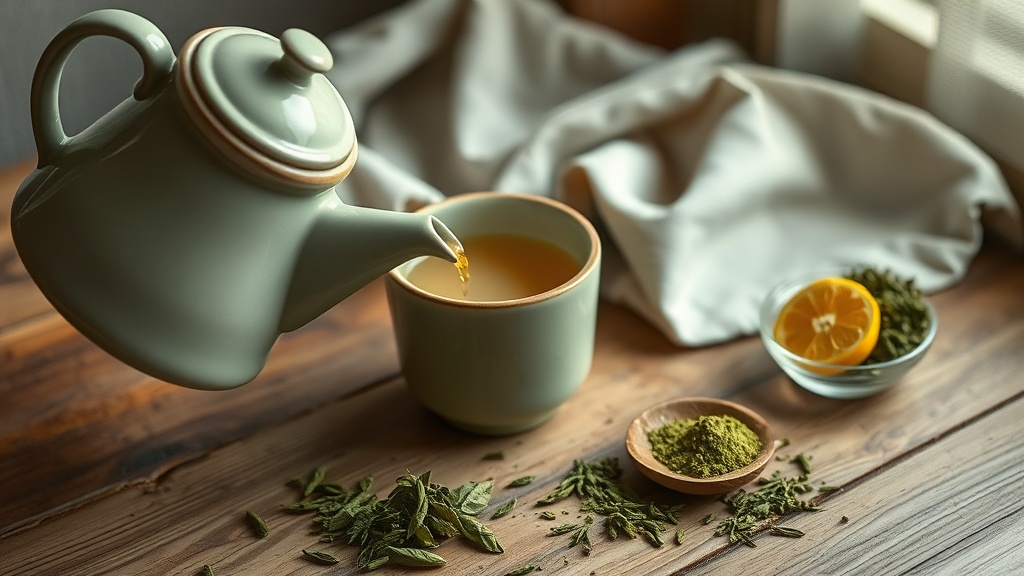
Kratom tea is made by simmering kratom powder or dried leaf in water, straining out the plant matter, and drinking what’s left. It’s the oldest way people have consumed kratom — farmers and laborers across Southeast Asia have brewed it for generations — and many users still find it gentler on the stomach than swallowing powder directly. This guide walks through how to brew it, why a splash of lemon juice matters, and how to think about dosing.
Hot water pulls mitragynine and other alkaloids out of the plant material. Adding a small amount of citric acid — lemon juice works fine — before heating helps those alkaloids dissolve more completely. Strain the tea well, drink it warm rather than scalding, and start at the low end of your usual dose, since tea tends to kick in faster than capsules or straight powder.
What Kratom Tea Actually Is
Kratom tea is simply Mitragyna speciosa leaves — whole, crushed, or powdered — steeped or simmered in hot water and then strained. It’s the original way people consumed the plant in Thailand, Malaysia, and Indonesia, where it grows natively. Long before capsules and extracts existed, field workers and traditional healers relied on this tea as part of daily life, using it for energy and general well-being.
In the past, people often chewed fresh leaves or boiled them for hours to make a strong decoction. Today’s version is usually built from commercial powder, and it doesn’t need nearly that much time — a gentle simmer of 10 to 20 minutes pulls out most of the active compounds. What you end up with is a bitter, earthy drink somewhere between light amber and dark brown, depending on strength.
It’s worth remembering that kratom tea isn’t a standardized product. How much alkaloid ends up in your cup depends on the strain, the batch, and how you extract it. If you’re buying powder, look for lab testing that reports actual mitragynine content — that number is far more useful than guessing based on strain name alone.
How Kratom Tea Works Once You Drink It
The effects of kratom come mainly from two alkaloids: mitragynine and 7-hydroxymitragynine. Mitragynine acts as a partial agonist at mu-opioid receptors and also affects adrenergic and serotonergic activity, which is why lower doses tend to feel stimulating and higher doses tend to feel more sedating. When you brew kratom into tea, these compounds move out of the plant fiber and into the water.
Hot water dissolves kratom alkaloids reasonably well, but not completely at a neutral pH. Mitragynine and related alkaloids dissolve more easily in slightly acidic water — which is the whole reason lemon juice gets added to kratom tea recipes. Studies on how mitragynine moves through the body show it’s absorbed quickly, with blood levels typically peaking within roughly an hour of ingestion.
Because the alkaloids in tea are already dissolved by the time you drink it, your digestive system can start absorbing them right away, without waiting for solid powder to break down first. That head start is likely why many users notice tea working a bit faster — and a bit more gently — than capsules.
The sludge left at the bottom of the cup after brewing is mostly leftover plant fiber with little alkaloid content remaining. Drinking it doesn’t add much in terms of effect, but it can add stomach irritation. Straining thoroughly isn’t just about taste — it’s a real part of why tea tends to sit easier than raw powder.
| Variable | Plain hot water (~pH 7) | Acidified water (~pH 4, with lemon) |
|---|---|---|
| Mitragynine solubility | Decent, but not maximized | Higher — forms more soluble alkaloid salts |
| Extraction efficiency | Fine for a 10–20 minute simmer | Better — more alkaloid pulled per gram |
| Flavor | Bitter, earthy | Tart, somewhat less bitter |
| Alkaloid breakdown from heat | Minimal at simmering temps | Minimal — acid helps stabilize alkaloids |
| Worth doing? | Sure, works fine | Generally the better choice, especially with weaker batches |
Does Lemon Juice Actually Make a Difference?
Yes, and there’s a straightforward chemical reason. Mitragynine and related alkaloids are weakly basic — their molecules carry nitrogen atoms that pick up a proton in acidic conditions. Add lemon juice or citric acid to your brewing water, and you lower the pH enough to convert some of the mitragynine into a salt form that dissolves in water much more readily than the unmodified alkaloid does.
In practical terms, that means you pull more alkaloid out of the same amount of powder when you acidify the water first. That matters more if you’re working with a weaker batch or trying to stretch your supply. If your powder already tests high in mitragynine, the difference might be smaller — but it’s still there.
How much lemon do you need? Most people use the juice of about half a lemon to a whole lemon (roughly 15 to 30 mL) per cup of water, added before heating. Citric acid powder works just as well — about half a teaspoon per cup — and doesn’t change the flavor much. Bottled lemon juice is fine too, though fresh tends to taste better.
One common worry — that boiling destroys the alkaloids — doesn’t really hold up at tea-brewing temperatures. A simmer sits around 80–95°C (176–203°F), nowhere near the sustained high heat that would meaningfully break down mitragynine. You’d need much higher temperatures held for a long time to cause real degradation, which isn’t what happens in a covered pot on the stove. The reason to avoid a hard boil isn’t alkaloid loss — it’s that boiling uncovered evaporates water and concentrates the flavor into something harsher.
How to Brew Kratom Tea, Step by Step
This method reflects traditional Southeast Asian brewing practices adapted for powder, and it’s built around three goals: good extraction, decent taste, and easy digestion.
What you’ll need
- Measured kratom powder (your usual dose)
- 2 cups (475 mL) of water per serving
- Juice of half a lemon, or half a teaspoon of citric acid powder
- A fine mesh strainer, cheesecloth, or coffee filter
- A small saucepan
- Honey, agave, or another sweetener
- Optional: fresh or powdered ginger, for taste and stomach comfort
Step 1: Weigh your dose
Use a scale rather than a spoon. Kratom powder density varies a lot — a teaspoon can weigh anywhere from about 2.3 to 3 grams depending on grind and moisture. A scale accurate to 0.1 grams removes that guesswork entirely.
Step 2: Add the acid first
Stir lemon juice or citric acid into your water before it goes on the heat. That way the powder hits acidic water from the start, rather than partway through brewing.
Step 3: Mix in the powder
Whisk the powder into the cold or room-temperature acidified water before heating. Kratom powder clumps easily, so whisk thoroughly, or use a small hand blender to break it up and expose more surface area to the water.
Step 4: Simmer, don’t boil
Bring the pot to a gentle simmer over medium-low heat — small bubbles, no rolling boil. Hold it there for 10 to 15 minutes, stirring now and then, with the lid on to keep the liquid from evaporating.
Step 5: Strain it well
Don’t skip this. Pour the tea through a fine mesh strainer lined with cheesecloth into your mug, pressing the plant material with a spoon to squeeze out remaining liquid. Discard the solids. A coffee filter works too, though it drains slowly — give it 3 to 5 minutes for a cleaner result.
Step 6: Sweeten and drink
Stir in honey or another sweetener while the tea is still hot so it dissolves completely. Letting the tea cool slightly before drinking can soften the sharper edges of the flavor. If the taste is rough going, brew a smaller, more concentrated cup (1 cup of water instead of 2) and follow it with a flavored drink.
Optional second extraction
After straining, put the used plant material back in the pot with a fresh cup of acidified water and simmer another 5 to 10 minutes. Strain again and combine with your first batch. This second pull is worth doing with lower-potency powder, since it catches alkaloids the first simmer left behind.
How Tea Stacks Up Against Other Methods
Kratom can be taken as tea, toss-and-wash, mixed into juice, capsules, or extracts. None of these is objectively “best” — each comes with tradeoffs, and tea happens to suit stomach-sensitive users especially well.
| Method | Onset | Stomach tolerance | Dose precision | Portability | Best suited for |
|---|---|---|---|---|---|
| Tea | Fast (15–30 min) | High — plant matter removed | High, with a scale | Low — needs prep | Home use, sensitive stomachs |
| Toss & wash | Fast (20–40 min) | Low — raw powder hits the stomach | High, with a scale | High | Speed, experienced users |
| Capsules | Slower (30–60 min) | Moderate | Pre-measured | Very high | Travel, discretion, taste aversion |
| Mixed in juice | Fast (15–30 min) | Moderate | High, with a scale | Moderate | Masking flavor, quick onset |
| Extract | Fast (under 20 min) | Variable | Needs concentration knowledge | High | Experienced users, tolerance breaks |
A pattern that comes up often: people who switch from toss-and-wash to tea frequently notice less stomach upset, especially when taking kratom on an empty stomach. Straining removes the raw fiber that seems to be the main irritant for people with sensitive digestion. If nausea has been an issue with powder, tea is a reasonable next step to try before changing dose or strain.
Getting the Dose Right for Tea
Dosing for tea follows the same general logic as powder dosing, with one caveat: because the alkaloids are already dissolved, tea can hit a bit faster and sometimes a bit stronger at the same amount consumed. Anyone new to tea, or switching over from capsules, should start toward the low end of their usual range and adjust from there.
| Experience level | Dose range (powder equivalent) | What to expect | Notes |
|---|---|---|---|
| New user | 1–2 g | Mild alertness, light stimulation | Start here no matter the strain; wait at least 45 minutes before considering more |
| Occasional user | 2–4 g | Noticeable mood lift, energy or relaxation | Typical range where most people land |
| Experienced user | 4–6 g | Stronger effects, more sedating | Rotating strains can help manage tolerance |
| High-tolerance user | 6–8 g | Heavy sedation, strong relaxation | If this is a daily baseline, a tolerance break is worth considering |
A useful rule when switching to tea: if you normally take 4 grams in capsules, try starting your first cup at 3 grams and check in after about 45 minutes before deciding whether to add more. Faster onset means you get feedback sooner — use that to your advantage rather than guessing.
Which Strains Work Best as Tea
Every kratom strain can be brewed into tea — the extraction process itself doesn’t favor one vein color over another. That said, some strains fit certain times of day or use cases better when prepared this way.
White vein strains (White Maeng Da, White Borneo) brewed light — around 2 to 3 grams, without sweetener — work well as a morning cup, offering alertness similar in character to a strong coffee.
Green vein strains (Green Malay, Green Bali) tend to suit afternoon use, offering a more balanced feel than the sharper edge of white veins. Green Malay in particular tends to brew into a smoother, less astringent cup than some red varieties.
Red vein strains (Red Bali, Red Borneo) lean more sedating and fit evening use or situations calling for physical relaxation. At 4 to 6 grams, red vein tea can be quite relaxing; at 2 to 3 grams in the afternoon, it produces a milder mellowing effect for people who find white or green veins too stimulating.
Common Mistakes When Brewing Kratom Tea
A few preparation errors show up again and again. Here’s what to watch for:
Skipping the acid. Plain water extracts kratom alkaloids adequately, but lemon juice or citric acid noticeably improves extraction for almost no added effort. People who skip this step and conclude tea is weaker than toss-and-wash are often comparing an incomplete extraction to a full dose of raw powder.
Steeping instead of simmering. Pouring boiling water over powder and letting it sit for five minutes in a French press isn’t the same as a proper 15-minute simmer. Both time and sustained heat matter. If you’re doing a cold steep instead, extend the contact time significantly — at least 6 to 8 hours in the refrigerator.
Not straining enough. The sediment at the bottom isn’t extra potency — it’s mostly leftover fiber with little alkaloid content after a good simmer. Strain it out completely.
Measuring by volume instead of weight. A level teaspoon of kratom powder can vary by 30 to 40% in actual weight depending on grind and moisture. A scale removes that variability.
Drinking on an empty stomach without easing in. Tea’s faster onset combined with an empty stomach can cause nausea in new users, even at modest doses. A light meal 30 to 60 minutes beforehand helps while you’re still figuring out your dose.
Using too much water. More liquid doesn’t mean more potency — it just dilutes what’s already there. Two cups (475 mL) per serving is a reasonable standard; drop to one cup if the volume is hard to finish.
Frequently Asked Questions
Can you use kratom powder for tea, or do you need whole leaf?
Powder works well and is what most people brew with. Its finer texture actually increases surface area compared to crushed or whole leaf, which can help extraction during a simmer. Crushed leaf makes a clearer, less cloudy tea but needs a longer simmer — 20 to 30 minutes — to extract comparably. Properly brewed, both formats end up with similar alkaloid content in the final cup.
Does kratom tea go bad?
Yes — brewed tea is perishable. Refrigerate it right away if you’re not drinking it immediately, and use it within 48 to 72 hours. After that, mitragynine starts to break down and bacterial growth becomes more of a concern. Freezing extends shelf life to several weeks; ice cube trays are a convenient way to portion it. Dry powder, on the other hand, keeps for 12 to 24 months in an airtight container away from light, heat, and moisture. Refrigerating unbrewed powder isn’t necessary, though it won’t hurt it.
Can you cold brew kratom tea?
Yes. Combine powder with room-temperature or cold acidified water and refrigerate for 6 to 12 hours before straining. It takes longer, but the result is smoother and less bitter than a hot brew. Since cold extraction pulls out somewhat less alkaloid than a hot simmer, consider increasing your dose by around 10 to 15% if you switch to this method.
Is kratom tea weaker than swallowing powder?
Not inherently — it depends on how it’s brewed. A well-made tea with acid extraction and thorough straining delivers a comparable alkaloid dose to the same amount swallowed as powder. What people usually notice is a difference in how it feels coming on, not total strength: tea tends to hit faster and feel cleaner, while swallowed powder often builds more gradually. If your tea feels weak, try a second extraction before assuming you need a bigger dose.
Can I just add kratom powder to coffee or juice instead of brewing tea?
You can mix powder directly into coffee, orange juice, or another drink without straining. It’s a valid shortcut — orange juice’s mild acidity even helps solubility a bit. The downside is you’re still consuming the raw plant fiber, which some people find harder on the stomach than strained tea. If it works for you without stomach issues, it’s a reasonable option, but brewing and straining remains the gentler choice for sensitive stomachs.
Why is my kratom tea so bitter?
The bitterness comes mostly from the alkaloids themselves — mitragynine has a naturally bitter taste that’s hard to fully mask. A few things help: honey or agave, which can blunt bitter taste perception; lemon or citric acid, which shifts the flavor toward tart rather than purely bitter; and using more water at the same dose, which dilutes the bitterness (though you’ll need to drink a larger volume). Cold brewing also tends to produce a noticeably less bitter cup than hot brewing.
Does the strain change how the tea tastes?
A little, though the effect is smaller than simply adjusting your water-to-powder ratio. Red vein strains often brew a bit more earthy and woody; white veins can taste sharper; greens tend to fall in between. Freshness matters more than most people expect — a fresh, well-stored batch will taste better brewed than an older one that’s been exposed to heat and light.
Is it safe to drink kratom tea every day?
Daily use of any kratom preparation, tea included, carries the same general considerations as other methods — mainly the risk of building tolerance over time. The brewing method itself doesn’t change the underlying safety profile compared to the same total alkaloid intake taken another way. Traditional daily users in Southeast Asia have consumed kratom tea for long periods, and survey data on regular users suggests most don’t report significant problems at low-to-moderate doses. Daily high-dose use of any kratom form is still worth paying attention to, and periodic breaks are reasonable. This isn’t medical advice — talk to a healthcare provider about your specific situation.
Can I use pre-made kratom tea bags instead of loose powder?
Some vendors sell pre-filled tea bags for convenience. The catch is that dose per bag varies and often isn’t clearly labeled. If dose precision matters to you — and it usually does when you’re finding your minimum effective dose — loose powder measured by weight and brewed yourself is more reliable. Tea bags can still be useful for travel, but check that the dose per bag is stated and that the product has been lab tested.
Should I drink kratom tea on an empty or full stomach?
On an empty stomach, effects tend to arrive faster — often within 15 to 20 minutes, compared to 25 to 40 minutes after a moderate meal. If you’re new to kratom or trying a new dose, eating something light 30 to 60 minutes beforehand can reduce nausea risk and give you more time to gauge effects before they peak. More experienced users who already know their tolerance often prefer an empty stomach for speed and consistency. There’s no single right answer here — it comes down to your own digestion and how quickly you want the effects to show up.
What’s the best sweetener for kratom tea?
Raw honey is the most commonly recommended choice, and there’s a practical reason beyond taste — it seems to work more effectively against bitterness than refined sugar. Agave nectar is another solid option. Stevia can sometimes add its own bitter edge that compounds with kratom’s flavor rather than masking it. Milk or cream is best avoided, since fat content can affect alkaloid absorption in unpredictable ways. Start with about a tablespoon of honey per cup and adjust from there.