

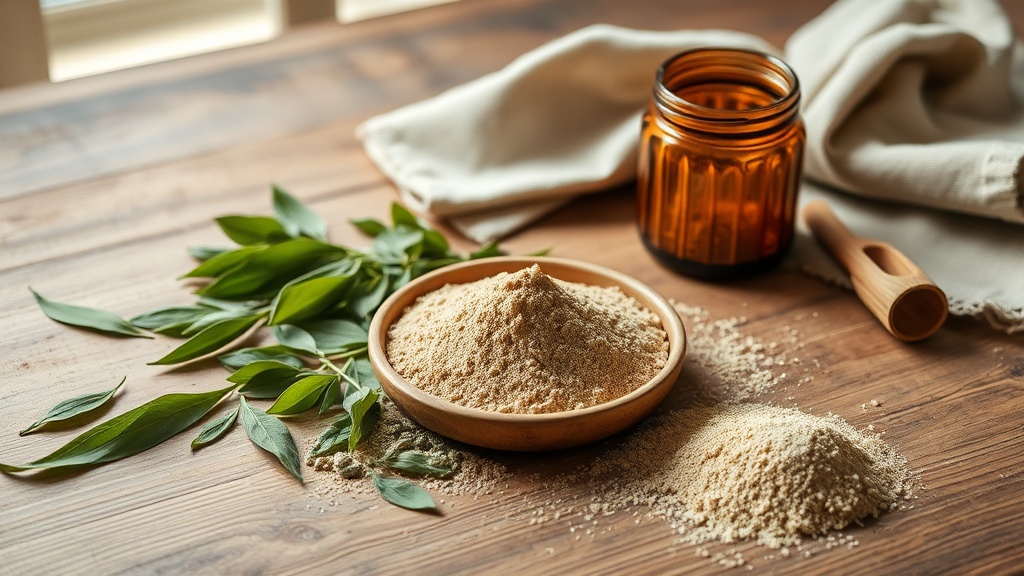
Kratom begins as a leaf growing on a tree in Indonesia. By the time it reaches a store shelf, it’s a powder, capsule, tablet, or extract in a sealed container. What happens between those two points — harvesting, drying, milling, blending, testing, and packaging — determines whether that final product is safe, consistent, and honestly labeled. This piece walks through each stage of kratom production, points out where things commonly go wrong, and outlines the documentation and testing practices that separate careful manufacturers from the rest.
Kratom is an agricultural product, not a lab-synthesized drug. No manufacturing process can erase the natural variation that comes with growing a plant — it can only be managed and documented. A trustworthy supply chain includes leaf sourced from mature trees, drying that’s controlled enough to prevent mold, milling and blending done under real sanitation practices, lot-specific third-party testing for alkaloids and contaminants, and packaging with batch codes that tie back to a lab report. If a company can’t show you that chain, you have no real way to judge what you’re buying.
The Manufacturing Chain at a Glance
Kratom production follows an agricultural processing path, not a pharmaceutical one. It runs through eight main stages, and each one either adds a quality risk or a quality control, depending on how well it’s handled.
| Stage | What Happens | Main Risk |
|---|---|---|
| 1. Cultivation | Mature Mitragyna speciosa trees grown in tropical regions | Soil contaminants, leaves harvested too young |
| 2. Harvest | Leaves picked by hand | Picking before veins mature |
| 3. Drying | Moisture brought down to 8–12% | Mold growth, alkaloid loss |
| 4. Milling | Dried leaf ground into powder | Contamination between lots, equipment residue |
| 5. Blending | Sub-lots combined to hit a target spec | Losing track of which lots went where |
| 6. Formulation | Turned into powder, capsules, tablets, extracts, or gummies | Inaccurate fill weights, contaminated additives |
| 7. Testing | Lot sent to an accredited lab for a Certificate of Analysis | Skipping tests, using generic (non-lot) reports |
| 8. Packaging | Lot code applied, product sealed and labeled | Label claims that don’t match test results |
Each of these steps has both a right way to do it and a well-documented way to get it wrong. The rest of this guide covers them one at a time.
Where Kratom Is Grown and How It’s Harvested
Mitragyna speciosa is native to Southeast Asia, historically grown or gathered in Indonesia, Malaysia, Thailand, Myanmar, and parts of Papua New Guinea. Malaysia and Thailand restricted kratom trade domestically for decades (Thailand decriminalized it in 2021), so Indonesia — especially West Kalimantan and Sumatra — became the main source for the U.S. market.
A few growing conditions carry straight through to the finished product:
- Tree age. Alkaloid content rises noticeably as trees pass four or five years old. Leaves from younger trees tend to have lower, less balanced alkaloid levels.
- Soil quality. Heavy metals in soil work their way into the leaves, which is exactly why arsenic, lead, and cadmium testing on finished product isn’t optional.
- Vein color at harvest. Red, green, and white veins reflect leaf age and drying conditions — not different plant varieties. (Our green vs. red kratom guide covers this in more depth.)
- Weather patterns. Rainfall affects both alkaloid levels and how much microbial load the leaf picks up after harvest. A 2023 field study in Thailand documented real seasonal and regional swings in leaf alkaloid content.
Harvesting is done by hand. Commercial kratom trees are kept at a manageable height so pickers can select mature leaves rather than stripping the tree bare. Good practice keeps leaves off the ground to avoid contamination and moves them to drying quickly, before unwanted fermentation sets in.
Drying: The Step That Sets Up Everything Else
Drying brings leaf moisture down from roughly 60% fresh to 8–12% in the finished material — dry enough to store and mill safely, but not so dry that it turns to dust. How drying is handled affects three things directly:
- Microbial load. Leaves that dry too slowly, or in humid conditions, become a breeding ground for bacteria and fungus. This is the root cause of many of the microbial and Salmonella flags that later show up on lab reports.
- Vein color. The red, green, or white label on a finished product often comes down to how the leaf was dried — indoor versus outdoor, sun exposure, timing — rather than any genetic difference between plants.
- Alkaloid retention. Too much heat or too long a drying period breaks down mitragynine. Careful drying keeps plain leaf powder in the typical 1.0–2.0% mitragynine range.
Common methods include shaded outdoor drying on racks, indoor drying with dehumidifiers, or a mix of both — leaves partly dried outside, then finished indoors. The specific method matters less than whether it’s done consistently and recorded.
Milling Dried Leaf Into Powder
Once dried, leaves go through a series of grinding steps — a rough pre-grind followed by a fine mill that gets the powder down to the 40–80 mesh size typical of U.S. retail kratom. Milling doesn’t change the leaf’s chemistry; it’s purely a physical step.
The quality issues here are mostly about cleanliness:
- Cleaning equipment between lots, to avoid cross-contaminating different source batches or product lines.
- Metal detection, since worn grinding equipment can shed trace metal particles that a magnet or detector should catch.
- Cross-contamination from other botanicals, if the facility processes more than just kratom.
- Dust control, since fine kratom powder is inhalable — proper protective gear and dust collection systems matter for worker safety.
After milling, the powder is sieved to confirm it’s a consistent mesh size before moving on to blending or packaging.
Blending Batches for a Consistent Product
Most commercial kratom isn’t sold straight from a single sub-lot — it’s blended. Blending combines several sub-lots of milled powder to hit a target alkaloid level and a predictable taste and effect profile. The point isn’t to make the plant uniform, which isn’t possible with a botanical, but to narrow the gap in what a customer notices from one purchase to the next.
Done properly, blending involves:
- Testing each sub-lot before blending, so the blender knows what alkaloid levels are going into the mix
- Calculating blend ratios to hit a specific mitragynine target
- Mixing thoroughly in equipment like ribbon blenders or V-cone mixers
- Re-testing the finished blend before it’s released
- Keeping records that connect the final lot back to every sub-lot that went into it
A blended lot with no paper trail back to its ingredients is a black box. If something goes wrong later, there’s no way to trace it or recall it properly. That’s the main reason blended batches need full documentation, not just a single certificate for the finished mix.
How Capsules, Tablets, and Extracts Differ in Production
Kratom shows up in several finished forms, and each one adds its own manufacturing wrinkles:
| Form | Extra Processing | Extra Quality Checks |
|---|---|---|
| Plain powder | None beyond milling and blending | Alkaloid and microbial testing |
| Capsules | Powder placed in shells (veggie or gelatin) | Accurate fill weight, shell material check |
| Tablets | Powder or extract pressed with binders | Excipient purity, weight consistency |
| Extracts (resin, paste, isolate) | Solvent extraction, concentration | Residual solvent testing, accurate potency labeling |
| Shots/liquids | Extract dissolved in a liquid base | Microbial stability, preservatives |
| Gummies/edibles | Extract mixed into a confection | Even dosing, testing accuracy despite the sugar/gel matrix |
Extracts deserve extra scrutiny. Making an extract means concentrating alkaloids through solvent extraction, which shifts the overall chemical balance compared to whole leaf. That means extract products need:
- Testing for residual solvents (ethanol, water, or food-grade alcohols, confirmed by GC-MS)
- Clear potency labeling in milligrams of mitragynine per serving — not vague percentages
- Clear labeling that separates them from plain leaf, so people don’t compare doses across categories that aren’t equivalent
Extracts are a legitimate category when made and labeled honestly. The problem shows up when a product is engineered to concentrate 7-hydroxymitragynine well beyond what occurs naturally in the plant — a pattern documented in a 2016 study that found this kind of manipulation in a subset of commercial products.
Quality Control Before Packaging
Quality control involves two layers: checks done in-house during production, and independent testing after. In-house checks — visual inspection, moisture readings, mesh size, blend uniformity — matter, but they’re not enough on their own. They don’t replace outside verification.
Independent testing should come from an ISO/IEC 17025:2017-accredited lab with no financial stake in the manufacturer beyond the testing contract itself. A thorough panel covers four areas:
- Identity and alkaloid levels — HPLC-DAD or LC-MS testing confirms the material is actually kratom and measures mitragynine and 7-HMG levels. A 2026 study combined DNA barcoding with several chemical methods to tell Mitragyna speciosa apart from related species — relevant because substitution with look-alike plants is a documented problem.
- Heavy metals — ICP-MS testing for arsenic, cadmium, lead, and mercury against USP <232> limits. A 2024 review of elemental testing across commercial U.S. kratom products found lead and nickel were the most common contaminants exceeding limits, which is why lot-by-lot testing matters.
- Microbial screening — plate counts under USP <61> for total plate count, yeast/mold, and coliforms including E. coli.
- Pathogen testing — confirming Salmonella is absent in a 25-gram sample, per FDA or AOAC methods.
The result of this testing is a Certificate of Analysis (COA) tied to a specific lot. A lot without a matching COA shouldn’t reach the market. For a closer look at how to actually read one of these reports, see our kratom COA guide.
Labeling and Traceability
Packaging is where the whole chain either holds together or breaks down. Every unit sold should carry a lot code that matches its COA, usually printed on the bottom of the container or on the main label. That code is the one piece of information that lets a customer actually verify what’s inside.
A properly labeled kratom product should include:
- A lot or batch code matching its COA
- A production or packaging date
- A best-by or expiration date (typically 24 months for sealed powder)
- Accurate net weight
- A simple ingredient list — plain kratom powder should read only “Mitragyna speciosa leaf powder,” nothing else
- Alkaloid disclosure (not required everywhere, but increasingly standard) showing mitragynine mg per serving
- Age restriction or contraindication language, required in states with Kratom Consumer Protection Act laws
- The standard FDA disclaimer noting the statements haven’t been evaluated by the agency
One common shortcut: packaging that looks consistent from batch to batch but isn’t actually lot-coded. It looks professional, but it breaks the traceability chain entirely. A real lot code tied to a real COA is what lets a company recall a specific batch instead of pulling an entire product line.
What Manufacturing Can’t Fix
Even with careful controls at every step, a few things are simply built into kratom as a plant product, and no process removes them:
- Natural variation persists. Alkaloid ratios and sensory qualities differ between lots, even from the same grower. Blending narrows that range, but it doesn’t produce the kind of uniformity you’d get from a synthesized drug.
- People react differently. Two people taking the same product from the same lot can have noticeably different experiences, depending on genetics (like CYP2D6 variation), body composition, prior use, and what else they’ve taken or eaten.
- Manufacturing isn’t research. A well-made, well-documented product tells you it’s consistent — it doesn’t tell you anything about effectiveness for a particular purpose.
- Testing is a snapshot. A COA reflects the lot at the moment it was sampled. Heat, humidity, or time sitting on a shelf can change a product’s actual quality after that test was run.
None of this reflects poorly on good manufacturing — it’s just the reality of working with a plant. Responsible producers manage that variability through documentation and testing rather than pretending it doesn’t exist.
Closing Thoughts
Kratom manufacturing is agricultural processing, not chemistry in a sterile lab — and that distinction matters. A leaf’s journey from an Indonesian tree to a labeled jar involves real decisions at every step that affect safety and consistency. The best evidence of a well-run operation isn’t marketing language on a label; it’s a lot code that traces back to a real, lab-issued Certificate of Analysis. If a company can show you that paper trail, you have something concrete to judge. If they can’t, you’re taking their word for it.
Frequently Asked Questions
Is kratom manufacturing regulated by the FDA?
Kratom is sold as a dietary ingredient, which technically puts it under the FDA’s 21 CFR 111 rules for dietary supplement manufacturing. In practice, though, the FDA has mostly taken an adversarial approach toward kratom — import alerts and warning letters — without issuing category-specific guidance. Manufacturers who actually follow 21 CFR 111 and take part in the American Kratom Association’s GMP program are operating at a higher standard than what’s being actively enforced.
What is cGMP, and does it apply to kratom?
cGMP means “current Good Manufacturing Practices” — the FDA’s enforced rules under 21 CFR 111 for supplement production. It applies to any dietary supplement sold in the U.S., kratom included. The AKA’s GMP program is a kratom-specific voluntary add-on that builds on those rules with extra requirements around alkaloid testing, heavy metals, and pathogen screening.
How long does it take to go from harvest to a U.S. shelf?
Usually four to eight weeks. That covers harvest and drying (one to three weeks), shipping (two to three weeks), customs and incoming inspection, sub-lot testing (three to seven days), blending and finishing (about a week), and final third-party testing (five to ten business days) before packaging and release. Any lot that fails testing has to restart part of that process.
Why do batches of the same strain vary?
Because kratom comes from a plant, not a chemical formula. Alkaloid content differs between individual trees, between sub-lots from the same grower, and between harvests across seasons. Blending narrows that range toward a target, but it doesn’t erase it. A “Green Maeng Da” batch this season won’t be chemically identical to one from last season — it’ll fall within a similar range.
What happens when a batch fails quality control?
At a responsible company, the lot gets quarantined and rejected — not reprocessed or quietly blended into other material. Rejected lots are returned to the supplier, destroyed, or, in borderline cases, held for further review, but never released without documented re-testing. Blending a failed lot with a passing one just to meet spec undermines the entire point of testing.
Is kratom irradiated or pasteurized?
Some manufacturers treat incoming raw material with ethylene oxide, irradiation, or steam pasteurization to cut down microbial load. These methods are legal when properly disclosed. Preferences vary among buyers and companies — some avoid irradiation altogether and instead rely on careful drying, supplier vetting, and post-production microbial testing.
Can kratom be grown commercially in the United States?
There’s small-scale cultivation in places like southern Florida and Hawaii, but nothing close to commercial-scale domestic production. Kratom trees need tropical conditions and take four to five years to mature, which makes sustained U.S. cultivation impractical for now. Nearly all retail kratom sold in the U.S. still comes from Indonesia.
What’s the difference between contract manufacturing and in-house manufacturing?
Contract manufacturers produce kratom products for brands that don’t run their own facilities — handling milling, blending, encapsulation, and packaging before shipping finished goods to the brand. In-house manufacturing means the brand controls every step itself. Both can turn out a quality product if they’re documented and audited properly. The real question isn’t which model a company uses — it’s whether they’re GMP-qualified and testing every single lot.