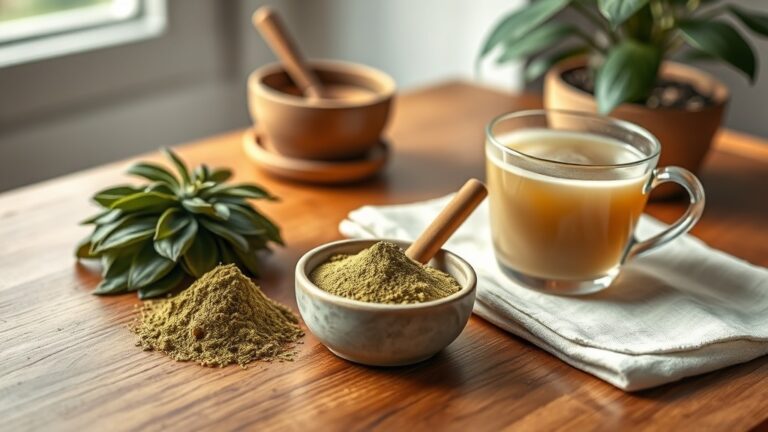



Kratom comes from the leaves of a tropical tree in the coffee family, native to Southeast Asia. People there have used it for generations to manage fatigue and discomfort during long workdays. In the United States, it’s grown into a product used by an estimated 10 to 16 million people, sold as powder, capsules, teas, and extracts. But it’s not a simple herbal supplement — its main compounds act on the same receptors targeted by prescription opioids, which means it carries real benefits and real risks depending on how it’s used.
This guide covers where kratom comes from, how it affects the body, what forms it comes in, and what current research says about its safety.
What Is the Kratom Plant?
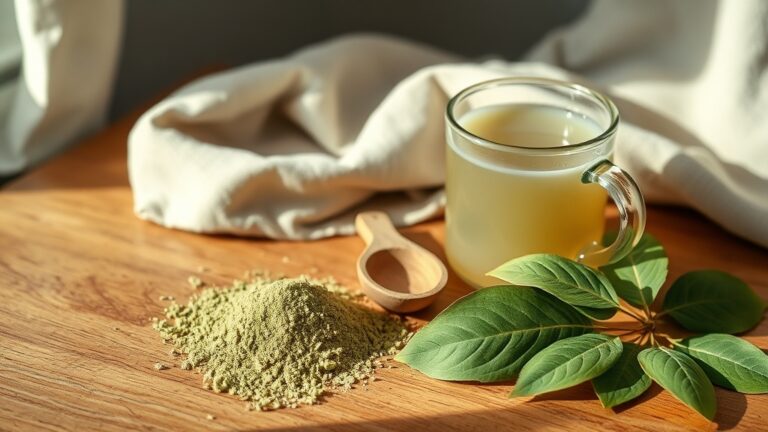
Kratom, or Mitragyna speciosa, is an evergreen tree belonging to Rubiaceae — the same plant family as coffee and gardenia. It grows naturally in the humid lowlands of Indonesia, Malaysia, Thailand, and Myanmar, reaching heights of 33 to 82 feet, with broad, dark green leaves often 14 to 20 centimeters long. Those leaves are the part that matters commercially — harvested, dried, and ground into the powders and extracts sold abroad.
| Category | Detail |
|---|---|
| Scientific name | Mitragyna speciosa Korth. |
| Family | Rubiaceae (coffee family) |
| Native region | Southeast Asia (Indonesia, Malaysia, Thailand, Myanmar, Papua New Guinea) |
| Main commercial growing regions | Kalimantan (Borneo), Sumatra, Sulawesi — Indonesia |
| Local names | Biak-biak, ketum, thom, kakuam |
| Active leaf compounds | 40+ alkaloids; mainly mitragynine (~66% of the alkaloid content) and 7-hydroxymitragynine (~2%) |
The coffee connection isn’t just botanical trivia. Both plants produce stimulating effects at low doses through related alkaloid pathways, and both have long histories among laborers looking for an energy boost. Kratom’s chemistry runs deeper, though — its leaves contain compounds that interact with opioid receptors, something coffee doesn’t do.
A Brief History of Kratom Use
Southeast Asian communities have used kratom for far longer than Western science has studied it. Farm workers in Thailand and Malaysia chewed fresh leaves to push through long days, ease body aches, and lift their mood — not unlike the traditional use of coca leaves in South America. One researcher, Suwanlert, reported in 1975 that kratom use was so common in parts of southern Thailand that as many as 70% of men in some provinces used it regularly.
Western science caught up slowly. Dutch botanist Pieter Korthals gave the plant its first formal description in 1839. Mitragynine, the leaf’s dominant alkaloid, wasn’t isolated until 1921, and scientists didn’t map its full chemical structure until 1964.
Thailand actually banned kratom in 1943 under the Kratom Act, partly to protect government revenue from the opium trade and partly through anti-drug campaigns that lumped it in with heroin and cocaine. That changed in 2021, when Thailand legalized kratom and took it off its narcotics list, acknowledging both its cultural roots and its comparatively low harm profile.
In the U.S., kratom use expanded through the 2000s and 2010s. The DEA floated an emergency ban in 2016 but backed off after pushback from researchers, advocacy groups, and the public. A national survey by Grundmann in 2017 gave the first large-scale picture of who was using kratom and why. Today, the American Kratom Association estimates the user base at 10 to 16 million Americans. When the World Health Organization’s drug dependence committee reviewed kratom in 2021, it decided against recommending international control.
The Alkaloids Behind Kratom’s Effects
Kratom leaf contains more than 40 active compounds, though two get most of the research attention.
Mitragynine makes up 60 to 66% of the alkaloid content in most commercial kratom. Structurally, it’s nothing like morphine or codeine, but it functions as a partial agonist at mu-opioid receptors. It also interacts with adrenergic, serotonin, and dopamine receptors, which explains the energizing effects people feel at lower doses. Researcher Kruegel and colleagues described mitragynine in 2018 as a “biased agonist” — it activates opioid receptors mainly through G-protein signaling while triggering less of the beta-arrestin-2 activity associated with side effects like respiratory depression in classical opioids.
7-hydroxymitragynine, often shortened to 7-HMG, makes up only about 2% of the alkaloid content in whole leaf, but it’s considerably more potent at the mu-opioid receptor than mitragynine. Despite the small quantity, it likely contributes a lot to kratom’s pain-relieving effects at higher doses. Products that concentrate 7-HMG artificially carry different safety concerns than plain leaf kratom, since they push the dose of this more potent compound well beyond what’s naturally present.
Other alkaloids — speciogynine, paynantheine, speciociliatine, and corynantheidine among them — round out the mix. Scientists understand these less well, but they likely play a role in the differences between vein colors and processing types.
How Kratom Works in the Body
A 2012 review by Prozialeck and colleagues laid out the framework most later research has built on: kratom’s effects shift along a spectrum depending on dose, moving from adrenergic-receptor activity toward opioid-receptor activity as the amount consumed increases.
At lower doses — roughly 1 to 4 grams of plain leaf powder — adrenergic stimulation dominates, producing more energy, alertness, and focus. This range behaves more like a stimulant than an opioid. At higher doses, 5 grams and up, mu-opioid receptor activity takes over, bringing sedation, pain relief, and the kind of effects typically associated with opioid drugs.
A 2015 human study by Trakulsrichai and colleagues established some key numbers: kratom reaches peak blood levels around 90 minutes after ingestion, and its elimination half-life is about 9 hours. Plasma levels vary quite a bit between people taking identical doses, largely because of differences in how their liver enzymes — CYP3A4 and CYP2D6 — process the compound.
The biased signaling pattern mentioned earlier has drawn interest from pharmaceutical researchers looking at safer pain medications, since it theoretically lowers the risk of the breathing suppression seen with classical opioids. That said, confirmation in controlled human trials is still limited.
What Effects Does Kratom Produce?
The largest real-world dataset on kratom’s effects comes from a 2017 survey of more than 8,000 U.S. users conducted by Grundmann. A separate set of interviews by Swogger and colleagues in 2015 captured how users describe the experience in their own words.
Effects generally track with dose:
- Low doses (1–4g): more energy and alertness, better mood, easier sociability, sharper focus, mild euphoria
- Moderate doses (3–6g): relaxation, reduced anxiety, moderate pain relief, a warm bodily sensation
- High doses (5g+): strong sedation, significant pain relief, less mental clarity, heavy physical relaxation
Effects typically last three to six hours, with blood levels peaking around 90 minutes after taking it. Vein color shifts the character of these effects within that same framework — white vein leans stimulant, red vein leans sedative and analgesic, and green vein sits in between.
What Forms Does Kratom Come In?
Kratom shows up in several product formats, each with different onset times and trade-offs:
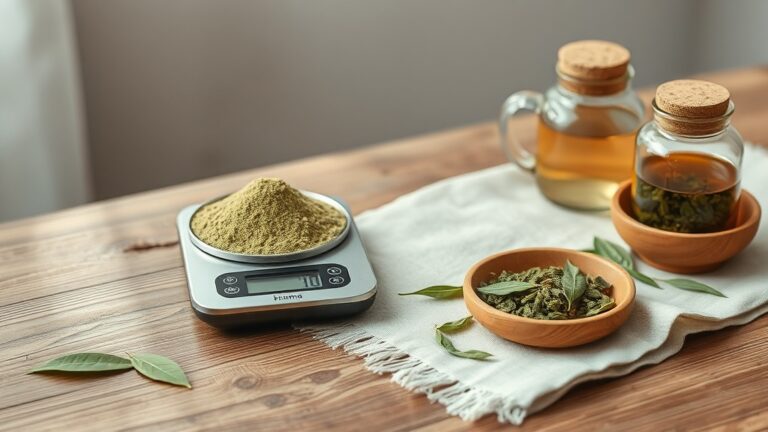
- Powder — ground dried leaf, the most common and flexible form. Works well with a digital scale for precise dosing. Kicks in within 15 to 30 minutes on an empty stomach.
- Capsules — pre-measured powder in gelatin or plant-based capsules. Tasteless and convenient, though onset takes 30 to 60 minutes because the capsule has to dissolve first.
- Tea — powder or crushed leaf steeped in hot water, often with lemon or lime. Onset runs 20 to 40 minutes, though the alkaloid yield may be slightly lower than eating the raw powder.
- Extracts — concentrated alkaloid preparations, much stronger gram-for-gram than plain leaf. Not something to reach for as a beginner, since dosing isn’t equivalent to regular powder.
- Shots — liquid extracts, the fastest-acting commercial option, working in 10 to 25 minutes. Each bottle delivers a fixed dose.
- Gummies — extract in edible form, pre-dosed per piece.
Is Kratom Legal?
At the federal level in the U.S., kratom is not a controlled substance and can be sold legally. That said, state and local rules vary a lot:
- A handful of states — including Alabama, Arkansas, Indiana, Rhode Island, Vermont, and Wisconsin — ban or heavily restrict kratom.
- Several other states have passed Kratom Consumer Protection Act laws, which don’t ban the plant but set age limits, labeling standards, and manufacturing requirements.
- The DEA considered scheduling kratom as a controlled substance in 2016 but dropped the proposal after public comment. It remains unscheduled federally.
- The FDA hasn’t approved kratom for any medical use, and it has taken enforcement action against specific products found to contain contaminants or make illegal drug claims.
Check your local and state laws before buying, since the picture changes fairly often.
Is Kratom Safe?
Kratom’s risk profile depends heavily on dose and frequency. A 2022 study by Smith and colleagues found that adverse effects were most common among people using higher doses on a daily basis — consistent with what’s known about its opioid receptor activity.
Known risks include:
- Dependence. Daily use can down-regulate mu-opioid receptors, leading to physical dependence in a meaningful share of regular users. People who stop after daily use sometimes report insomnia, irritability, muscle aches, and anxiety.
- Enzyme interactions. Mitragynine inhibits the liver enzymes CYP3A4 and CYP2D6, which can interfere with how the body processes many prescription drugs.
- Side effects at higher doses. Nausea, constipation, dizziness, and mental fogginess become more common as intake increases.
- Inconsistent product quality. Without FDA oversight, alkaloid content can vary between brands and batches. Products verified by independent lab testing carry less uncertainty here.
Kratom doesn’t appear to carry the same risk of breathing suppression as classical opioids, thanks to its partial agonist activity and biased signaling. Deaths linked to kratom alone are rare and often involve disputed circumstances — most fatalities tied to kratom involve other central nervous system depressants taken at the same time.
If you decide to try it, start with the lowest dose that works for you, avoid using it daily if you can, watch for signs of rising tolerance, and talk to a doctor if you’re on other medications.
Closing Thoughts
Kratom sits in an unusual spot — a traditional botanical with real pharmacological activity on opioid receptors, sold with little regulatory oversight in much of the U.S. It has genuine uses reported by millions of people, but it also carries dependence risk and interacts with other medications. Anyone considering it should start low, pay attention to frequency of use, and choose products that have been independently tested.
Frequently Asked Questions
Is kratom an opioid?
Not in the classical sense, but its main alkaloid, mitragynine, does act as a partial agonist at mu-opioid receptors — the same receptors targeted by morphine and codeine. That overlap explains why kratom relieves pain, why dependence can develop with regular use, and why some regulators treat it similarly to opioid drugs. Its biased signaling and broader receptor activity still set it apart from classical opioids in important ways.
What’s the difference between white, green, and red vein kratom?
Vein color reflects the color of the leaf’s central vein at harvest and corresponds to different stages of leaf maturity and alkaloid content. White vein, from younger leaves, tends toward stimulation — more energy, sharper focus, quicker onset. Red vein, from more mature leaves often dried longer, leans sedative and pain-relieving, with longer-lasting effects. Green vein sits in the middle, offering moderate stimulation early on and relaxation as it wears off. Processing methods also shift the alkaloid ratios, which is how yellow and gold vein varieties come about.
Is kratom addictive?
Daily use can lead to physical dependence through mu-opioid receptor down-regulation, which causes withdrawal symptoms if you stop. Whether that turns into compulsive, harmful use depends on more than just pharmacology — frequency and dose matter a lot. Occasional use carries low dependence risk; daily high-dose use carries real risk. Most researchers consider kratom’s dependence potential lower than classical opioids, but it shouldn’t be treated as risk-free.
What does kratom look like?
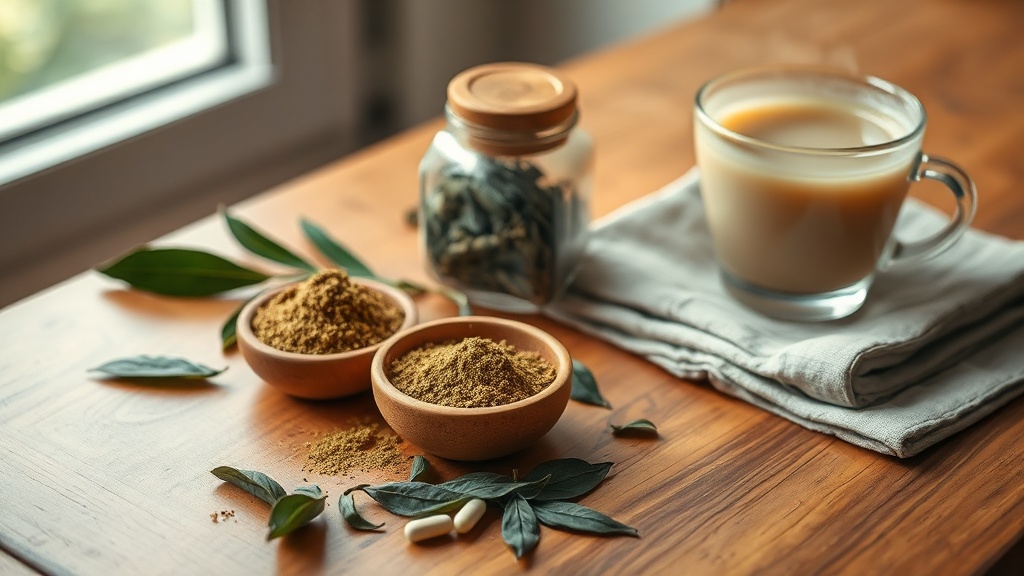
Commercial kratom powder is fine and slightly fibrous, ranging from light green to dark brown depending on vein color and processing. White vein tends to look lighter and more yellow-green; red vein usually appears darker. It has an earthy, grassy smell with a bitter edge. Capsules contain the same powder inside clear, green, or white gelatin or vegetable capsules.
Can you drink kratom as tea?
Yes — tea is one of the oldest traditional preparation methods. Leaves or powder are simmered in water, sometimes with lemon juice to help extract the alkaloids, then strained and drunk. It takes effect a bit more slowly and gently than swallowing raw powder, and some users find it easier on the stomach.
How is kratom different from CBD?
Both are plant-derived and used for wellness purposes, but they act on entirely different systems in the body. Kratom works mainly through opioid and adrenergic receptors; CBD works through the endocannabinoid system and serotonin receptors. Their effects and risks differ accordingly — kratom carries more dependence risk because of its opioid activity, while CBD has stronger evidence behind it for anxiety specifically.
Where does the kratom sold in the U.S. come from?
Nearly all of it is grown in Indonesia, primarily in Kalimantan (Indonesian Borneo), Sumatra, and Sulawesi, then harvested, dried, ground, and exported as leaf or powder. Quality varies a good deal depending on the supplier relationship, drying process, and whether alkaloid testing is done before the product reaches shelves.