



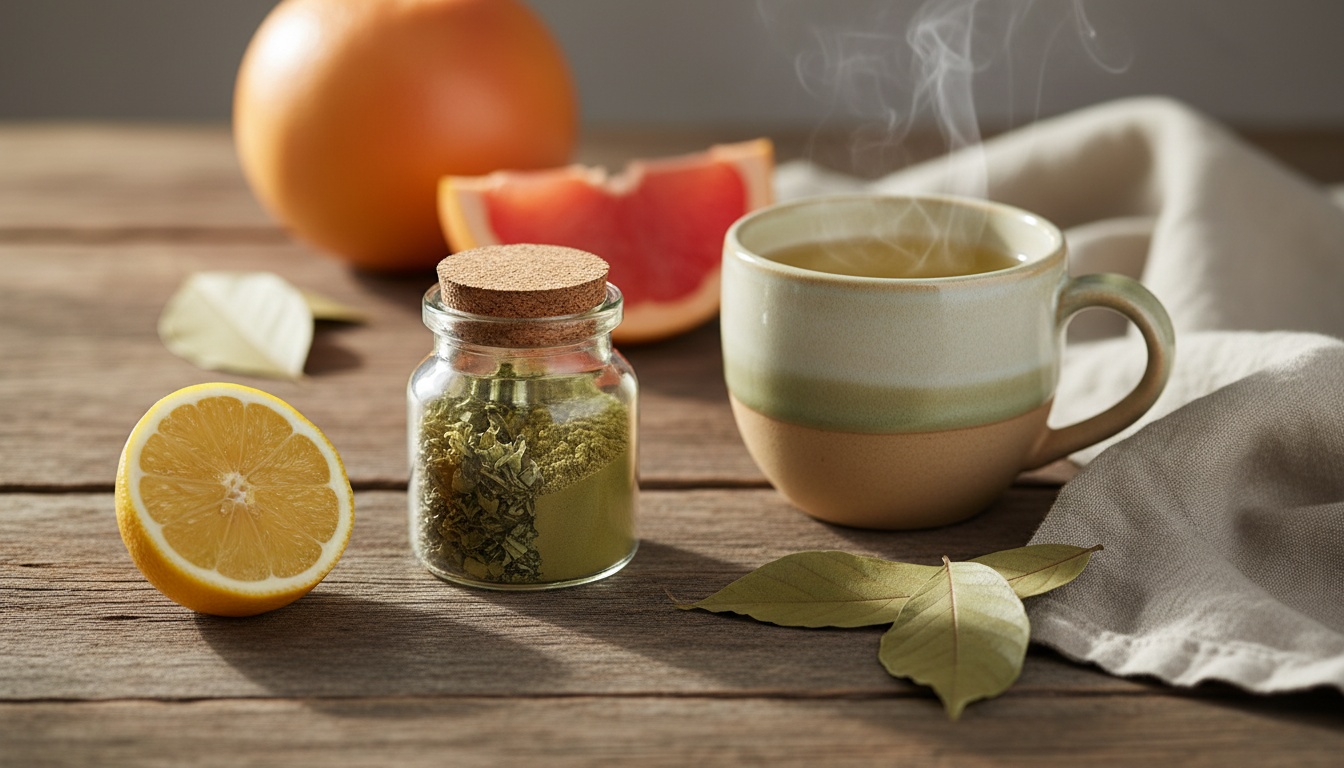
You’ve probably heard the tip before: squeeze some lemon into your kratom. It’s a small thing, but the results aren’t. The taste gets better, sure, but people also notice the effects hit differently—stronger, and often lasting longer.
Most people leave it there. They’ve noticed it works but never asked why. Turns out there are two separate mechanisms at play, and once you understand them, you can actually work with your kratom routine instead of just following a tip you picked up online.
Why Metabolism Slows Down
Mitragynine, the main active compound in kratom, gets broken down by an enzyme in your liver called CYP3A4. That enzyme works at a fairly steady pace, and that pace largely determines how long you feel the effects.
Citrus juice gets in the way of that process.
Grapefruit juice is the best-documented example — it inhibits CYP3A4 activity, and studies show it can cut enzyme levels by nearly half within a few hours, with effects lingering for up to a day. Lemon juice works on the same principle, just less forcefully.
The practical result: your body takes longer to clear mitragynine, so the alkaloids stick around longer and the effects stretch out.
Lemon doesn’t hit as hard as grapefruit in this regard, but it wins on other fronts. It tastes better alongside kratom, it’s in nearly every kitchen, and people have been adding lemon to tea for so long that it barely registers as a “technique.” That familiarity counts for something — a habit you’ll actually keep up beats a stronger effect you’ll abandon after a week.
Extraction Before You Even Swallow
The second mechanism kicks in earlier, before kratom ever reaches your bloodstream.
Citric acid is a natural extractor. When it meets kratom powder, the acidity pulls alkaloids out of the plant material and into the liquid. That means more active compounds are available for your body to absorb in the first place.
Letting the mixture sit makes a difference. Five minutes gives the citric acid some time to work; ten minutes does more. Some people mix their kratom and lemon juice ahead of time specifically to maximize this window.
In effect, you’re doing a mild extraction every time you combine the two — nowhere near as concentrated as a commercial extract, but enough to notice.
Put both mechanisms together and you get a compounding effect: better extraction means more alkaloids get absorbed, and slower metabolism means they stay active longer. Same direction, doubled up.
The Taste Problem Nobody Skips
Kratom doesn’t taste good. It’s earthy and bitter enough that plenty of people quit using it consistently just because they can’t stand the flavor.
Citrus cuts through that. The acidity and natural sugars balance out the bitterness, and lemon in particular works well because its tartness complements the earthy notes rather than fighting them.
This matters more than people give it credit for. Any botanical only works if you actually take it consistently. If the taste makes you dread it, you’ll skip doses or stop altogether. Make it bearable, and you’ll stick with it.
Not all citrus tastes the same, either:
- Lemon – classic tartness, most versatile
- Lime – sharper, more bite
- Orange – sweeter, gentler
- Grapefruit – strongest effect, but a more complex, sometimes bitter taste
Try a few and see what you actually enjoy drinking — preference matters just as much as the chemistry.
Not every drink helps, though. Carbonated beverages, for instance, can work against kratom rather than for it — worth knowing before you reach for a soda.
Comparing the Citrus Options
If raw potentiation is the goal, grapefruit juice wins — it inhibits CYP3A4 more strongly and for longer. But in practice, lemon is what most people actually use, for a few reasons:
It’s already in the kitchen. Grapefruit means a special grocery trip; lemon usually doesn’t.
It tastes better with tea. Grapefruit can taste a bit medicinal to some people; lemon blends in naturally.
It’s familiar. Lemon in tea isn’t a novelty — it’s something people have done for generations, so it doesn’t feel like an experiment.
The gap in potency between lemon and grapefruit is real, but it’s not big enough to outweigh convenience for most people. A juice you’ll actually use beats a slightly stronger one you won’t bother with.
Lime behaves almost the same as lemon. Orange is milder but appeals to anyone who prefers sweetness. And you don’t need much — even a small amount makes a noticeable difference. Some people stick with one citrus fruit; others switch depending on mood. Either approach is fine.
How to Actually Use This
There’s no single right way to combine kratom and citrus. A few options:
- Toss-and-wash swap: Use citrus juice instead of water to wash down your kratom powder. Extraction starts immediately in your mouth and stomach.
- Pre-mix and wait: Stir the powder into juice and let it sit 5–10 minutes before drinking. Longer waits mean more extraction.
- Hot tea: Brew kratom tea as usual, then stir in fresh lemon juice once it’s done. You get both heat-based and acid-based extraction.
- Smoothie: Blend kratom powder into a smoothie with orange juice and other ingredients. The texture hides the powder entirely while still giving you the metabolic benefit.
- Capsule chaser: If you take capsules, drink citrus juice right after. You won’t get the extraction benefit since the kratom is enclosed, but you’ll still slow metabolism.
Whichever method you’ll actually stick with is the right one. Consistency matters more than squeezing out the last bit of optimization.
A Simple Lemon Kratom Tea
Here’s a basic recipe that works for most people:
- Heat 2 cups of water until steaming, but not boiling — boiling can degrade some alkaloids.
- Add your usual kratom dose along with the juice of half a lemon. Stir well.
- Let it steep for 10–15 minutes. Longer steeping pulls out more alkaloids but also more bitterness.
- Strain if you want to, then sweeten with honey or another natural sweetener if needed.
Done right, this tastes more like an herbal tea than straight kratom. The hot water handles most of the extraction, and the lemon juice both boosts that extraction and slows how quickly your body processes the alkaloids afterward.
Feel free to adjust it — swap in different citrus, play with steep time, or add ginger or mint.
Why This Is Worth Knowing
Understanding the mechanics changes how you approach kratom. You’re not just repeating a tip you saw online — you know that citric acid pulls alkaloids out of the plant material, and that citrus compounds slow down how fast your liver clears mitragynine.
That knowledge lets you experiment with intention. Maybe you find grapefruit juice in the morning extends effects through your workday. Maybe lime juice in an evening tea gives you exactly the wind-down feeling you’re after.
Everyone metabolizes botanicals a little differently, so what works best for you won’t necessarily match what works for someone else. But once you understand the underlying science, you can adjust based on your own results instead of guessing.
This combination also illustrates something broader: natural compounds often behave differently — sometimes better — in combination than alone. It’s a pattern worth watching for with other botanicals too.
Quality Still Matters
None of these techniques work well if the kratom itself is inconsistent. Potentiation methods depend on knowing roughly what alkaloid content you’re starting with — you can’t fine-tune something you can’t predict.
At Amazing Botanicals, our kratom is wild-harvested, lab-tested, and processed in AKA GMP-qualified facilities, with every batch checked by a third-party lab. That consistency is what makes techniques like citrus potentiation something you can actually rely on, not just something you hope works this time.
The Bottom Line
Kratom and lemon juice work well together because two separate mechanisms line up in the same direction. Citric acid extracts more alkaloids from the plant material before you even swallow it. Citrus compounds slow down how quickly your liver clears those alkaloids afterward. And on top of both, citrus makes the whole experience taste better, which means you’re more likely to keep doing it.
You don’t need anything complicated — a lemon and a basic understanding of what it’s doing gives you real control over the experience. Experiment a little, pay attention to how your body responds, and adjust from there.
Frequently Asked Questions
How much lemon juice should I use?
Start with the juice of half a lemon per dose. Even a tablespoon makes a difference — adjust based on taste.
Can I use bottled lemon juice instead of fresh?
Yes. It still contains citric acid and works fine for extraction and potentiation, though fresh tends to taste better.
How long should I let the mixture sit?
Five to ten minutes is usually enough. Longer can help, but you’ll still get some metabolic benefit even if you drink it right away.
Does this work with capsules?
Partially. Drinking citrus juice with capsules slows metabolism, but there’s no extraction benefit since the kratom is sealed inside. Powder gets you both effects.
Will citrus make kratom too strong?
It enhances the effects somewhat but doesn’t drastically change them. Stick with your normal dose and adjust only if needed after a few tries.
Where can I find quality kratom for this?
Amazing Botanicals offers lab-tested, wild-harvested kratom in several formats, with details on shipping and returns available on our site.

[…] For quantities over 250 grams meant to last more than three months, this approach works well: […]