



Most people never look twice at the trees lining their street. But some of those leaves have fed and supported human health for thousands of years.
Roughly 80 percent of the world’s population still relies on plant-based remedies passed down through generations, and tree leaves are part of that tradition. Not every leaf on every tree is fit for the table — some are genuinely dangerous — but a handful of species have earned a real place in kitchens and wellness routines around the world.
Why People Eat Tree Leaves at All
Leaves carry different amounts of nutrients depending on the species and the time of year. Pick them in spring and you’ll usually find them tender, mild, and loaded with vitamins. Let them mature through summer and they tend to toughen up and turn bitter, though many still hold onto useful compounds even later in the season.
Humans have eaten tree leaves for all kinds of reasons — hunger, curiosity, and deliberate health practices among them. Indigenous communities built detailed knowledge about which leaves nourished, which supported wellness, and which could kill. As interest in plant-based living grows again, that knowledge is worth revisiting.
Moringa: A Tree Packed With Nutrients
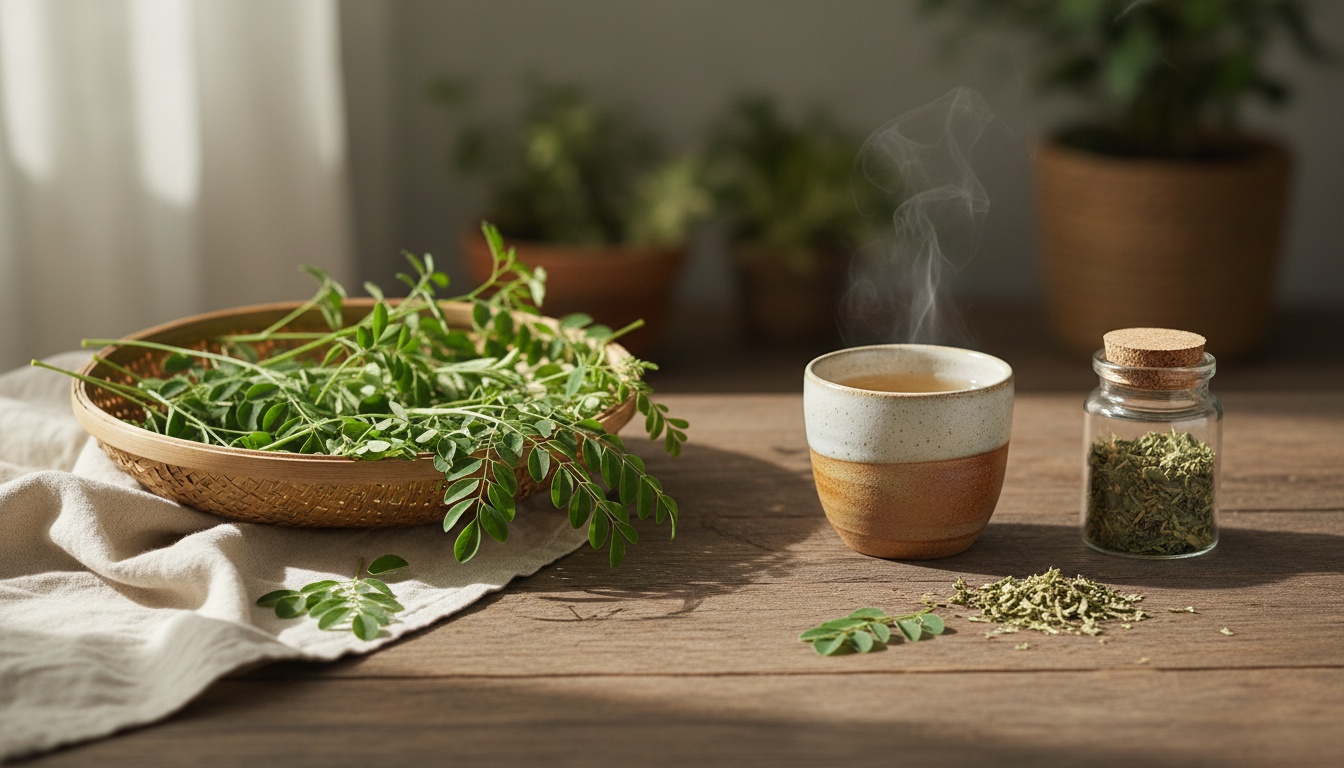
Moringa oleifera may be the most nutrient-dense edible leaf around. Researchers have identified more than 90 active compounds in it, including vitamins, minerals, and antioxidants.
What sets moringa apart is concentration. Ounce for ounce, its leaves pack more beta-carotene than carrots, more vitamin C than oranges, and more calcium than milk.
You can toss fresh moringa leaves into a salad, though most people cook or dry them first. Expect a slightly bitter, earthy taste — something in the same family as matcha or spirulina.
The tree thrives in tropical and subtropical climates, so unless you live somewhere warm, growing your own isn’t realistic. Dried moringa powder is the more practical option for most people. Traditionally, the leaves have been linked to supporting bone strength, immune function, and antioxidant activity.
Kratom: Southeast Asia’s Traditional Energy Leaf
Mitragyna speciosa, a relative of the coffee plant, grows across Southeast Asia. For generations, workers in Thailand, Malaysia, and Indonesia have chewed the fresh leaves or brewed them into tea to push through long, hot days of physical labor.
The leaves contain alkaloids that affect the body in varied ways. Different strains and vein colors are associated with different effects — some lean toward focus and energy, others toward calm and relaxation.
Fresh kratom leaves rarely make it outside Southeast Asia, so most people in the U.S. rely on dried powder, capsules, or extracts. Users often describe reaching for it to stay sharp during a demanding day or to unwind afterward, though results differ based on strain, dose, and individual body chemistry. It remains one of the more talked-about botanicals in natural wellness circles, and research into its traditional and modern uses continues.
Mulberry: A Mild Leaf Even Silkworms Love
Morus trees produce leaves that both humans and silkworms happily eat. Young mulberry leaves have a soft, slightly sweet taste — good raw in a salad or cooked much like spinach.
They bring protein, fiber, and a range of vitamins to the table. Traditional medicine systems have used mulberry leaves to support healthy blood sugar and general wellness.
Mulberry trees grow across temperate regions, and while white, red, and black mulberry all produce edible leaves, the white variety is the one most commonly harvested. Pick them in spring while they’re tender — later in the season they get tough and lose their appeal.
Linden: A Calming European Tradition
Tilia trees have supplied leaves and flowers to European herbal tradition for generations. Linden leaves brew into a mild, pleasant tea, often associated with relaxation and easing respiratory discomfort. The taste is delicate, with a touch of sweetness.
Harvest young leaves in spring; the flowers, which bloom a bit later, are also edible and often the preferred choice for tea. Linden tea is still a household staple in parts of Europe, where people have long turned to it for gentle support with stress, tension, and sleep. The trees grow widely across temperate North America and Europe, so finding one isn’t hard.
Sassafras: An Early American Export
Sassafras albidum was among the first plants shipped from North America to Europe. Its leaves carry a flavor that’s genuinely hard to pin down — a bit citrusy, a bit like root beer, with an aromatic complexity that made it valuable in early trade.
Young leaves work fresh or dried. They’re best known today as the base for filé powder, a staple in Creole and Cajun cooking, or brewed as tea. The tree’s leaves, bark, and roots each carry their own aromatic compounds and were used differently in traditional preparations.
Modern understanding of sassafras is more measured than some of its historical reputation suggested, but it still holds an important place in North American botanical history.
Hawthorn: Long Associated With Heart Health
Crataegus trees produce young leaves that are edible and mild in flavor. Hawthorn leaves, flowers, and berries have all played a role in traditional medicine, particularly for cardiovascular support. The leaves are most tender in early spring.
Add young hawthorn leaves to a salad or steep them for tea — the taste is subtle, with a slight nuttiness. The trees are common across North America and Europe, and their distinctive thorns make identification fairly straightforward, though careful confirmation still matters. Traditional use has centered on heart and circulatory health, an area that continues to draw research attention.
Beech: Unassuming but Edible
Fagus grandifolia offers young leaves that few people think to eat, but they’re perfectly edible. Harvest them in spring, when they’re tender and mild — later on, they develop a more pronounced astringency.
Indigenous peoples used beech leaves both as emergency food and for wellness support, and they contain compounds traditionally linked to healthy inflammation response. Eat them raw or cooked. They won’t win any flavor awards, but they’re safe, easy to find, and nutritious. Beech trees are common throughout eastern North America.
What to Expect in Terms of Taste
Don’t expect fireworks. Most edible tree leaves land somewhere between mild, bitter, and astringent, with texture ranging from tender to fibrous depending on species and timing.
Spring leaves consistently taste better than ones picked later in the year — younger leaves are milder and more tender across the board. Cooking usually helps, too. Steaming, sautéing, or tossing leaves into soup tends to improve both flavor and digestibility compared to eating them raw.
Some people genuinely enjoy the earthy, green taste of tree leaves. Others eat them strictly for the nutritional payoff rather than the experience.
A Safety Warning Worth Repeating
Correct identification isn’t optional — it’s essential. Some toxic species closely resemble edible ones, and mistaking one for the other can make you seriously ill.
Never eat a leaf you can’t identify with total confidence. If there’s any doubt, skip it. Cross-check with multiple resources, learn from experienced foragers, and even after confirming identification, start with a small amount.
Harvest responsibly, too. Take only what you need, leave enough behind for the tree to stay healthy, and avoid areas that might carry pesticide residue or pollution.
Getting Started
If this has piqued your interest, begin with species that are easy to identify. Mulberry and linden are solid starting points — both are common and have a long history of safe use.
For tropical botanicals like moringa and kratom, buying from a trustworthy supplier makes more sense than foraging, since these species don’t grow naturally in most of North America. Quality control matters here more than almost anywhere else.
Look for companies that provide lab testing and clear sourcing information. At Amazing Botanicals, we offer lab-tested, wild-harvested kratom powder and other botanicals processed in GMP-certified facilities.
Whether you’re foraging in your backyard or buying dried leaves online, treat the process with the same curiosity and caution.
The Bigger Picture
Edible tree leaves are an overlooked source of nutrition and traditional wellness knowledge. You don’t have to start eating leaves tomorrow to appreciate the point behind them: plants have supported human health for a very long time, and much of that knowledge still holds up.
Modern research keeps confirming what traditional cultures already understood — the compounds in leaves, bark, and roots can offer real benefits when used correctly. That’s exactly why education matters so much here. Knowing what’s safe, how to identify it, and how to use it properly is the line between a helpful practice and a dangerous mistake.
Tree leaves aren’t a substitute for a balanced diet, and they won’t solve every health concern. But for anyone curious about plant-based wellness, they’re worth a closer look.
Keep in mind that “natural” doesn’t automatically mean “risk-free.” People respond differently to the same plant, so what works for someone else may not work the same way for you. Approach this subject with informed curiosity rather than blind enthusiasm — that’s how this knowledge has survived for generations, and it’s still the smartest way forward.
Frequently Asked Questions
Is it safe to eat any tree leaf?
No. Plenty of tree leaves are toxic. Only eat leaves from species you’ve confirmed as safe through reliable identification.
When should I harvest tree leaves?
Spring, ideally. Young leaves are tender, mild, and at their nutritional peak. Older leaves get tougher and more bitter.
Should tree leaves be eaten raw or cooked?
It depends on the species. Some, like young mulberry leaves, work fine raw. Others taste better and digest more easily when cooked. Either way, start small.
How do I confirm I’ve identified a tree correctly?
Cross-reference multiple sources, ask experienced foragers, and skip anything you’re not sure about. Many local groups offer plant ID workshops for beginners.
Do tree leaves actually offer wellness benefits?
Many have a long history of traditional use for supporting nutrition, energy, and general wellness. Results vary from person to person, and researchers continue to study these traditional applications.
[…] Receptor density reduction — over days to weeks, the cell actually produces fewer receptors overall. This is slower to build and slower to reverse, which is why a single day off rarely resets tolerance for someone using heavily every day. […]