



Shilajit gets called nature’s multivitamin often enough that the label barely registers anymore. But what’s actually in that dark, tar-like resin seeping out of Himalayan rock faces? The answer explains why people have valued this substance for thousands of years, and why it behaves so differently from a typical mineral supplement.
Most supplements isolate one or two compounds and package them in a capsule. Shilajit does the opposite. It arrives as a dense mixture of minerals, organic acids, and other bioactive compounds, all interacting in ways researchers are still working to fully map out.
How the Resin Forms
Shilajit isn’t manufactured — it’s the product of geological time.
Plant material gets trapped between layers of mountain rock. Over centuries, pressure, temperature shifts, and microbial activity break that material down and slowly convert it into a mineral-dense resin. During the warmer months, it seeps out through cracks in the rock, carrying with it compressed traces of ancient plant matter along with minerals absorbed from the surrounding stone.
What emerges is a substance packed with more than 84 identified minerals, most in forms the body can actually use.
What’s in the Mineral Profile
Lab analysis of Shilajit turns up something unusual: it contains every mineral considered essential to human health, plus a long list of trace elements most diets never supply.
The 15 essential minerals — iron, calcium, magnesium, zinc, copper, manganese, chromium, molybdenum, selenium, iodine, potassium, sodium, phosphorus, sulfur, and chloride — cover the basics that keep the body’s core processes running.
Beyond that baseline, Shilajit contains trace elements such as boron, silicon, lithium, germanium, and vanadium, in combinations that would be difficult to reproduce synthetically. These trace minerals show up in small amounts, but they matter — they support enzyme activity, hormone production, and cell repair.
What stands out isn’t just which minerals are present, but the ratios between them. These proportions weren’t engineered; they’re the byproduct of slow geological formation, which is part of why the mineral balance in Shilajit looks so different from anything mixed in a lab.
Fulvic Acid Does the Heavy Lifting
The most functionally important part of Shilajit isn’t a mineral at all — it’s fulvic acid, which makes up roughly 60 to 80 percent of the resin’s total composition.
Fulvic acid has a molecular structure built to bind with minerals and carry them into cells. Without it, a lot of the mineral content in Shilajit would simply pass through the digestive tract unused. It also increases the permeability of cell membranes, which helps nutrients actually reach their target tissue instead of getting filtered out along the way.
A simple way to think about it: fulvic acid isn’t the nutrient itself, it’s what gets the nutrient through the door.
Iron Without the Usual Downsides
Standard iron supplements are notorious for causing stomach upset, largely because they deliver isolated iron in a form that’s hard on digestion.
In Shilajit, iron shows up naturally chelated — bound to organic compounds that make it gentler on the stomach and easier to absorb. It’s also paired with copper and other cofactors that occur naturally in the resin, which helps the body actually use the iron for energy production rather than just processing and excreting it.
Some people notice a boost in energy within days of starting Shilajit, which may come down to better iron absorption supporting improved oxygen transport.
Magnesium and Calcium, Working Together
Bone health, muscle function, and nerve signaling all depend on magnesium and calcium being present in the right proportion to each other.
Many people get more than enough calcium from dairy and fortified foods but fall short on magnesium. That imbalance can undercut how effectively the body uses calcium in the first place.
Shilajit supplies both minerals in a naturally balanced ratio, along with supporting compounds — vitamin D precursors, phosphorus, and trace boron — that help the body metabolize calcium properly. This combination is likely why traditional use of Shilajit often focused on bone strength and muscle function, particularly for older adults.
The Trace Elements Nobody Talks About
The minerals that get the most marketing attention aren’t necessarily the ones doing the most work.
Chromium supports blood sugar regulation and metabolic function. Selenium acts as an antioxidant and supports immune activity. Molybdenum helps process sulfur-containing amino acids. Vanadium plays a role in glucose metabolism, and germanium has been studied for possible immune benefits. Lithium, present only in trace amounts, may support mood stability and cognitive function.
Getting meaningful amounts of these elements from food alone is nearly impossible, and most synthetic supplements skip them entirely. Yet they influence enzyme activity, hormone production, and cell repair — the kind of behind-the-scenes processes that shape how energetic or clear-headed a person feels day to day.
Humic Acid’s Role
Fulvic acid tends to get the spotlight, but Shilajit also contains humic acid, a related compound with its own job to do.
Humic acid acts as a natural binder, latching onto heavy metals and other unwanted substances so the body can clear them more easily. It also supports gut health by encouraging beneficial bacteria and improving nutrient absorption along the digestive tract.
That combination — delivering useful minerals while helping remove less useful substances — is part of what makes Shilajit stand out from a typical mineral blend.
Quality Varies a Lot
Not every batch of Shilajit has the same mineral makeup.
Altitude, source location, harvesting method, and storage conditions all shape the final mineral profile. Resin sourced from higher altitudes tends to carry higher concentrations of beneficial compounds.
Because of that variation, lab testing matters. A reliable supplier should be able to show a detailed mineral analysis, not just make general claims about purity. It’s also worth checking how the resin was purified — traditional purification methods tend to preserve fragile organic compounds better than aggressive chemical processing.
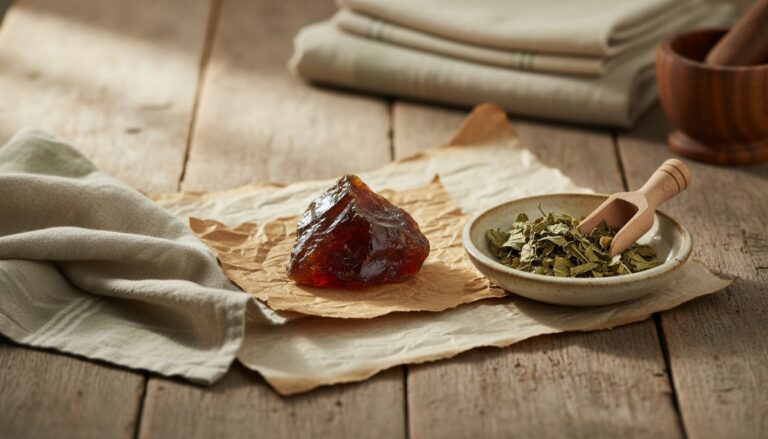
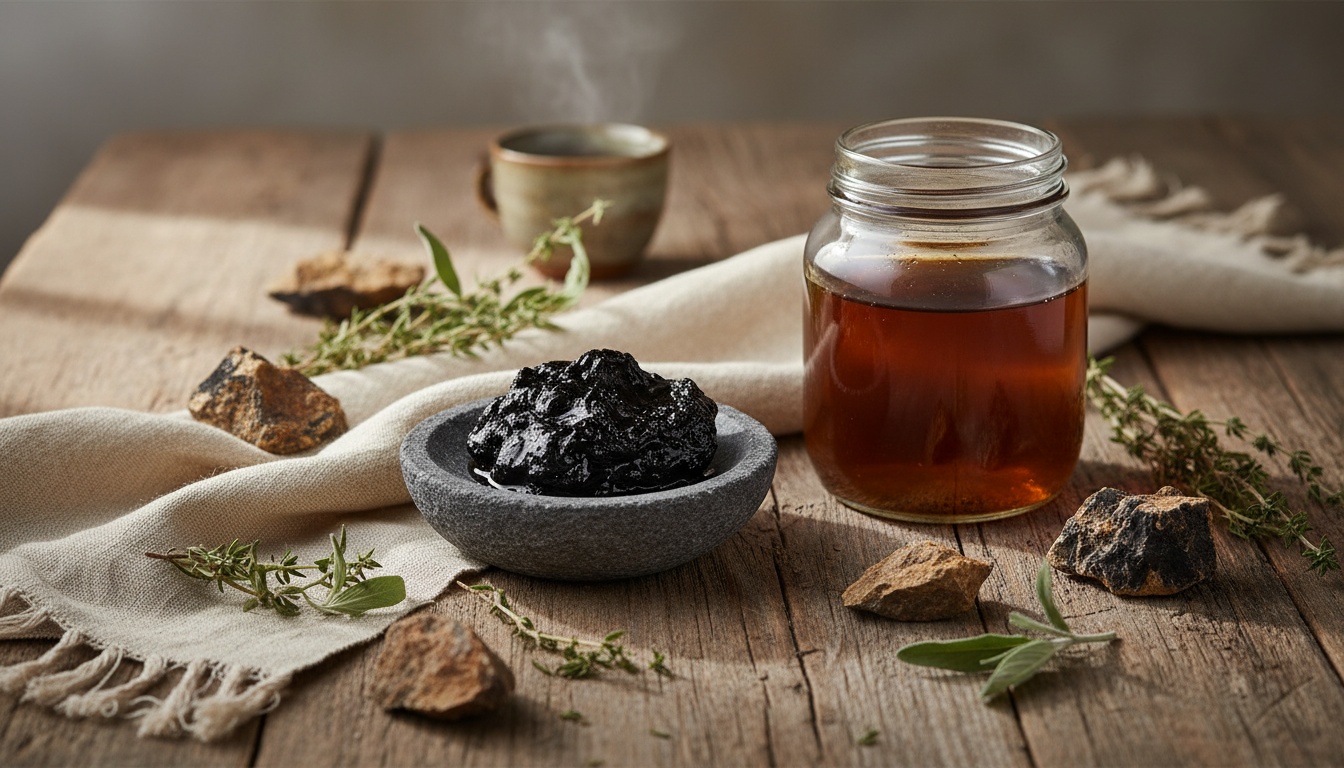
Authentic Shilajit should be dark brown to black, sticky, and earthy-smelling. It should dissolve fully in warm water without leaving grit or residue behind.
How These Minerals Actually Work Together
None of these minerals operate alone inside the body.
Iron needs copper to be properly utilized. Zinc supports immune function, but too much without balanced copper can create its own deficiency. Magnesium activates hundreds of enzymatic reactions, but works best alongside calcium, potassium, and sodium in the right proportions.
That interdependence is part of why Shilajit sometimes produces effects that seem bigger than what any single mineral would predict. It’s not adding one nutrient to the mix — it’s supplying a broad mineral foundation that lets several systems function more smoothly at once. Fulvic acid helps deliver these minerals where they’re needed, while humic acid clears some of the obstacles that would otherwise limit absorption.
Old Practice, Modern Confirmation
For centuries, traditional practitioners treated Shilajit as a general nutritional support rather than a remedy aimed at one specific complaint. Modern mineral analysis backs up that older view — the resin does appear to offer broad nutritional support rather than a narrow, targeted effect.
The main thing to understand is that Shilajit isn’t valuable because of any single mineral inside it. It’s valuable as a complete mineral base that supports the body’s own capacity to maintain energy and function well.
Frequently Asked Questions
How many minerals does Shilajit actually contain?
More than 84 minerals and trace elements, including all 15 minerals considered essential for basic bodily function.
How is Shilajit different from a standard mineral supplement?
Synthetic supplements typically isolate individual minerals. Shilajit delivers minerals in naturally chelated forms alongside fulvic acid, which improves absorption, and in ratios shaped by geological processes rather than a lab formula.
How much Shilajit should someone take per day?
Many people start with a portion about the size of a grain of rice — roughly 300 to 500 mg — dissolved in warm water or milk, and find that sufficient.
How do you know if Shilajit is authentic?
Look for a dark brown to black resin with a sticky texture and earthy smell. It should dissolve completely in warm water without leaving residue, and it should come with lab results confirming mineral content and purity.
Does where Shilajit comes from affect its mineral content?
Yes. Altitude and location have a real impact — resin sourced from very high elevations, generally above 16,000 feet, tends to carry higher concentrations of beneficial compounds.
Can Shilajit be combined with other supplements?
Many people do combine it with other supplements, and fulvic acid may help improve absorption of other nutrients taken alongside it. Anyone with specific health concerns should check with a healthcare provider before adding it to a routine.
How quickly do people notice effects?
Some people report changes within the first week, often more energy or better sleep. Effects can become more noticeable over time as mineral stores build up.
Should it be taken with food or on an empty stomach?
Either works, though some people find it easier on digestion with food. Morning use is common, since the energizing effect can interfere with sleep if taken too late in the day.