



Nano kratom has been showing up more often on shelves and in online shops, and if you’re used to buying regular kratom powder, the name alone might throw you off. It sounds like some kind of lab-engineered product. In reality, the idea behind it is fairly simple once you break it down.
For related reading, check our guide on kratom dosage recommendations.
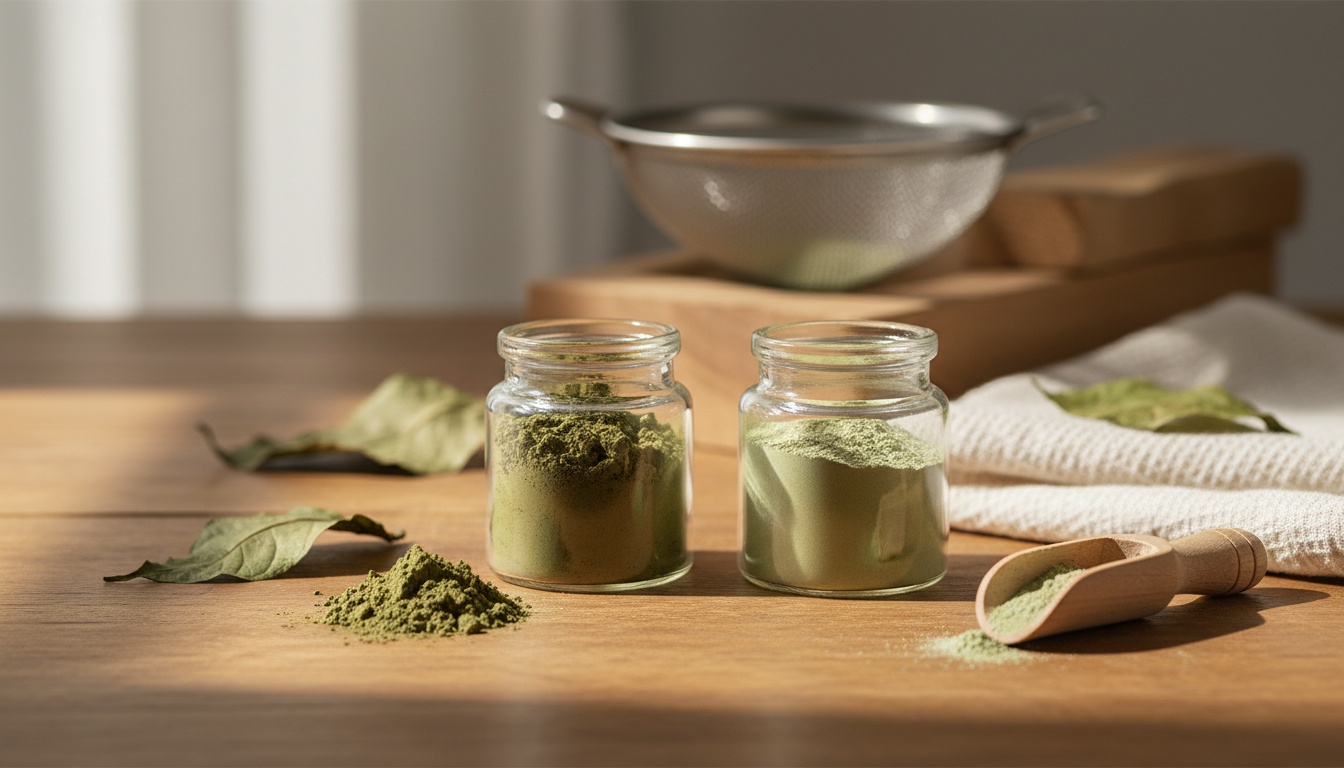
At its core, nano kratom is just kratom powder that’s been milled down to extremely tiny particle sizes—usually somewhere between 1 and 10 microns. To put that in perspective, a strand of human hair measures about 70 microns across. So these particles are far smaller than anything visible to the naked eye.
This piece covers what nano kratom actually is, how manufacturers produce it, how it compares to standard powder, and whether the size difference actually changes anything for the person using it. Before trying anything new, it’s also worth getting familiar with the current legal situation surrounding kratom.
What Nano Kratom Actually Is
First, let’s clear up what nano kratom is not. It’s not a new strain, not a different plant species, and it hasn’t been chemically modified or boosted in any way.
It’s the same kratom you already know, just run through specialized milling equipment to shrink the particles down further.
The plant itself doesn’t change. Leaves get harvested, dried, and ground the same way they always have. The difference happens at the tail end of production, when the powder gets an extra pass through equipment designed to break it down to a much finer scale.
Manufacturers rely on different tools to do this—disc mills, ball mills, jet mills—and the results vary depending on which method they use. Some products genuinely reach nano scale, meaning under 100 nanometers. Others land in the micron range and are more accurately described as ultra-fine or micronized powder rather than true nano kratom.
Still, “nano kratom” has become the term everyone uses in marketing, regardless of the actual particle size behind the label.
How It’s Produced
Making standard kratom powder is a fairly basic process. Dried leaves go through conventional grinding equipment and come out as powder, typically with particles ranging from 50 to 200 microns.
Getting to nano or ultra-fine size takes an additional step. After the initial grind, the powder passes through specialized mills that break the particles down even further, using a few different approaches:
- Disc mills spin rotating discs with narrow gaps, shearing particles into smaller pieces.
- Ball mills tumble the powder together with small grinding balls, gradually wearing particles down.
- Jet mills blast particles with high-pressure air, causing them to collide with each other and the chamber walls until they fracture.
Each approach comes with trade-offs — consistency, speed, and the risk of contamination all vary by method. The equipment also needs regular upkeep, since worn components under heavy mechanical stress can shed metal particles or other contaminants into the product.
Responsible manufacturers test the finished powder to confirm particle size and check for anything that might have leached in during processing.
What Actually Changes With Smaller Particles
Reducing particle size does create some noticeable differences, though not the ones you might expect.
Texture and mixability. This is the change people notice first. Nano kratom blends into liquid far more smoothly than regular powder — less clumping, less grit, less residue settling at the bottom of your glass. If the chalky texture of traditional powder has ever bothered you, this is the main problem nano kratom solves.
Surface area. Breaking particles down into smaller pieces increases the total surface area dramatically. More surface area means more contact with digestive fluids, which in theory could influence how quickly the body processes it.
Dissolution speed. Smaller particles dissolve faster once mixed with liquid. Some people notice the effects seem to kick in sooner with nano kratom compared to regular powder.
What doesn’t change is the alkaloid content. Grinding kratom finer doesn’t create new compounds or destroy existing ones. A gram of nano kratom and a gram of regular powder from the same batch contain the same alkaloids.
Does Smaller Particle Size Make a Real Difference?
This is where marketing claims sometimes get ahead of the evidence.
In pharmaceutical research, shrinking particle size has been shown to improve how well certain compounds get absorbed. Grinding a drug down to nano scale can sometimes help the body take it up more efficiently, raising blood concentration levels.
Kratom, though, isn’t a pharmaceutical compound, and there’s not much research specifically looking at nano-milled kratom.
Anecdotally, some users say nano kratom feels faster-acting or more potent. Others notice nothing beyond the smoother texture. What you experience likely depends on things like your metabolism, whether you’ve eaten recently, and how your body typically responds to kratom in general.
The physical changes — more surface area, faster dissolving — are real. Whether they translate into a meaningfully different experience for you isn’t something anyone can predict; you’d have to try it yourself.
It’s fair to be skeptical of vendors claiming nano kratom is “stronger” or “more potent.” The alkaloid content hasn’t changed. Any difference in effect would come down to absorption speed, not the kratom itself being more powerful.
Should You Try Nano Kratom?
Nano kratom isn’t an upgrade over regular powder — it’s just a different format. Whether it’s worth trying comes down to personal preference.
Nano kratom might appeal to you if you don’t like the gritty texture of regular powder, want something that blends easily into drinks, or you’re curious whether faster dissolving changes anything for you.
Regular powder might make more sense if you’re already happy with what you use, the price gap doesn’t seem worth it, or your usual vendor doesn’t offer a nano version with solid quality documentation. Whichever you choose, check the shipping and return policy before ordering.
Neither option is objectively better. It’s really about matching the product to what you actually want out of it.
What to Look for Quality-Wise
If you decide to give nano kratom a try, hold it to the same standards you’d apply to any kratom product.
Look for vendors who publish third-party lab results showing alkaloid content and screening for contaminants. Confirm the kratom comes from reputable farms and is processed in facilities following Good Manufacturing Practices.
For nano kratom specifically, it’s worth asking about the milling equipment and how often it’s maintained. Poorly maintained mills can introduce contamination, so you want assurance that the vendor takes equipment upkeep seriously.
Keep in mind that fine particle size alone says nothing about quality. Milling low-grade kratom down to nano scale just gives you very fine low-grade powder. The source material and overall processing standards matter far more than how small the particles are.
Common Questions
Is nano kratom stronger than regular powder?
No. The alkaloid content is the same as regular powder from the same source — grinding doesn’t change the chemistry. Some people notice faster onset, but that’s not the same thing as increased strength.
Does it cost more?
Generally, yes. The extra processing and specialized equipment usually push the price up. Whether it’s worth the premium depends on how much you value the smoother texture and easier mixing.
Can I use my usual serving size?
Yes. Since the alkaloid content per gram doesn’t change, there’s no reason to adjust your amount unless you notice your body responding differently.
How should it be stored?
The same way as regular kratom powder — sealed in an airtight container, away from light, heat, and moisture. Because the increased surface area exposes it to slightly more air, keeping it well-sealed matters a bit more here.
Is it safer than regular powder?
Not automatically. Safety comes down to the quality of the source material, how clean the processing facility is, and proper lab testing — not particle size. Both forms need to come from vendors who are transparent about their quality control.
Closing Thoughts
Nano kratom is, at its heart, the same plant material you already know, just milled down further. The texture and mixing benefits are real, and some people notice a difference in onset speed, but the alkaloid content stays the same no matter how fine the powder gets. The choice between nano and regular powder comes down to personal preference — and either way, the source and quality control matter more than the particle size ever will.