

Microdosing has become a popular way to approach plant-based wellness — small, measured amounts instead of large, occasional doses. For people curious about botanical edibles like kratom gummies, kava chocolates, or blue lotus tea, this method offers a way to experiment carefully rather than jumping in with a full serving.
What Microdosing Actually Means
At its core, microdosing means taking a small enough amount of a botanical to notice a mild effect, without the intensity of a full dose. The goal is to find your minimum effective amount — the smallest quantity that gives you what you’re looking for, whether that’s a bit more focus or a calmer mood.
This differs from how most people first try botanicals, which is often trial and error with larger amounts. Microdosing instead prioritizes consistency. Many users say it helps them avoid building tolerance and sidesteps the unwanted side effects that can come with bigger doses.
Edibles suit this approach well because they come pre-measured. A gummy or capsule takes the guesswork out of portioning that you’d otherwise face with loose powder or brewed tea, and they’re easier to carry around and use discreetly.
Why Edibles Behave Differently in the Body
The idea of taking small, regular doses isn’t new — many traditional cultures consumed plants this way long before “microdosing” became a wellness buzzword.
Kratom, for example, contains alkaloids such as mitragynine and 7-hydroxymitragynine that interact with receptors in the body. Users often describe smaller amounts as more energizing, while larger amounts tend to bring on relaxation or sedation. That dose-dependent pattern is part of what makes microdosing appealing — you’re aiming for a specific zone of effect, not just “more” or “less.”
Edibles also change how the body absorbs these compounds. Because they pass through digestion first, the effects tend to show up more slowly and last longer than with powders:
- Onset: roughly 30–90 minutes (versus 15–30 minutes for powders)
- Duration: about 4–6 hours (versus 2–4 hours)
- A steadier, more gradual effect overall
- Easier to predict once you know how your body responds
What Users Commonly Report
Everyone’s experience differs, but people who microdose botanical edibles tend to describe a few recurring themes.
Focus and mental clarity. Small amounts of white or green kratom strains are often linked to improved concentration — the trick is finding a dose that sharpens focus without causing jitteriness.
Mood support. Many people use botanical edibles as part of a broader effort to feel more balanced, though this varies a great deal from person to person.
Stress relief. Kava and red kratom strains, in small amounts, are frequently associated with a sense of calm. Microdosing helps some users find that middle ground — relaxed but still able to function.
Evening wind-down. Some people take a small dose of a relaxing botanical before bed, reporting that it helps them settle down without the grogginess sometimes associated with larger doses.
A note on these claims: they reflect personal experience and traditional use, not clinical proof. These products aren’t meant to diagnose or treat any condition, and it’s worth talking to a healthcare provider before adding anything new to your routine.
Getting Started: A Simple Protocol
1. Pick a starting dose.
For kratom edibles, most experienced users recommend beginning around 0.5–1 gram of kratom content. In practice, that could look like:
- Half of a standard 2-gram gummy
- One low-dose capsule
- A small piece of kratom chocolate
For kava, blue lotus, or other botanicals, start below the manufacturer’s suggested minimum serving.
2. Choose your timing.
Try your first dose on a day with no pressing obligations, so you have several hours to notice how you feel. Energizing strains often suit mornings; relaxing ones tend to work better in the evening. Adjust based on what fits your schedule.
3. Keep notes.
A simple log helps a lot. Track the product and amount, the time you took it, when effects started and faded, what you noticed, and any discomfort. Rate the overall experience so you can compare sessions later.
4. Adjust slowly.
Give it three to five days before changing your dose. If you didn’t notice much, increase in small steps — around 0.25–0.5 grams for kratom. If the effects felt too strong, scale back.
Common Forms of Botanical Edibles
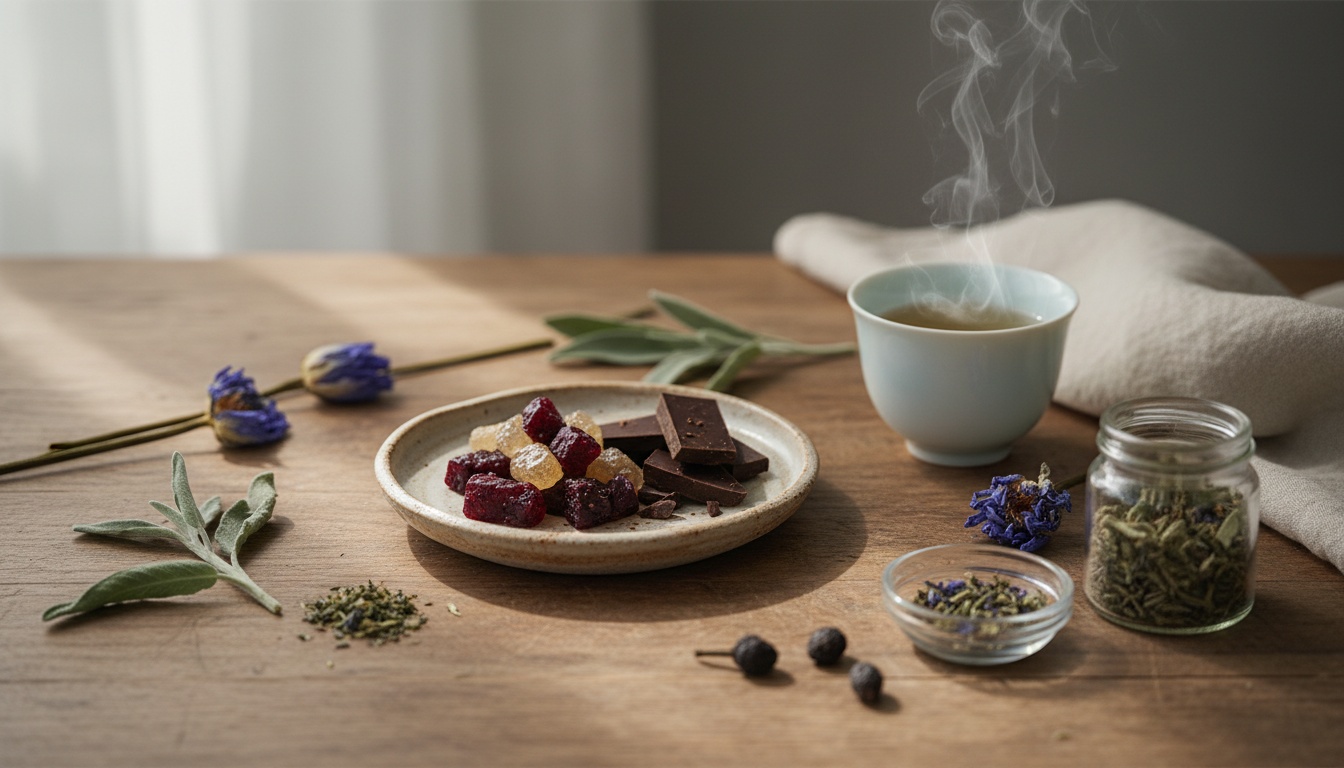
Kratom gummies are probably the most popular choice. They taste good and usually list kratom content per piece, so you can cut them for a smaller dose if needed.
Kratom capsules offer the most precise, tasteless option. You can open one and measure out a smaller amount if a full capsule is too much.
Kratom chocolates and candies mask the plant’s natural bitterness and feel more like a treat than a supplement.
Botanical teas let you control your portion easily — drink half a cup, save the rest for later, and get some hydration in the process.
Tinctures and liquid extracts are more concentrated but give you the tightest dosing control, since you can measure exact drops.
Dosage and Safety Basics
Start low, go slow
This is the single most important rule. You can always take more later, but you can’t undo a dose once it’s in your system. Impatience — expecting a big, obvious effect right away — is the most common reason people overshoot.
Spacing your doses
- Leave at least 4–6 hours between doses
- Avoid daily use at first; try every other day or two to three times a week
- Take regular breaks — at least two to three days off per week
- Consider a full week off once a month to reset your tolerance
Signs you’ve taken too much
Watch for nausea, dizziness, unusual sedation or overstimulation, headaches, or irritability. Any of these suggest your dose was higher than it should have been.
When to stop
If side effects persist, if you find yourself needing more to get the same effect, or if you feel you can’t function without your botanical routine, stop and talk to a healthcare professional.
Why Quality Matters More Than You’d Think
With microdosing, you’re chasing subtle effects — and low-quality products make that nearly impossible to achieve consistently.
Look for lab testing. Reputable products come with current, batch-specific lab results showing alkaloid content, and confirming the absence of heavy metals, pesticides, and microbial contamination.
Look for transparency. Trustworthy sellers will tell you where their botanicals come from, how they’re processed, what else is in the edible, and how their quality control works.
Look for GMP certification. Products made in facilities following Good Manufacturing Practices — ideally certified by the American Kratom Association for kratom specifically — tend to be more reliable.
Look for consistency. Potency should be roughly the same from piece to piece and batch to batch. If it varies wildly, dialing in your ideal dose becomes guesswork.
Legal and Health Considerations
Laws around kratom and other botanicals vary widely by location. Before buying or using anything, check your state and local regulations, review any relevant workplace policies, and consider restrictions if you plan to travel with these products.
Botanicals can also interact with medications or existing health conditions. It’s worth checking with a healthcare provider first if you take prescription medication, have liver, kidney, or heart issues, are pregnant or breastfeeding, have a history of substance use, or are under 18.
A few general safety habits apply no matter what:
- Don’t drive or operate machinery after taking any dose, however small
- Don’t mix with alcohol or other substances
- Store products securely, away from children and pets
- Don’t share your supply with others
- Be upfront with your doctor about what you’re using
Building a Routine That Works
Some people prefer a fixed schedule — say, Monday, Wednesday, and Friday mornings. Others take a more intuitive approach, using botanicals only when they feel they need support, while still respecting minimum time gaps. Some tailor their choice to the day: an energizing strain for a demanding workday, something calming for a stressful evening.
Whatever approach you take, microdosing works best alongside other wellness habits — decent sleep, good nutrition, hydration, regular movement, and some kind of stress management practice.
It’s worth checking in with yourself periodically. Are you getting what you wanted from this? Are your doses creeping upward? Is anything about this routine causing problems in your daily life? If the answer to any of these gives you pause, that’s a sign to step back or adjust.
Mistakes Worth Avoiding
The biggest one is rushing — taking more too soon because you don’t feel an immediate, dramatic effect. Microdosing is about subtlety, not intensity.
Switching brands or products constantly also makes it hard to know what’s actually working, since you lose your baseline. Stick with one trusted source while you’re calibrating your dose.
Pay attention to how you’re feeling generally, too. If you’re already stressed, unwell, or dealing with a health issue, that’s not the time to experiment with a new botanical routine.
And don’t treat botanicals as medication — they’re not a fix for underlying health problems, and they work best as one piece of a broader wellness approach, not a replacement for proper care. Finally, don’t forget that tolerance can build even with small doses. Regular breaks matter.
Closing Thoughts
Microdosing botanical edibles is less about chasing a strong effect and more about finding a quiet, sustainable level of support that fits into your life. It takes patience, good products, and a willingness to pay attention to how your body responds.
What works for someone else may not work for you, and that’s fine — this is a personal process. Keep records, adjust slowly, and don’t be afraid to take a break if something feels off.
Think of it as one part of a larger wellness picture, not a standalone solution. Paired with solid sleep, nutrition, and stress management, botanical edibles can be a reasonable addition to a healthy routine — as long as you start small, stay consistent, and listen to what your body tells you.
This article is for informational purposes only and has not been evaluated by the FDA. These products are not intended to diagnose, treat, cure, or prevent any disease. Talk to a healthcare professional before starting any new wellness routine, particularly if you have existing health conditions or take medication.
Frequently Asked Questions
How long before I feel anything?
Usually 30–90 minutes, with peak effects around the two-to-three-hour mark. Edibles take longer to kick in than powders, but the effects last longer too.
What’s a safe starting amount?
For kratom, 0.5–1 gram of kratom content. For other botanicals, try half the manufacturer’s suggested minimum.
How often can I do this?
Two to three times a week to start, with at least a day between doses, plus regular breaks to avoid building tolerance.
Can I cut a gummy or open a capsule for a smaller dose?
Yes — just make sure the botanical content is evenly distributed before you divide it.
What if I don’t notice anything?
Wait three to five days, then increase slightly (0.25–0.5g for kratom). Remember, the effects are meant to be subtle.
Should I avoid anything while microdosing?
Alcohol and grapefruit juice can intensify effects. Taking edibles on an empty stomach may speed things up and make them stronger.
How can I tell if a product is good quality?
Check for third-party lab testing, GMP certification, clear sourcing, and consistent potency across batches.
Can I drive after taking a microdose?
No. Never drive or operate machinery after any dose, no matter how small — effects can be unpredictable.