
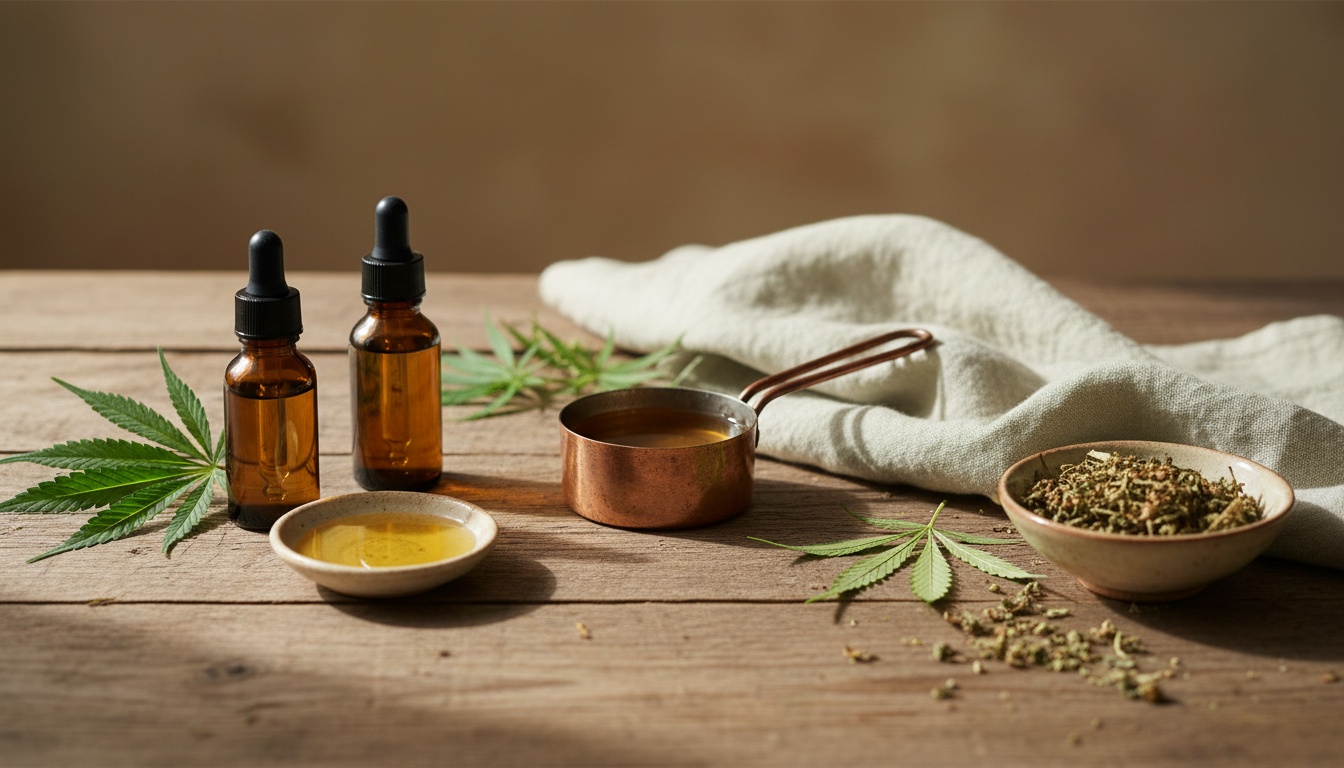
Walk down any CBD aisle and you’ll see two bottles that look almost identical, both promising the same plant extract. But the ingredient list tells a different story — and that difference affects how much CBD your body actually absorbs. One formulation can push absorption rates as high as 30%, while the other tends to top out around 20%.
The gap comes down to what’s mixed with the CBD and how your body handles that base ingredient.
Two Different Bases, Two Different Products
CBD oil pairs cannabidiol with a carrier oil — usually MCT, hemp seed, or olive oil. These fats help the body take in cannabinoids more efficiently than if you consumed CBD extract on its own.
Tinctures, on the other hand, use alcohol. It does two jobs at once: pulling cannabinoids out of the raw hemp during extraction, and then improving absorption once you take the finished product.
That single distinction — oil versus alcohol — ripples through nearly every other difference between the two.
How Extraction Shapes the End Product
Most CBD oils are made using CO2 extraction. Pressurized carbon dioxide draws cannabinoids out of hemp without leaving behind chemical residue, which is why a lot of buyers gravitate toward oils marketed this way.
Tinctures usually come from alcohol extraction instead. Hemp material sits in high-proof alcohol, sometimes with light heat applied, until the cannabinoids dissolve into the liquid. It’s a slower process, but it produces a distinct kind of product.
Neither extraction method beats the other outright — they’re just suited to different formulations and different goals.
Absorption: Where Tinctures Have an Edge
This is the category where tinctures generally win.
Taken under the tongue, tinctures often reach 20-30% bioavailability. The alcohol helps cannabinoids move through the thin tissue there and into the bloodstream more efficiently.
CBD oils, taken the same way, typically land in the 10-20% range. The oil base still works, but it doesn’t boost absorption as effectively as alcohol does.
That said, both formats are flexible. You can take either one sublingually, add it to food or drinks, or use it topically, depending on what you’re trying to accomplish.
Everyday Differences Worth Knowing
Mixing with drinks: Tinctures blend into water-based beverages more smoothly, since alcohol doesn’t separate the way oil does.
Topical use: Oils tend to perform better on skin. They spread easily, and many people report better results applying oil directly to a specific spot.
Shelf life: Tinctures usually last longer. Alcohol acts as a natural preservative, extending the product’s usable life compared to oil-based versions.
Taste: This one’s personal. Some people like the neutral flavor of carrier oils; others don’t mind the slight bite alcohol gives a tincture.
How to Decide Between Them
Start by asking how you feel about alcohol. If you’d rather avoid it altogether, oil is the clear choice. If a small amount of alcohol isn’t a concern, a tincture will likely give you better absorption.
Next, think about how you plan to use it. If mixing CBD into drinks is the goal, go with a tincture. If you want something for topical application, oil is the better fit.
If maximizing bioavailability per dose is your top priority, tinctures usually deliver more. If you’d rather have flexibility across multiple methods of use, oil offers that versatility.
And if you’re a regular user, factor in storage. Tinctures tend to hold their potency longer thanks to the alcohol content.
What to Look for in Either Format
No matter which you choose, third-party lab testing should be non-negotiable. Reputable brands test for potency, pesticides, heavy metals, and residual solvents, so you know exactly what’s in the bottle.
Check how the product was extracted. CO2 extraction for oils and proper alcohol extraction for tinctures are both signs of solid manufacturing.
Look closely at the carrier oil or alcohol base itself. MCT oil, hemp seed oil, and organic ethanol are all good signs. Steer clear of products loaded with unnecessary additives or artificial ingredients.
Finally, consider the brand’s track record. Companies with an established history and consistent customer feedback tend to have tighter quality control than newer, unproven names.
Getting Started Safely
If you’re new to CBD, start low regardless of which format you pick — around 10mg a day is a reasonable starting point. Adjust from there based on how your body responds. (Our beginner’s guide to CBD covers dosage and product selection in more detail if you want to go deeper.)
Give your system time to adjust before judging results. Keep notes on how each format affects you — how fast it kicks in, how long it lasts, and whether you notice a difference in effectiveness.
Keep in mind that everyone responds differently. What works well for someone else may not be the right fit for you.
Bottom Line
The choice between oil and tincture really comes down to your priorities.
Go with a tincture if you want stronger absorption, a longer shelf life, and easy mixing with drinks — as long as the alcohol taste doesn’t bother you.
Go with oil if you’d rather avoid alcohol, want to use CBD topically, or just want the most flexible product overall.
Both can deliver a quality experience as long as they come from a manufacturer that tests its products and is transparent about sourcing. Your lifestyle, goals, and personal preferences should be what tips the scale — neither option is wrong, just different tools built for different approaches to plant-based wellness.
If you’re curious about other botanical options, kratom is worth a look — it comes in powders, capsules, extracts, teas, shots, gummies, and more, each offering a different way to fit botanicals into your routine. Our blue lotus vs. CBD comparison is also worth checking out if you’re weighing other natural options.
Frequently Asked Questions
Which works faster?
Tinctures usually act faster when taken sublingually, thanks to better absorption. Both formats typically show effects within 15-45 minutes when held under the tongue.
Can I cook with both?
You can, but oil works better for cooking since heat causes the alcohol in tinctures to evaporate. Oil blends more naturally into recipes involving fats.
How long do they last once opened?
Tinctures typically last 3-5 years thanks to alcohol’s preservative effect. Oils usually stay potent for 1-2 years if stored in a cool, dark place.
Is there enough alcohol in a tincture to cause intoxication?
No. A standard dose contains a small amount of alcohol — typically less than what you’d find in vanilla extract or mouthwash.
Which is better for beginners?
Both work fine. Pick oil if you want to avoid alcohol or plan on topical use. Pick a tincture if you want stronger absorption and don’t mind trace alcohol.
Can I use both at once?
Yes, but start with smaller doses of each so you don’t end up taking more CBD than you intended. Many people just stick to one format for consistency.
Why does pricing vary so much?
Extraction method, lab testing, sourcing, and concentration all affect price. Always check the lab report and ingredient list before comparing products on cost alone.