
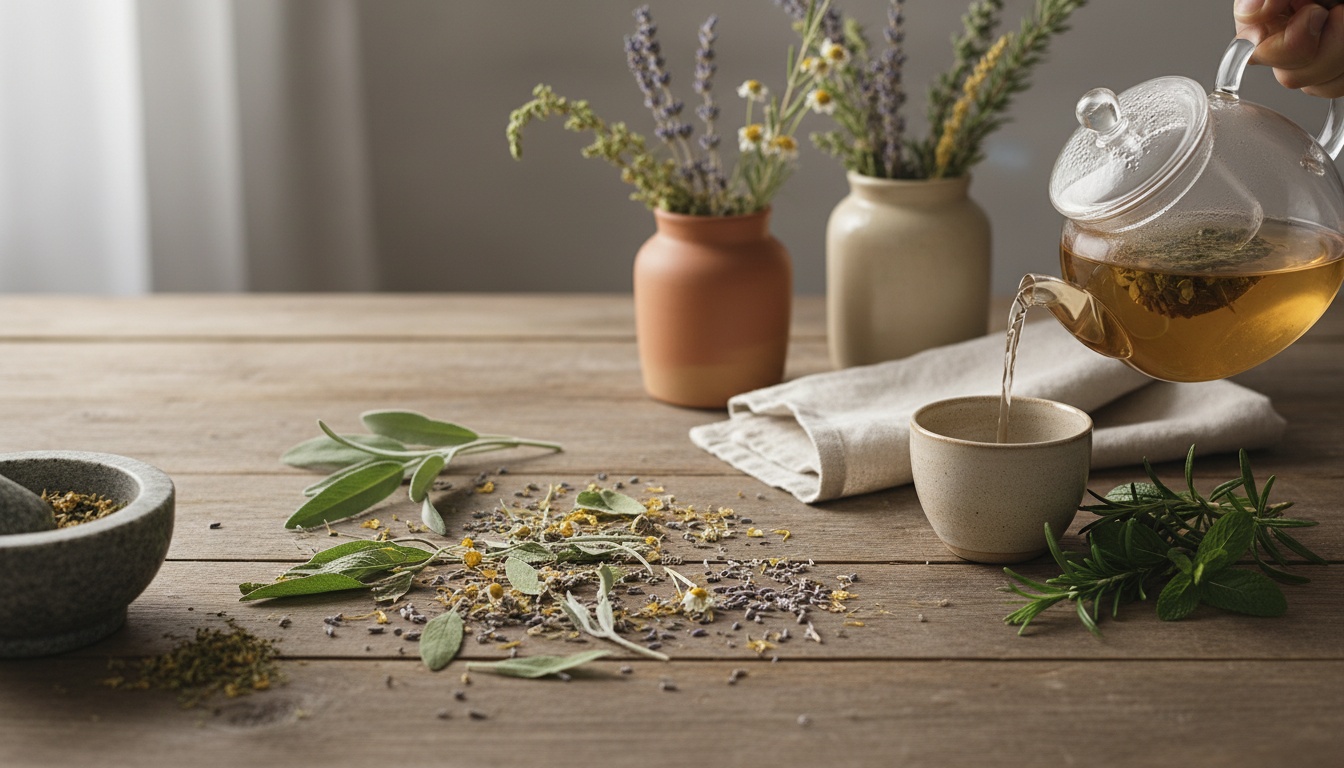
Walk through any forest and you won’t find a single species growing in isolation. Plants compete, cooperate, and adapt alongside each other. That same principle shows up in the world’s oldest healing traditions — and it’s worth understanding if you’re serious about botanicals.
Traditional Chinese medicine, Ayurveda, and countless Indigenous practices share a common thread: herbs are rarely used one at a time. Practitioners built detailed systems for combining plants, not out of habit, but because the results were better. Modern research is starting to catch up with what these traditions figured out generations ago.
So what actually makes a blend of herbs outperform a single one?
What Makes Botanical Combinations Work
When plant compounds are combined thoughtfully, the result can be more than what each herb delivers on its own. One botanical might boost how well the body absorbs another’s active compounds. A second might soften a harsh side effect. A third might work on an entirely different pathway. Put together, they create something more balanced than any single plant could manage alone.
This isn’t just old folklore. Studies increasingly show that combined botanical approaches tend to produce steadier, more reliable outcomes than isolated compounds — a pattern that echoes what’s seen in modern medicine, where combination treatments often beat single-ingredient ones for complicated health issues.
A few reasons this happens:
- Certain compounds help the body absorb others more efficiently
- Some herbs take the edge off another’s stronger effects
- Multiple herbs can act on different systems at once
- The combined effect tends to feel more sustained, rather than sharp and short-lived
This is part of why whole-plant blends often feel different from single, isolated extracts. The full profile of compounds matters, not just one active ingredient.
How Traditional Systems Structure a Blend
Herbal traditions didn’t throw plants together at random. They built actual frameworks for it.
One of the clearest examples comes from Traditional Chinese medicine’s Jun-Chen-Zuo-Shi model — often translated as “Emperor-Minister-Assistant-Courier.” It assigns a specific job to each herb in a formula:
- Jun (Emperor) — the main herb, addressing the core purpose of the blend
- Chen (Minister) — supporting herbs that strengthen the primary herb’s effects
- Zuo (Assistant) — herbs that soften side effects or handle secondary concerns
- Shi (Courier) — botanicals that help direct the formula’s effects or improve overall uptake
Some herbs carry the main effect. Others exist purely to support it, improve the taste, or make the whole thing work better together. You don’t need to know the Chinese terms to recognize the logic — nearly every effective herbal tradition follows some version of this: one clear focus, a few supporting players, and something to keep it balanced.
Applying This to Kratom and Other Botanicals
This framework isn’t just historical. It shows up in how people combine botanicals today, including kratom.
When kratom is paired with other plants, users often describe a kind of “entourage effect” — the combination creating a more rounded experience than kratom alone. The other botanical isn’t competing with kratom; it’s complementing it.
A couple of examples:
- Kratom and Blue Lotus — This pairing loosely follows the Emperor-Minister structure, with kratom typically taking the lead role and Blue Lotus contributing supporting characteristics.
- Kratom and Kava — Here, two very different botanical profiles combine, each bringing its own distinct qualities to the mix.
Neither combination is arbitrary. Each reflects a deliberate pairing of botanicals whose profiles are thought to complement one another.
How to Think About Building Your Own Blends
Once you understand the logic behind botanical synergy, you can apply it yourself. A few practical guidelines:
- Start with quality. Synergy depends on having the full range of a plant’s natural compounds intact, so sourcing and testing matter.
- Know your main goal. Whatever you’re trying to achieve should point you toward your “primary” herb.
- Look for complements, not duplicates. A good supporting herb addresses something the main herb doesn’t, rather than repeating the same effect.
- Keep it balanced. The best combinations pair stimulating and calming elements rather than piling on more of the same type.
- Keep it simple at first. Two herbs is plenty to start. Add complexity only once you understand how a pairing behaves.
Keep in mind that everyone responds differently. A combination that works well for one person might need tweaking for another — this isn’t an exact science, and individual reactions vary.
Where Botanical Formulation Is Headed
Interest in plant-based wellness keeps growing, and along with it, a renewed appreciation for these older combination principles. Researchers now have better tools to study the actual mechanisms behind why certain plant pairings work — bridging the gap between traditional practice and lab-based validation.
The most useful approach going forward will likely combine both: respecting what traditional herbalists already worked out, while using modern science to understand why it works.
The Case Against Single-Plant Thinking
If you’re exploring botanicals, it’s worth looking past single-ingredient products. Some of the most well-rounded experiences come from careful combinations, not solo herbs.
That said, more isn’t automatically better. A thoughtful two-herb blend will usually beat a chaotic mix of five or six plants thrown together without a plan. Quality and intention count more than volume.
Traditional herbalists understood something plants have known all along: they weren’t built to work in isolation. Their combined effects took shape over long stretches of time, and we’re still working out exactly how they interact.
The real skill in herbalism isn’t finding one perfect plant. It’s understanding how different plants can support each other when paired with care — which is exactly why experienced herbalists rarely stop at just one.
Frequently Asked Questions
What is botanical synergy?
It’s the effect that happens when combined plant compounds produce results greater than any single herb could achieve alone — often improving absorption, balance, and overall effectiveness.
Why combine herbs instead of just using one?
Blends can act on multiple systems at once, soften unwanted effects, and produce steadier results than a single herb used by itself.
How do traditional herbalists design their blends?
Systems like Traditional Chinese medicine use structured frameworks — such as Jun-Chen-Zuo-Shi — to assign each herb a role: primary effect, support, balance, or direction.
How do I start building my own blend?
Choose quality herbs, identify your main goal to pick a primary herb, add one complementary botanical, and keep the combination simple before expanding further.
Are there safety concerns when combining herbs?
Yes. Botanicals can interact with medications or cause unexpected effects. Introduce new herbs one at a time, pay attention to how your body responds, and check with a healthcare provider if you’re uncertain.