
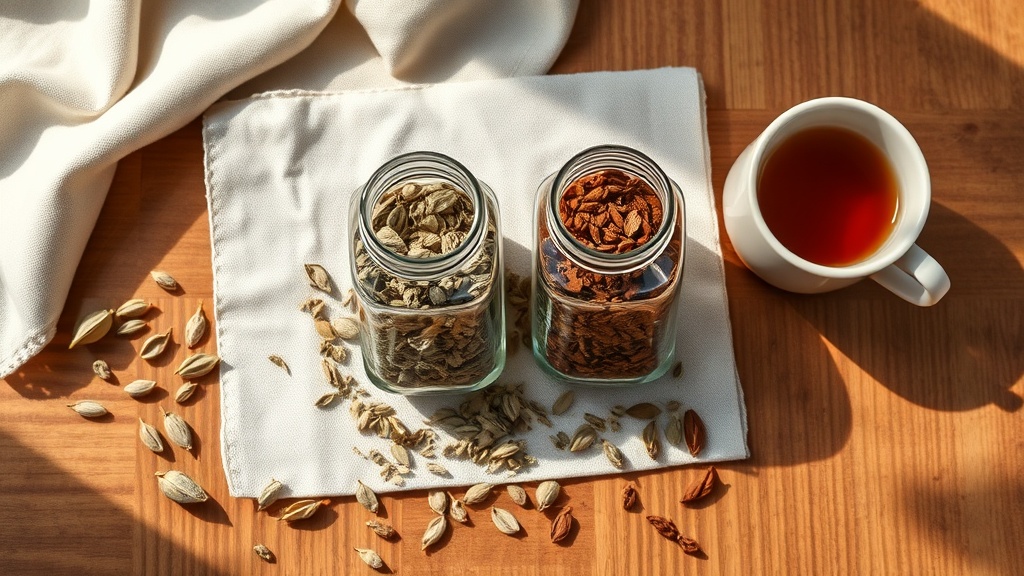
Green and red are the two names you’ll see most often on kratom packaging, and most buyers assume they mean something fixed — a certain chemical makeup, a guaranteed effect. That assumption doesn’t hold up well. The color on a bag reflects when the leaf was picked and how it was dried afterward, not a distinct plant variety or a locked-in formula. This piece walks through what actually separates green from red, where the color system earns its keep, and where it falls short.
What “green” and “red” actually refer to
Kratom comes from Mitragyna speciosa, a tree native to Southeast Asia. Green and red aren’t different plants or genetic strains — they’re informal processing categories that vendors adopted over time, not scientific classifications.
Broadly, the two labels track three things:
- Leaf maturity at harvest. Green kratom usually comes from leaves picked at a middle stage of growth; red comes from leaves left on the tree longer.
- Drying method and length. Red kratom typically gets a longer drying period, sometimes under direct sun or UV light, or handled through fermentation-style methods.
- Blending after harvest. Many commercial batches mix leaf from different sources and maturity levels, then get labeled based on the intended effect rather than lab-verified content.
These conventions grew out of Southeast Asian kratom farming and were later adopted loosely by exporters and vendors worldwide. They’re a decent shorthand for general tendencies, but nothing about them is standardized, and no color guarantees a specific alkaloid mix.
Do green and red really differ chemically?
On average, yes. HPLC testing across strains and vein colors shows that processing does shift alkaloid ratios in measurable ways. The catch is that variation between batches of the same color can be just as large as the average gap between colors — which is exactly why color alone can’t tell you what’s in your bag.
What the alkaloid research tends to show:
- Mitragynine (MG) usually makes up a larger share of total alkaloids in green-processed leaf — Green Malay, for instance, often tests around 55–65% MG.
- Red-processed leaf typically shows a lower MG percentage, with more speciociliatine, speciogynine, and paynantheine picking up the slack.
- 7-Hydroxymitragynine (7-HMG) stays under 2% in both colors, though UV-heavy red processing can push it slightly higher through oxidative conversion.
- Total alkaloid diversity can vary too — Red Bali has been reported to contain as many as 24 distinct identifiable alkaloids, among the highest counts recorded for any single strain.
Alkaloid tendencies by vein color
| Alkaloid | Green Tendency | Red Tendency | Effect Relevance |
|---|---|---|---|
| Mitragynine | Higher % (55–65% of alkaloids) | Lower % (some converts to secondary alkaloids) | Stimulant, mood, focus at low-moderate doses |
| Speciociliatine | Moderate | Higher (UV/fermentation raises it) | Modulates opioid receptor activity |
| Speciogynine | Present | Higher in mature/red leaf | 5-HT1A agonist; muscle relaxant; anxiolytic |
| Paynantheine | Present | Typically higher in red | 5-HT1A agonist; relaxation; possible antidepressant effect |
| 7-Hydroxymitragynine | Very low (<1%) | Slightly higher with UV processing | Potent MOR agonist; pain relief, sedation |
These are tendencies drawn from HPLC alkaloid research (Boffa et al., 2018). Real numbers shift a lot depending on vendor, batch, and where the plant was grown.
Processing, not genetics, drives the difference
The real dividing line between green and red isn’t the tree — it’s what happens to the leaf after picking. The same tree can supply material for both green and red products, depending on how each batch is handled.
Green processing
- Drying environment: Shaded indoor drying, or brief outdoor exposure — this keeps the alkaloid profile close to what’s in the fresh leaf.
- Drying time: Short, usually 1–3 days.
- Alkaloid impact: Mitragynine stays largely intact; little conversion to secondary alkaloids.
Red processing
- UV exposure: Longer drying in direct sunlight or under artificial UV light, which pushes oxidative conversion of mitragynine into speciociliatine and small amounts of 7-HMG.
- Fermentation-style handling: Some red kratom (Bentuangie being the clearest example) is sealed in bags while still fresh, letting enzymatic activity reshape the alkaloid profile and flavor.
- Drying time: Longer, often 3–7 days or more.
- Alkaloid impact: Lower MG share, higher secondary alkaloid content, often described as producing a more relaxing or sedating effect.
This gives the color system a real chemical basis — but it also explains why results aren’t consistent. Two vendors both calling their product “Red Bali” might use very different UV intensity, drying time, and leaf age, and end up with meaningfully different alkaloid profiles despite the identical label.
Comparing green and red for different goals
With those caveats in mind, here’s how the two colors generally compare based on user surveys and available alkaloid data — again, tendencies rather than guarantees.
| Dimension | Green Kratom | Red Kratom |
|---|---|---|
| Leaf maturity | Intermediate | More mature at harvest |
| Processing | Shorter, indoor, low-UV drying | Longer, outdoor/UV drying; sometimes fermented |
| Mitragynine level | Higher proportion | Lower proportion (partly converted) |
| Secondary alkaloids | Lower | Higher |
| Reported effect tendency | Balanced energy, mood lift, moderate stimulation, less sedation | Calming, relaxing, stronger for pain and sleep |
| Dose-effect pattern | More stimulating at low doses | Sedation kicks in at lower doses relative to green |
| Common use context | Energy, focus, mood, daytime use, mild anxiety | Pain relief, relaxation, sleep, stronger anxiety relief, evening use |
| Flavor | More bitter, “fresher” taste | Earthier; fermented reds taste distinctly different |
| Batch consistency | Variable, depends on vendor | Variable — UV/fermentation is hard to standardize |
A 2017 survey of over 8,000 kratom users (Grundmann) found pain relief and relaxation among the top reported reasons for use, with those goals more often tied to red vein products, while energy and mood-related use skewed toward green and white varieties.
Why color labels alone aren’t reliable
The most important thing to keep in mind is that “green” and “red” are vendor conventions, not regulated chemical categories. Two bags with the same color label, from two different sellers, can contain noticeably different alkaloid profiles.
A few reasons for this inconsistency:
- Inconsistent processing. UV exposure time, drying temperature, and environment vary from vendor to vendor, even when everyone’s aiming for the same “red” result.
- Growing conditions. Region, season, soil, and tree age all affect alkaloid content, independent of how the leaf is processed afterward.
- Blending practices. Many vendors combine leaf from multiple sources or harvests and assign a color based on the intended effect, not measured chemistry.
- No regulatory definition. There’s no government or industry body that enforces what “green” or “red” has to mean.
A Certificate of Analysis (COA) from an independent lab — one that includes HPLC alkaloid quantification, not just microbial and heavy metal screening — is the only real way to know what’s in a specific batch. Vendors who publish per-lot COAs with actual alkaloid data are offering something meaningfully different from those who only test for basic safety.
How to choose between them
Given everything above, here’s a practical way to approach the decision:
- Treat color as a starting point, not a promise. Want daytime energy? Try green first. Looking for evening wind-down or pain relief? Start with red.
- Ask for a COA. Reputable vendors publish third-party lab results per batch. Mitragynine percentage gives you real data instead of a guess based on a label.
- Track your own reactions. Body composition, tolerance, and individual metabolism mean the same product can hit two people very differently. A simple dose journal helps.
- Consider rotating colors. Many long-time users say switching between green and red slows tolerance buildup more than sticking with one color — likely because the differing secondary alkaloid profiles affect receptor adaptation differently.
- Start at your normal dose regardless of color. Don’t assume red automatically needs less to work. Begin where you usually would and watch the actual effect before adjusting.
Frequently Asked Questions
Which is stronger, green or red kratom?
It depends on what you’re measuring. Red tends to produce stronger sedation and relaxation at lower doses, so it may feel “stronger” for that purpose. Green tends to be more stimulating and focus-oriented at low-to-moderate doses. Neither is inherently more potent — it comes down to the alkaloid profile and what effect you’re after.
Is red kratom better for pain?
Survey data and anecdotal reports consistently point to red vein kratom as the preferred choice for pain relief. This likely ties to red processing’s higher secondary alkaloid content (speciogynine, paynantheine) and sometimes slightly elevated 7-HMG, both of which push the profile toward a more opioid-like effect. Still, “better” depends on the specific product and its actual tested alkaloid content.
Is green kratom better for energy and focus?
Generally, yes. Green processing keeps more mitragynine intact as a share of total alkaloids, and mitragynine at lower doses tends to produce stimulant effects. Most users who report using kratom for energy or focus lean toward green or white varieties. It’s a tendency, not a rule — check a COA when you can.
Can the same plant produce both green and red kratom?
Yes, and this is common. A farmer can pick leaves from the same tree at different maturity stages, or process the same harvest two different ways, to produce both green and red products. The color reflects harvest timing and handling, not genetics.
Does red kratom have more 7-HMG than green?
Both stay under roughly 1–2% of total alkaloids. Red kratom processed with extended UV exposure may run slightly higher due to oxidative conversion, but the difference is small. The idea that red contains dramatically more 7-HMG than green isn’t supported by current HPLC data.
What is Bentuangie kratom?
Bentuangie is a red kratom variety made through fermentation — fresh leaves are sealed in bags, letting enzymatic and microbial activity change the alkaloid profile before drying. It’s typically described as more sedating than standard red, with an earthier flavor, and represents one extreme of red-vein processing.
Should I rotate between green and red?
Many experienced users do this to manage tolerance, on the theory that different secondary alkaloid profiles reduce the rate of receptor adaptation. There’s no clinical research confirming the mechanism, but it’s a widely used harm-reduction habit, and it also helps you learn how each color affects you personally.
What should a good COA show for vein color comparison?
Look for HPLC quantification of mitragynine (as a percentage or mg/g), 7-HMG content, and ideally a fuller alkaloid breakdown. Green products should generally test higher in mitragynine (55%+ of alkaloids), while red products may show lower MG with more secondary alkaloids — assuming the processing was done as intended. A COA that only covers microbial and heavy metal testing can’t back up any color claim.