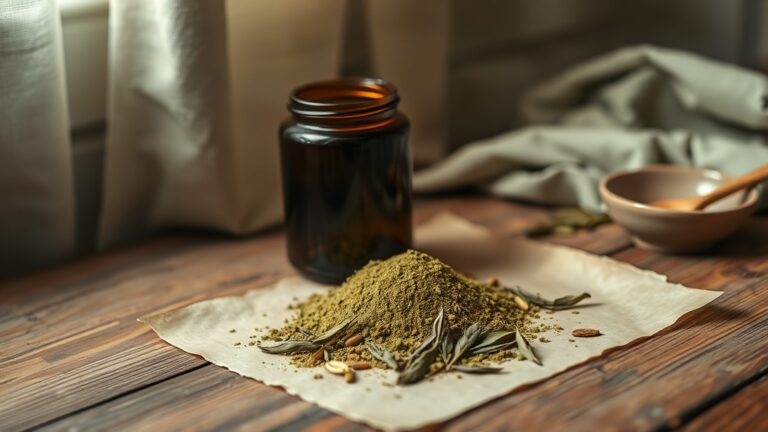


Finding a reliable commercial kratom tincture has gotten harder. Shifting regulations mean products can vanish from shelves with little warning, leaving regular users scrambling. Making your own is a practical fix — it gives you control over quality, potency, and supply.
The process looks more complicated than it is. You don’t need a chemistry background, just some patience and basic kitchen supplies. What you end up with is a concentrated liquid form of kratom that’s easy to carry, keeps for a long time, and works faster than powder. Here’s how to do it.
Why Bother Making Your Own
A tincture uses alcohol to pull kratom’s active alkaloids out of the plant material and into liquid form. You get the same compounds found in powder, just packed into a much smaller volume.
The practical upside is real. A dropper lets you measure doses precisely, a small bottle fits in a pocket or bag, and the taste — while still earthy — comes in a fraction of the volume you’d swallow with powder.
Speed is another factor. Taken sublingually (under the tongue), alkaloids can reach your bloodstream in 10 to 20 minutes, since they skip the digestive process entirely. Powder usually takes 30 to 45 minutes to kick in because it has to move through your gut first.
Because tinctures are concentrated, they feel stronger for the amount you take. A good starting point is 40-60% of your usual powder dose, then adjust from there once you know how it affects you.
What’s Actually Happening During Extraction
Alcohol is good at pulling alkaloids out of plant material. High-proof ethanol — in the 90-95% range — extracts far more efficiently than water, typically pulling out 80-95% of available alkaloids compared to 50-70% for water-based methods.
Time matters more than anything else here. Most of the alkaloid transfer happens within the first 24 hours, but letting the mixture sit for a full week produces noticeably better results, since the alcohol needs time to work through the plant material thoroughly.
Adjusting the pH helps too. Adding citric acid to bring the mixture down to around pH 4.0 converts alkaloids into a more soluble form, which means more of them end up in your finished liquid instead of staying trapped in the spent powder.
The end result is a full-spectrum extract — every compound naturally found in kratom is still there, just in a more concentrated form.
What You’ll Need
The supply list is short and easy to find:
- Kratom powder — Use lab-tested powder from a source you trust. The quality of your tincture depends entirely on what you start with. Plan on 50-100 grams for a first batch.
- High-proof alcohol — 90-95% ethanol or Everclear. Lower-proof alcohol extracts less efficiently. Figure roughly 4-5 ounces per 25 grams of powder.
- Citric acid powder — For adjusting pH. Most grocery stores carry it near the canning supplies.
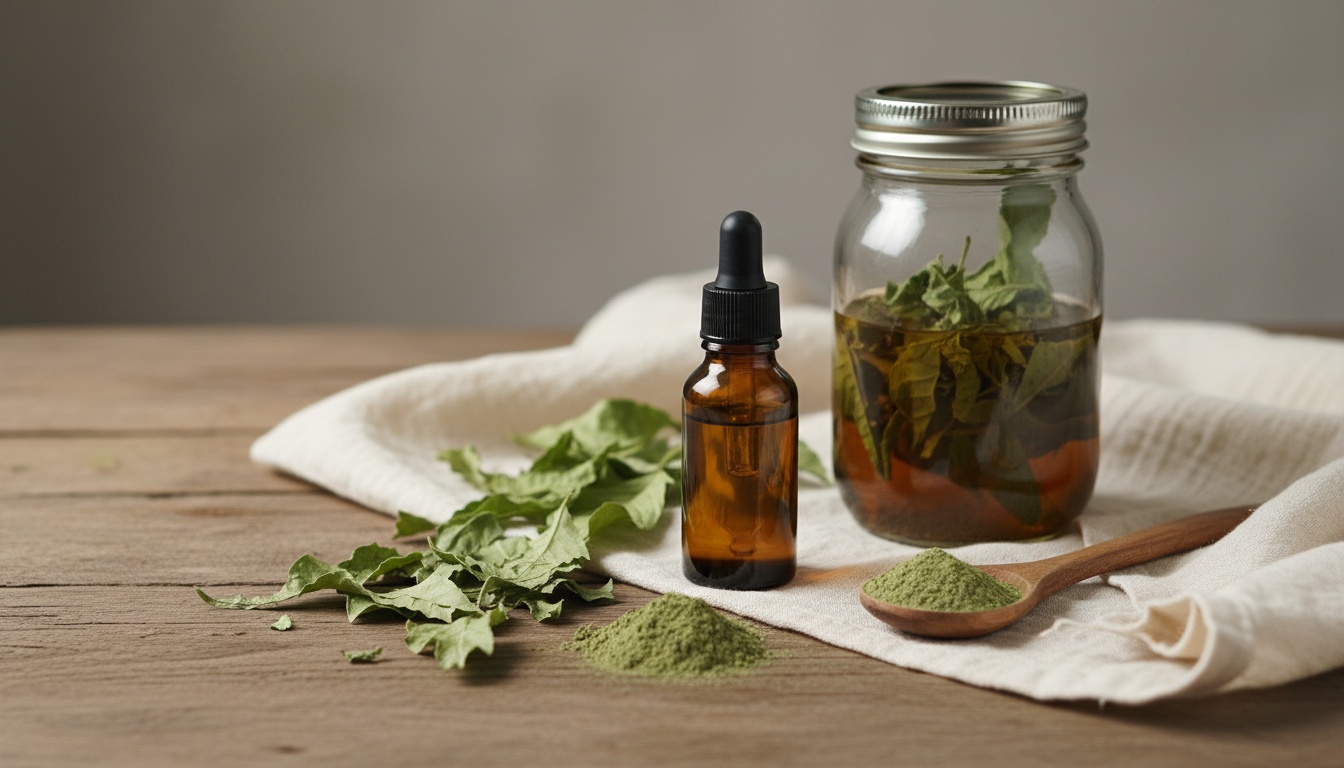
- Equipment — A digital scale, mason jars with tight-fitting lids, pH test strips, coffee filters or cheesecloth, and dark glass bottles with droppers for storing the finished product.
That’s the whole list. Nothing here requires lab-grade equipment.
Step 1: Combine Kratom and Alcohol
Weigh your kratom powder on a digital scale — accuracy here matters for calculating dosage later.
Put the powder into a clean mason jar, then pour in alcohol until the powder is fully submerged with about an inch of liquid on top.
A workable ratio is 4-5 ounces of alcohol for every 25 grams of powder. Scale it up or down depending on your batch size.
Seal the jar tightly and shake well to mix everything together.
Step 2: Adjust the pH
Add citric acid — start with about 1/4 teaspoon per 100ml of liquid.
Stir it in, then check the pH with a test strip. You’re aiming for around 4.0.
If it reads higher, add a small pinch more citric acid, stir again, and retest. Getting the pH right is one of the most important steps for maximizing how much you extract.
Once you hit the target, reseal the jar.
Step 3: Let It Sit
Store the sealed jar somewhere dark and at room temperature — a cupboard works fine.
Give it a shake once a day to redistribute the powder and keep extraction even.
Plan for at least seven days of steeping. Two weeks gives stronger results, and some people go as long as three weeks, though the gains taper off after that point.
This is the step that does the real work. There’s no shortcut — just time.
Step 4: Strain It
Once your steeping period is done, separate the liquid from the plant material.
Line a clean container with coffee filters or several layers of cheesecloth, then pour the mixture through slowly.
Let gravity do the filtering rather than squeezing or pressing the material. Forcing liquid through pushes fine particles into your tincture and leaves it cloudy.
What’s left is a dark, potent liquid, plus spent powder you can discard.
Step 5: Concentrate It (Optional)
The tincture is ready to use at this point, but you can boost its strength by evaporating off some of the alcohol.
Pour the strained liquid into a shallow dish and leave it in a well-ventilated spot for 24 to 48 hours.
Skip the heat — high temperatures can break down alkaloids. Room-temperature evaporation is slower but safer for potency.
Check the volume periodically and stop once it’s reduced to the concentration you want.
Step 6: Bottle and Label
Move the finished tincture into dark glass bottles — amber or cobalt blue both work to block out light.
Attach droppers so you can measure doses accurately.
Label each bottle with the amount of kratom used and the final liquid volume — you’ll need both numbers to calculate dosage. Add the date too, so you can track how long it’s been sitting.
How to Take It
Sublingually: Place your dose under your tongue and hold it there for 60-90 seconds before swallowing. This gets alkaloids into your bloodstream fastest, since they absorb through the tissue under your tongue.
Mixed into a drink or food: Stir your dose into juice or tea. It takes longer to kick in since it has to go through digestion.
Swallowed directly: Some people just measure and swallow. Onset time falls somewhere between the sublingual and food-mixed methods.
If you’d rather skip the preparation altogether, ready-made options like kratom gummies, edibles, or candy are worth considering.
To figure out your dose, divide the total grams of kratom used by the final volume of tincture in milliliters. For example, 100 grams of kratom extracted into 400ml of finished tincture works out to 0.25 grams of kratom per milliliter.
Storing Your Tincture
Alcohol-based tinctures keep much longer than powder because the alcohol itself acts as a preservative.
Store bottles somewhere cool and dark, away from direct sunlight and heat — a cupboard or drawer is ideal.
Stored properly, a tincture should stay potent for 1-2 years. Dark glass keeps light from degrading it, and a tight seal keeps the alcohol from evaporating.
Check occasionally for changes in color, smell, or texture. These are uncommon with proper storage, but if you notice anything off, it’s time to make a fresh batch.
A Few Variables Worth Knowing
- Extraction time — A week gets you good results; two weeks extracts more thoroughly. After three weeks, you’re not gaining much more.
- Alcohol proof — Higher proof extracts better but costs more. 90% is a solid middle ground; anything below 80% noticeably weakens the extraction.
- Strain choice — Red vein strains are often associated with relaxation, green with more balanced effects, and white with energy and focus. You can blend strains before extracting for a custom mix.
- Vegetable glycerin — Some people add a bit after straining to cut the alcohol taste and make sublingual dosing easier. It dilutes potency slightly but improves the experience for some.
Is DIY Worth It?
Making your own tincture makes the most sense if you use kratom regularly. The time and upfront cost pay off with frequent use, and you get to control every part of the process — the source material, extraction time, final strength, and how it’s stored.
Given how unpredictable the commercial market has become, knowing how to make your own is a useful skill to have. If you only use kratom occasionally or want something ready right away, pre-made products are still an option. But if quality control and long-term reliability matter more to you, this process delivers both.
None of the steps are difficult. The real requirement is patience — most of the work happens while the jar sits quietly in a cupboard, waiting.