



The kratom market crossed the billion-dollar mark in 2024, but that growth has a downside most buyers never see. Walk into any convenience store or browse an online shop, and you’ll find extract shots wrapped in bold packaging that promises potency and purity. Put many of those same products through rigorous lab testing, though, and they fail basic safety checks. The disconnect between what labels claim and what testing actually finds is a good reason to look past brand names and understand what real quality verification involves.
Why So Much Testing Falls Short
The kratom market was worth roughly $144 million in 2023, with projections putting it near $268 million by 2030. That kind of demand pushes manufacturers to scale up fast, and speed often comes at the expense of quality control. Many extract producers skip thorough testing altogether, leaning instead on a supplier’s certificate or a basic alkaloid check. That’s not enough to catch contamination risks that can actually harm consumers.
Manufacturers serious about quality operate differently. The American Kratom Association rolled out its Good Manufacturing Practices (GMP) standards back in 2019, requiring participants to vet their suppliers and run testing procedures aimed at catching harmful microorganisms. Those standards are what separate manufacturers who take safety seriously from ones cutting corners.
What Real Testing Involves
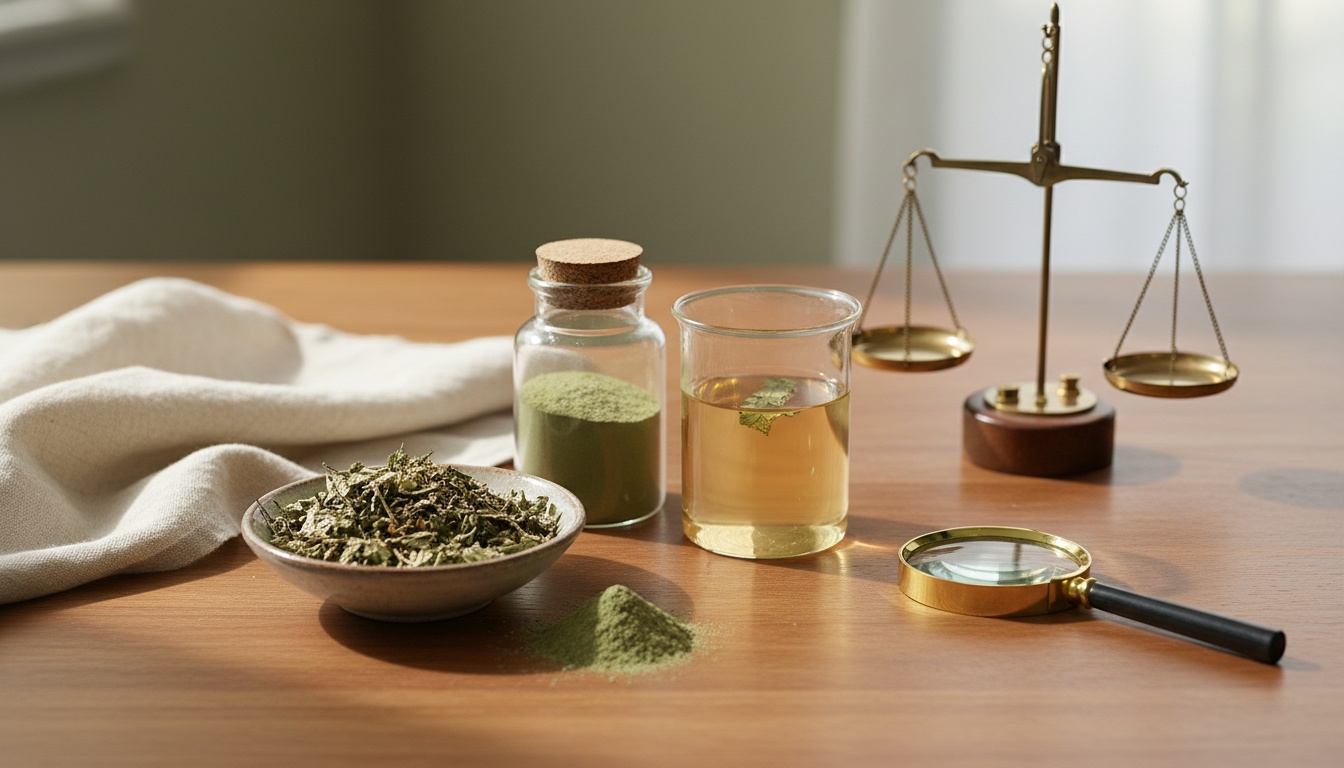
Solid quality assurance goes well beyond checking alkaloid levels. Reputable labs screen for several types of contamination that cheaper testing methods simply miss.
- Microbial screening checks for bacteria, yeast, mold, and dangerous pathogens such as E. coli and Salmonella. Herbal powders are prone to bacterial hot spots that basic sampling can overlook.
- Heavy metals testing looks for lead, mercury, cadmium, and arsenic, which can build up from contaminated soil or processing equipment and concentrate further during extraction.
- Pesticide residue screening flags agricultural chemicals that survive harvesting and processing. Wild-harvested kratom tends to test cleaner, but farming practices differ a lot depending on where the plant is sourced.
- Alkaloid profiling, typically done with Liquid Chromatography Mass Spectrometry, measures the eight main alkaloids down to a tenth of a percent. This is what tells you whether a product’s actual potency matches what’s on the label.
Warning Signs Worth Watching For
A trustworthy manufacturer will give you a batch-specific certificate, with a lot number that matches what’s printed on the product. If all you get is a generic certificate listing a strain name with no batch information, that’s a sign corners are being cut.
Pay attention to dates, too. A certificate with no test date, or one that’s clearly older than the batch you’re holding, doesn’t tell you much about what’s actually in your product right now.
Testing panels that skip microbial or heavy metals analysis are another red flag. Full-panel testing costs more, which is exactly why some manufacturers avoid it — but that shortcut puts consumers at risk.
Vague sourcing is a problem too. If a company can’t tell you where the kratom came from, down to the farm or region, there’s no way to verify anything about how it was grown or handled. These issues aren’t unique to kratom — you’ll find the same warning signs across other herbal supplement categories with weak oversight.
What GMP Certification Actually Means
GMP certification isn’t a marketing badge — it requires systematic quality control at every stage of production. Certified facilities monitor their environment, train personnel properly, and maintain equipment on a schedule. Every step has to be documented in writing, which makes it possible to trace a batch and respond quickly if something goes wrong.
Certified manufacturers also run supplier qualification programs, checking source quality before raw material ever enters production. That upstream screening keeps contaminated ingredients out of the pipeline in the first place. On top of that, third-party audits check whether a facility is actually following its own procedures, catching problems before they reach the shelf.
Making Sense of Potency Claims
Marketing language around extract strength can be misleading. Knowing how potency is actually measured helps you tell a legitimate product from an inflated claim.
Manufacturers worth trusting list alkaloid percentages based on precise lab analysis, breaking down concentrations of mitragynine, 7-hydroxymitragynine, and other compounds individually.
Ratios like “10:1” or “50:1” only describe how concentrated an extract is relative to raw leaf — they say nothing about the actual alkaloid content. A 10:1 extract made from low-quality leaf could easily contain less active compound than a 5:1 extract made from premium material.
Extracts labeled as “standardized” are formulated to keep alkaloid percentages consistent from batch to batch. That consistency doesn’t happen by accident — it requires ongoing testing and adjustment, which adds to production costs.
Why Better Products Cost More
Premium extract shots carry a higher price tag for a reason: comprehensive testing, GMP compliance, and quality sourcing all add real cost to production.
Cheaper extracts often get there by skipping expensive testing or using lower-grade source material. That trade-off means more risk of contamination and inconsistent potency.
Manufacturers focused on quality invest in long-term supplier relationships, better testing equipment, and trained quality control staff. Those investments protect consumers, but they also show up in the final price. The gap between a budget extract and a premium one usually reflects genuine differences in how the product was made, not just clever marketing.
Where Regulation Is Headed
More states are stepping in with testing requirements for kratom products. Florida recently became the 11th state to pass a Kratom Consumer Protection Act, setting minimum quality standards for anything sold within its borders.
These laws are pushing manufacturers to either adopt professional testing protocols or stop selling in regulated states. Over time, that kind of pressure tends to consolidate the market around companies that take quality seriously.
Consumers asking for transparency and real testing documentation are part of what’s driving this shift. As buyers get more educated, the market starts rewarding manufacturers who invest in quality and making life harder for those who don’t. This move toward pharmaceutical-grade standards should mean safer products for consumers, even as it raises the bar for anyone trying to compete on price alone.
Frequently Asked Questions
How do I know if a kratom extract is properly tested?
Look for a batch-specific certificate with a lot number matching the product label, covering microbial contamination, heavy metals, pesticides, and alkaloid content, with a recent test date.
What’s the difference between GMP and non-GMP kratom?
GMP-certified products come from manufacturers following documented procedures, verified suppliers, and regular third-party audits. Non-GMP products typically lack these safeguards.
Are expensive kratom extracts always better quality?
Not necessarily, but comprehensive testing and GMP compliance do raise production costs. Extremely cheap extracts often skip safety testing or use lower-grade material.
What should I avoid when buying kratom extracts?
Steer clear of products with generic certificates, no test dates, incomplete testing panels, or vague sourcing — all signs of weak quality control.
How often should kratom be tested?
Every production batch needs its own certificate. A certificate that’s older than the batch, or one that just lists a strain name with no batch details, isn’t sufficient.
What contaminants are most dangerous in kratom?
Heavy metals like lead and mercury, harmful bacteria such as E. coli and Salmonella, and pesticide residues are the biggest concerns. Full testing panels screen for all three.
Do extract ratios like “10:1” guarantee potency?
No. Ratios describe concentration, not final alkaloid content. A 10:1 extract from poor-quality leaf can be weaker than a 5:1 extract from premium leaf.
Is wild-harvested kratom safer than cultivated kratom?
Wild-harvested kratom tends to test clean for pesticides, but farming practices vary widely. Either type needs proper testing, since contamination can happen at harvest, processing, or storage.
What alkaloids should be tested in quality kratom?
Professional testing measures eight principal alkaloids. Mitragynine and 7-hydroxymitragynine matter most, but a full profile gives a clearer picture of quality.
Are state kratom laws making products safer?
It looks that way. Consumer Protection Acts now in 11 states require minimum testing standards, pushing manufacturers toward professional protocols or out of those markets entirely.


[…] guide breaks down what standard drug panels actually look for, why kratom slips past them, when it can be detected, and the situations where kratom-specific […]