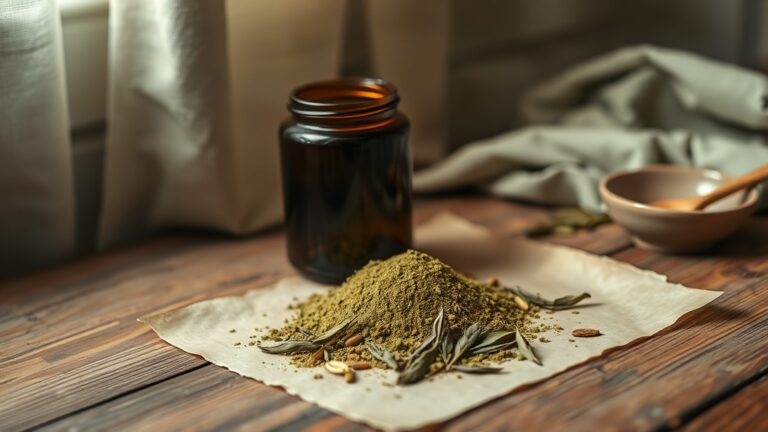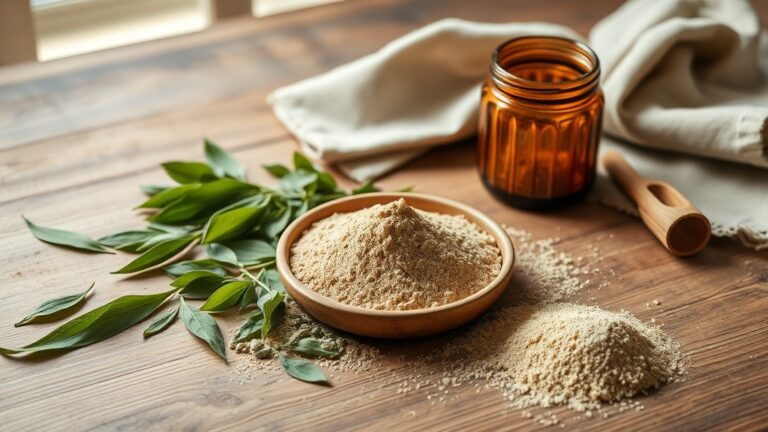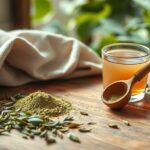
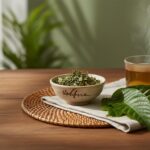
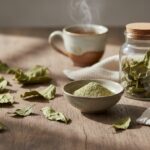
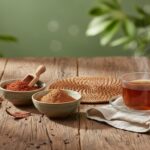

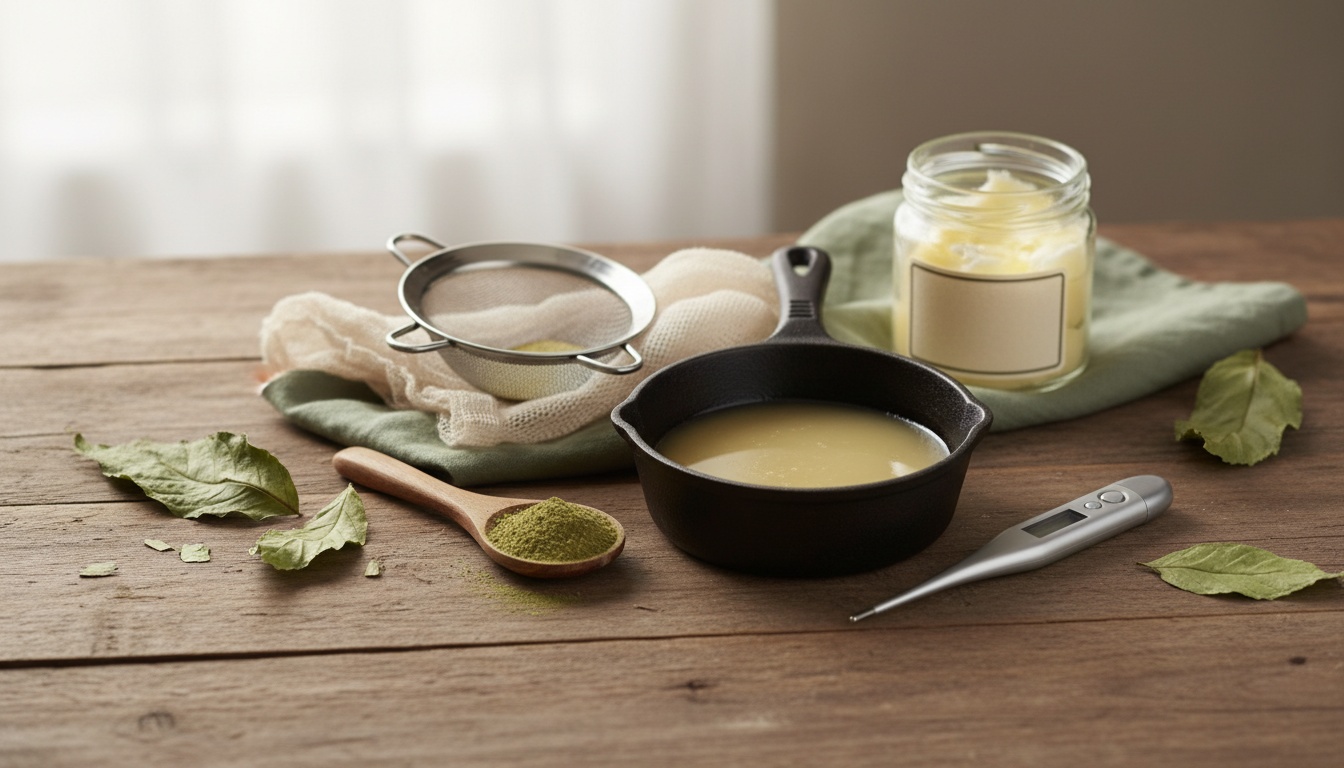
Turning loose-leaf kratom powder into butter gives you a more versatile way to use it than swallowing powder straight. But there’s a catch: heat. Too much of it, and you’ve wasted good kratom. One of the plant’s key compounds, 7-hydroxymitragynine, starts breaking down at temperatures as low as 104°F if it sits there too long. Get the temperature wrong, and you’re left with an expensive, weak batch.
Here’s how to do it properly.
What You’ll Need
Ingredients:
– 4 sticks (1 pound) of good-quality butter
– 14 grams of lab-tested loose-leaf kratom
– Filtered water
– A fine-mesh strainer or cheesecloth
Equipment:
– A heavy-bottomed saucepan
– A thermometer
– A wooden spoon
– Airtight containers for storage
– Labels
Your results depend heavily on where your kratom comes from. Wild-harvested powder that’s been lab-tested and produced in a GMP-certified facility will give you the alkaloid content needed to make this worth your time.
Step-by-Step Method
1. Set up before you start. Once the butter is on the heat, you’ll need to move quickly and stay focused. Have every ingredient and tool within reach so you’re not scrambling mid-process.
2. Melt the butter with a water buffer. Add the butter to your saucepan along with just enough water to cover the bottom. This layer of water keeps the butter from making direct contact with the pan, which helps avoid hot spots.
Use the lowest heat setting your stove has. Rushing this step is the easiest way to ruin the batch.
3. Stir in the kratom slowly. Once the butter has fully melted, add the powder a little at a time, stirring as you go. This keeps it from clumping and helps distribute the alkaloids evenly through the butter.
4. Keep it at a low simmer. This step trips up most people. While kratom alkaloids can technically hold up to temperatures near 212°F, you get better extraction — and less risk of damage — by staying well below that.
Let the mixture simmer gently for 2 to 3 hours. You’re looking for the occasional bubble, not a rolling boil.
5. Strain, then cool. Pour everything through cheesecloth or a fine strainer into your storage container. Press down gently on the leftover plant material to squeeze out extra butter, but don’t force it — you don’t want plant particles getting through.
Let the butter cool fully before putting it in the fridge.
Figuring Out Your Dosage
Guessing at dosage is how people end up with inconsistent, unpredictable results. A little math up front solves that problem.
Step 1 — Estimate total alkaloid content. Decent kratom typically runs about 1.5% mitragynine. With 14 grams of powder, that works out to roughly 210mg of mitragynine in the whole batch.
Step 2 — Know your final volume. Four sticks of butter equal 32 tablespoons.
Step 3 — Divide to get concentration per serving. 210mg divided by 32 tablespoons comes out to about 6.5mg of mitragynine per tablespoon.
Doing this math ahead of time means you know exactly what you’re consuming each time you use the butter.
Storing It Safely
Kept in the fridge in an airtight container, kratom butter holds its potency for up to about 8 weeks.
A few things worth doing every time:
- Label containers clearly — contents, concentration, and the date you made it
- Keep it refrigerated at a steady temperature
- Store it well out of reach of children, pets, or anyone who shouldn’t have access
- If you’re new to this, start with a smaller batch or dose
- Don’t leave it sitting out at room temperature for long stretches
Sloppy storage can undo all the careful work you put into cooking it correctly.
Ways to Use Kratom Butter
Once you’ve got a batch made, you have more options than just eating it plain.
- Baking: Swap it in for regular butter at a 1:1 ratio. Most baking temperatures and times won’t hurt the alkaloids much.
- Spreads: Put it on toast, crackers, or bread for an easy, measured dose.
- Cooking: Stir it into sauces, gravies, or sautéed vegetables.
- Energy bars: Mix it into a homemade bar recipe for a portable, pre-dosed snack.
- Drinks: Melt a spoonful into coffee, tea, or hot chocolate.
Whichever method you choose, the dosing math you worked out earlier still applies.
When Buying Might Make More Sense
Making kratom butter takes time, the right equipment, and some patience. That’s not always practical.
Consider a commercial product instead if:
- You don’t have time to prepare something at home
- You need dosing to be exact and repeatable
- You need something portable for travel
- Your kitchen setup isn’t suited for this kind of prep
Options worth looking at include pre-measured capsules, flavored powders that cut the bitterness, concentrated extracts, and ready-made edibles like gummies, chocolates, or kratom tea.
Which route makes sense really comes down to your routine and how much control you want over the process.
Common Problems and Fixes
The butter separates as it cools. This usually means too much water was used or the heat wasn’t steady. Reheat gently and stir until it comes back together.
The batch feels weak. Check your heat levels from the cooking process — even a slightly-too-hot simmer can knock down potency more than you’d expect.
The taste is too bitter. Try mixing in some flavoring during preparation, or use smaller amounts in foods with stronger flavors of their own.
Effects feel inconsistent from batch to batch. Double check your dosing math and make sure the kratom was mixed thoroughly and evenly through the butter.
Why Temperature Control Matters So Much
Kratom contains more than 40 alkaloids, but two — mitragynine and 7-hydroxymitragynine — are responsible for most of its effects. These two don’t respond to heat the same way.
Mitragynine tends to hold up reasonably well under heat. 7-hydroxymitragynine is more fragile and breaks down faster. Cooking gently, at low heat, protects both.
Both compounds are fat-soluble, which is exactly why butter works so well as a base — it pulls the alkaloids out of the plant material and holds onto them in a stable form.
A Few Final Notes
Good kratom butter starts with good kratom. Lab-tested, wild-harvested powder from a trustworthy source is the foundation — there’s no fixing bad starting material with technique.
Watch your temperature closely throughout. A thermometer isn’t optional here; it’s the tool that protects the alkaloids you’re trying to preserve.
Store what you make properly, and it’ll stay usable much longer than powder left out at room temperature.
If you’re new to this, start with a small amount and see how it affects you before using more. You can always take more later — you can’t undo taking too much.
Frequently Asked Questions
How long does kratom butter last?
Up to about 8 weeks in the fridge, stored in an airtight container.
Can I use any butter?
Stick with high-quality butter. Margarine and low-fat spreads don’t extract alkaloids as well.
What temperature should I aim for while cooking?
A bare simmer — just the occasional bubble. Avoid a full boil, which risks breaking down the alkaloids.
How much should I start with?
Try half a tablespoon (roughly 3.25mg of mitragynine) and wait 45 to 60 minutes before deciding whether to have more.
Can I freeze it?
Yes — freezing can extend shelf life up to around 6 months. Thaw in the fridge before use.
Why did my batch separate?
Usually too much water or uneven heat during cooking. Reheat gently and stir it back together.
Is butter stronger than powder?
Not inherently — it comes down to how carefully you prepare it and measure your dose. Done right, it just gives you more consistent, predictable results.