



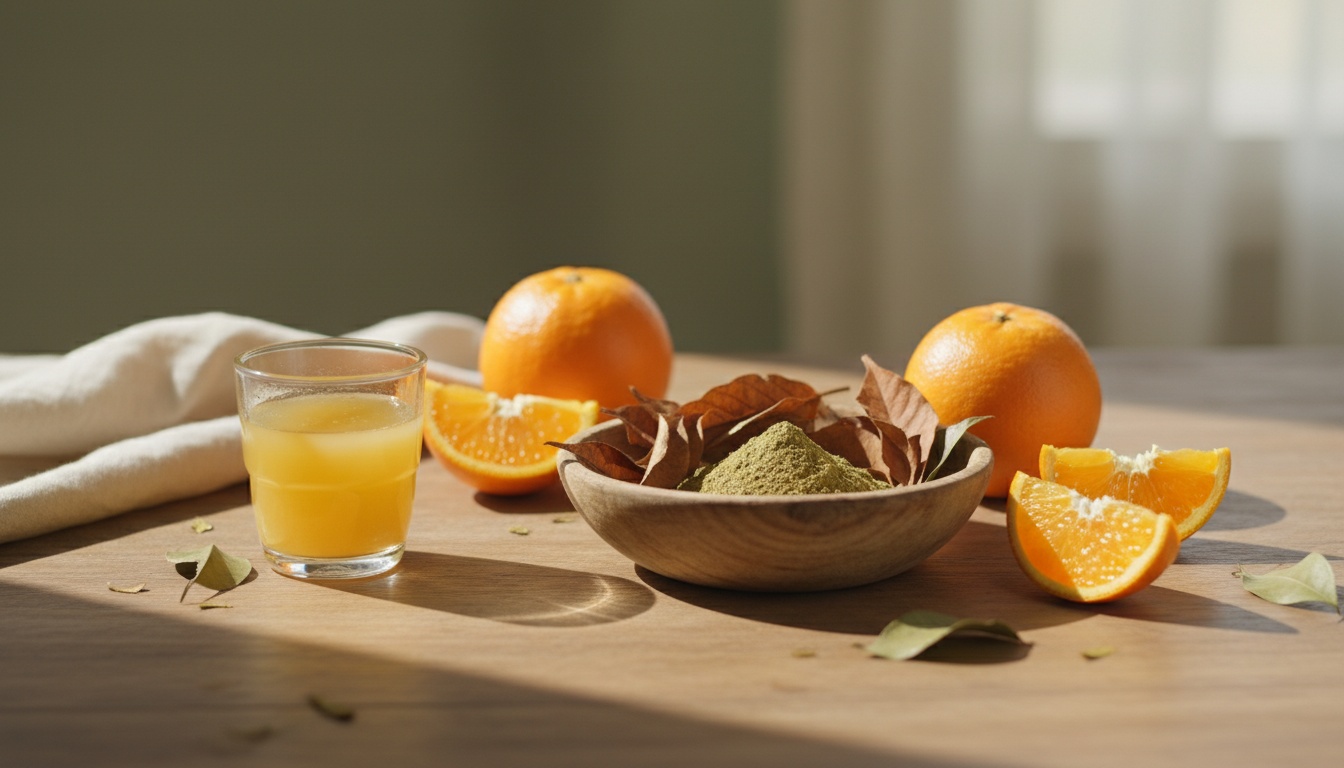
Ask around in kratom circles and you’ll get two very different answers about orange juice. Some people say it’s the best thing they’ve done for their routine. Others think it’s a recipe for trouble. As usual, the real answer sits somewhere in the middle — and knowing why can help you decide if it’s worth trying.
Why Orange Juice Might Boost Kratom’s Effects
The theory behind this pairing comes down to citric acid. Orange juice is acidic enough that it may help break down kratom’s alkaloids before they even reach your stomach, which could make them easier for your body to absorb.
This matters because mitragynine, the primary alkaloid in kratom, doesn’t absorb particularly well on its own when taken orally. An acidic environment might change that by starting the breakdown process early, so your digestive system has less work to do. That said, how much this actually helps varies a lot from person to person.
A number of users say they notice a real difference when they switch from water to something acidic — the effects seem to hit harder and, for some, faster.
What Users Actually Notice
Beyond the science, there are some practical perks people mention often.
Better taste. This is the one almost everyone agrees on. Kratom’s earthy, bitter flavor gets a lot more tolerable when it’s masked by something sweet and citrusy.
Quicker onset. Plenty of users report feeling effects roughly 15 to 20 minutes sooner than when they mix kratom with plain water.
More from less. If absorption really does improve, some people find they can use a bit less powder and still get the results they’re after.
A nutritional bonus. Fresh orange juice brings vitamin C and other nutrients along for the ride, which isn’t a bad side effect.
Easy to find. Unlike specialty potentiators, orange juice is sitting in nearly every grocery store and most refrigerators already.
The Downsides Worth Knowing
Better absorption isn’t automatically a good thing. It comes with trade-offs.
If citric acid really does intensify kratom’s effects, that means your usual dose could suddenly feel like more than you bargained for — especially risky if you’re used to a certain intensity and don’t adjust for it.
The acidity itself can also be tough on the stomach, particularly if you’re drinking it on an empty stomach. Some people notice discomfort they wouldn’t get from water or milk.
If you’re watching your blood sugar, orange juice’s natural sugars are worth factoring in, especially if this becomes a daily habit.
There’s also a subtler risk: because the juice masks the bitterness so well, it’s easy to lose track of how much kratom you’re actually taking. That bitter taste normally works as a natural brake on overconsumption — remove it, and you might drink more than intended without realizing it.
Finally, results won’t be perfectly consistent. Acidity levels differ between brands, and even between batches, depending on freshness and how the juice was processed.
How to Prepare It Properly
Getting the technique right helps you get the benefits without the guesswork.
- Measure your kratom first. Most people use around 5 grams per dose, but your ideal amount depends on your tolerance and experience level.
- Choose good juice. Fresh-squeezed is ideal, but a quality store-bought version works fine. Skip anything loaded with added sugar or artificial ingredients.
- Mix in stages. Combine your kratom with a small splash of juice first and stir until it’s fully dissolved — this prevents clumps. Then add more juice to reach the consistency you want.
- Drink it right away. Kratom tends to settle if the mixture sits too long, which throws off the even distribution you just worked for.
Does the Strain Matter?
Not all kratom strains react to acidic enhancement the same way.
- Red Bali seems to pair especially well with orange juice — many users say the citrus brings out its calming qualities without tipping into heavy sedation.
- Green Maeng Da often benefits from the extra absorption, with its typically balanced effects feeling more noticeable and longer-lasting.
- White Maeng Da fits naturally into a morning routine with orange juice, and the boost can sharpen the clean, energizing feel this strain is known for.
- Red Maeng Da calls for extra caution. It’s already one of the stronger red strains, so combining it with a potentiator could push effects further than expected.
Staying Safe With This Combination
A few precautions go a long way if you want to try this pairing without regret.
Start smaller than usual — your normal dose might hit harder than you expect. Pay attention during your first few sessions and jot down how quickly effects start, how strong they feel, and how long they last. This gives you a real baseline instead of guessing.
Some people do better having a light meal beforehand to ease any stomach irritation; others prefer an empty stomach for stronger absorption. Test what works for you. And don’t forget hydration — both kratom and the sugar in orange juice can contribute to dehydration if your water intake slips.
Lastly, keep an eye on your total kratom use. It’s easy to drink more than planned when the taste is this pleasant.
When You Should Skip This Combo
This pairing isn’t right for everyone or every situation.
If you have diabetes or are managing blood sugar closely, talk to a healthcare provider before making this a regular habit. If you deal with acid reflux or a sensitive stomach, the acidity might cause more irritation than it’s worth — try diluting the mixture heavily or switching to a milder liquid.
New kratom users should hold off on adding any potentiator until they understand how kratom affects them on its own. And if you’re on medication that interacts with citrus, check with a doctor or pharmacist before combining it with your kratom routine.
Other Acidic Options to Consider
Orange juice isn’t the only citrus-based potentiator out there.
- Grapefruit juice is considered one of the stronger options due to enzymes that may enhance alkaloid activity — but it also carries more risk of interacting with certain medications.
- Lemon juice mixed with water gives similar acidic benefits with less sugar and fewer calories.
- Lime juice works much the same way, just with a different taste.
- Apple cider vinegar, taken in small amounts, adds acidity without the sugar — though the flavor takes some getting used to.
Weighing It All Out
For a lot of users, kratom and orange juice make a solid pair — as long as it’s approached with a bit of care.
The upsides are real: better taste, possibly stronger absorption, some added nutrients, and easy prep. The downsides are just as real: unpredictable intensity, potential stomach issues, sugar intake to consider, and the risk of losing track of how much you’re taking.
The safest approach is to start with less than usual, watch how your body responds, keep your preparation consistent, and treat both substances with respect. What works well for someone else might need tweaking for you — everyone’s chemistry is different.
Whichever way you go, using quality, lab-tested kratom matters more than the mixer you choose. Orange juice can enhance the experience, but it can’t make up for poor-quality product.
Quick FAQ
Does orange juice really make kratom stronger?
Many people report stronger effects, likely tied to how citric acid affects alkaloid absorption. Individual results vary.
How much orange juice should I use?
Start with about 4 to 6 ounces mixed with your usual kratom dose, then adjust to taste and comfort.
Can I use any kind of orange juice?
Fresh-squeezed is best, but a decent store-bought brand works too. Just avoid ones with a lot of added sugar.
Will this upset my stomach?
It might, for some people. Try pairing it with a light meal or diluting the mixture if you notice discomfort.
Should I lower my kratom dose when adding orange juice?
Yes — try 10 to 20 percent less than your usual amount at first, since the effects may come on stronger.
How long do the effects last?
Roughly the same duration as usual, but often with a faster onset and a more noticeable peak.
Is this safe to do every day?
Moderation matters for both. If you’re doing this daily, keep an eye on the added sugar and calories from the juice.