



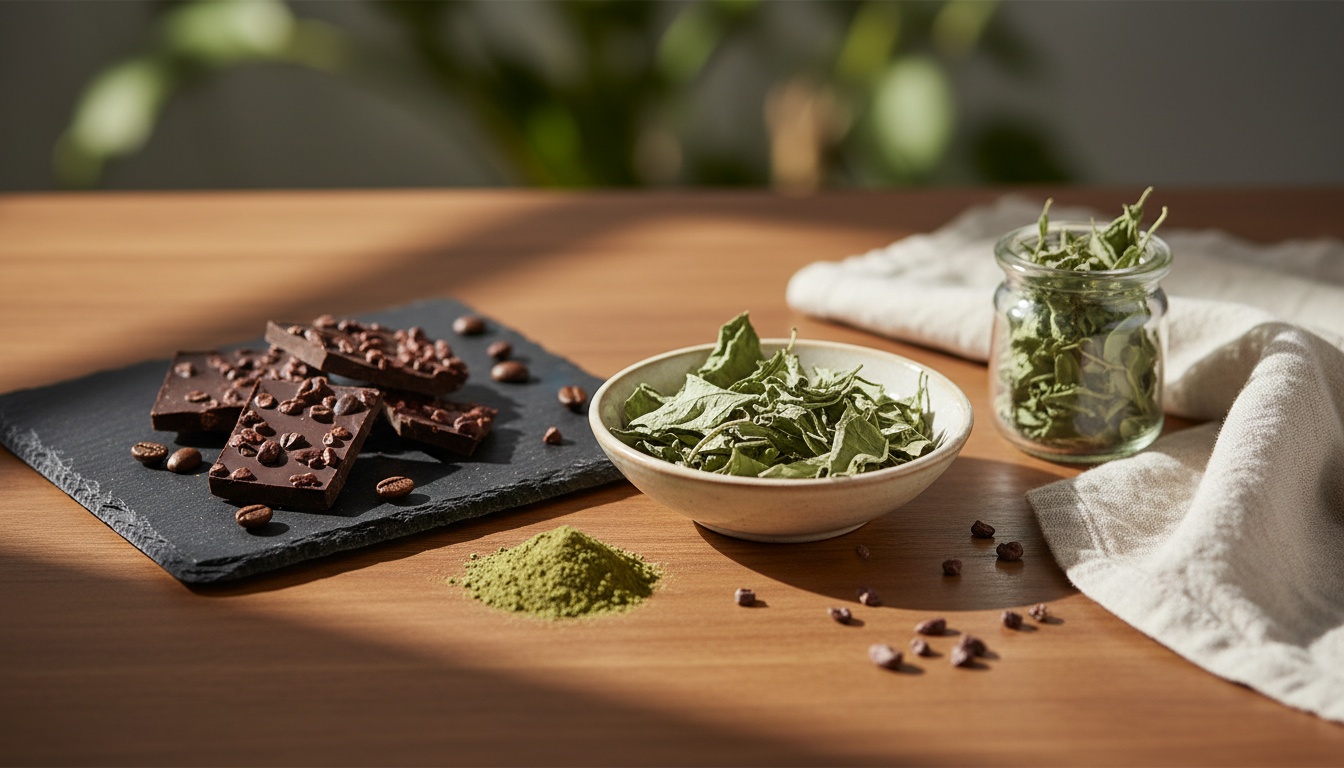
For years, kratom’s earthy, bitter taste kept a lot of curious people away or pushed regular users toward workarounds — stirring powder into juice, chasing capsules with something sweet, or just gritting their teeth and accepting the flavor. Chocolate bars changed that equation. They didn’t just make kratom taste better; they turned it into a product format that feels familiar and easy to use, which says something about how the botanical supplement industry keeps adjusting to what people actually want.
Why Chocolate Works So Well
The appeal isn’t just about covering up a strong taste. Good cocoa brings its own sweetness and texture, so the whole experience shifts from “choking down a supplement” to something closer to eating an actual treat. There’s also a practical side: the fat in chocolate may help the body absorb kratom’s alkaloids more effectively, which could make the format more than just a flavor fix.
Making these bars well isn’t simple, though. Kratom alkaloids break down under too much heat, and chocolate needs specific temperature ranges to temper properly and hold its texture. Producers who know what they’re doing have to manage both requirements at once, which is part of why quality varies so much between brands.
This shift matters because taste has long been cited as the biggest reason people avoid trying kratom in the first place. Edible formats give people a way around that without changing what’s actually in the product.
What Users Report
People turn to kratom chocolate bars for the same reasons they turn to kratom generally — the format just changes how it’s delivered. Effects tend to vary by strain and by the person taking it.
Energy and focus. Green and white vein strains show up often in daytime bars. Green Maeng Da and White Borneo are common choices, and users frequently mention better concentration while working or studying.
Relaxation. Red vein strains, including Red Bali and Red Maeng Da, are typical picks for evening or after-work bars aimed at winding down.
Mood. Some strains are associated with mood support, and cocoa itself contains compounds tied to mood in some research, so the combination may reinforce that effect.
Convenience. A chocolate bar with clearly marked squares makes dosing straightforward. That consistency, plus the fact that it’s easy to carry around, is a real draw for people who don’t want to measure powder every time.
The broader numbers back up the interest in new formats: the kratom market was valued at $2.19 billion in 2024, with projections pointing to 17.2% annual growth and a market size near $7.80 billion by 2032.
Quality and Testing Matter More With Edibles
Turning kratom into a chocolate bar adds a layer of complexity to quality control. Manufacturers need to preserve the botanical’s potency while also meeting food-safety standards for the chocolate itself.
Third-party lab testing is non-negotiable here. A trustworthy certificate of analysis should cover:
- Alkaloid levels, including mitragynine and 7-hydroxymitragynine
- Heavy metals — lead, mercury, cadmium, arsenic
- Microbial safety — bacteria, yeast, mold
- Pesticide residue
Ideally, both the kratom processing and the chocolate manufacturing happen in GMP-certified facilities, so quality standards apply across every part of the product. The American Kratom Association publishes GMP guidelines and consumer resources that are worth checking if you want to understand what “quality” actually means in this industry.
How to Choose a Good One
Buying kratom chocolate means judging two different things at once: the botanical and the confectionery.
Check where the kratom comes from. Trustworthy sellers are specific about their sourcing — which farms, what harvesting methods, how the leaf is processed. Wild-harvested kratom from mature trees generally has a stronger alkaloid profile than mass-produced alternatives.
Look at the lab results. Reputable brands make batch-specific testing available, often through a QR code or online portal, and that testing should come from an independent lab, not just an internal check.
Judge the chocolate on its own merits. A short, recognizable ingredient list is a good sign. Watch out for heavy use of fillers, artificial flavoring, or preservatives that don’t need to be there.
Confirm manufacturing standards. Facilities should meet requirements for both botanical supplements and food production. GMP certification is a reasonable baseline to look for.
Match the strain to your goals. Red strains for relaxation, green and white for energy and focus — pick based on when and why you plan to use it.
Start low on dosage. Look for bars with clear per-square dosage information, and if you’re new to kratom or a specific strain, start with a smaller amount before working up. Trying a lower-dose format like capsules first can help you gauge your tolerance before moving to chocolate.
Why This Format Is Gaining Ground
Chocolate bars work well as an entry point for people who’ve never tried kratom. The format feels familiar, which lowers the psychological barrier that keeps a lot of newcomers away, and pre-measured doses give people a built-in way to learn what a “serving” actually feels like.
That accessibility is helping pull in a wider range of consumers, not just longtime kratom users. A lot of this ties into a broader trend of people looking for natural options to address health and wellness concerns, and kratom keeps showing up more often in that conversation.
Because the dosing is already measured out, chocolate bars also make it easier to build consistent, responsible usage habits — something the industry has been trying to encourage as more people experiment with kratom for the first time.
Storing Kratom Chocolate Properly
Keep bars in a cool, dry spot out of direct sunlight, and try to avoid big swings in temperature. Chocolate’s fat content can interact with kratom’s alkaloids over time, so storage conditions actually matter for potency, not just texture.
Well-made products typically hold their potency for 12 to 18 months if stored correctly, though you should always check the manufacturer’s specific guidance.
Skip the refrigerator unless a brand tells you otherwise — condensation can mess with the chocolate’s texture and potentially introduce moisture that affects the kratom itself.
A Note on Legality
Kratom’s legal status isn’t uniform — it varies by state and by country, and that affects what’s available and how it can be marketed. If you’re planning to travel, check the rules at your destination beforehand.
Even in places where kratom is legal, some jurisdictions have specific rules around edible products or labeling. It’s worth keeping an eye on regulatory changes, since they can affect what’s on shelves or shipped to you.
If you’re bringing kratom chocolate with you on a trip, treat it like any other kratom product — confirm it’s legal where you’re headed, and don’t bring it into places where it’s banned.
Closing Thoughts
Kratom chocolate bars solve a real problem: taste has kept a lot of people from trying kratom or sticking with it. These bars don’t change what kratom does — they change how easy it is to take. Getting a good one comes down to picking a brand that takes both the botanical sourcing and the chocolate-making seriously, and doing your own homework on lab results and dosing before you buy.
Frequently Asked Questions
How long do kratom chocolate bars take to work?
Most people notice effects within 30 to 60 minutes, similar to other edible kratom products. The fat in chocolate may help with absorption.
How should I store kratom chocolate bars?
Somewhere cool, dry, and out of direct light. Skip the fridge unless the manufacturer says to use it.
Are kratom chocolate bars stronger than powder?
Strength comes down to how much kratom is in each serving, not the format itself. Check the alkaloid content and dosage on the label.
Can I travel with kratom chocolate bars?
Only to places where kratom is legal. Laws differ by state and country, so check before you go.
What’s the shelf life of kratom chocolate bars?
Typically 12 to 18 months if stored properly, but always check the expiration date on the package.
How do I know if a kratom chocolate bar is good quality?
Look for third-party lab testing, GMP certification, a clean ingredient list, and clear information about where the kratom comes from.