
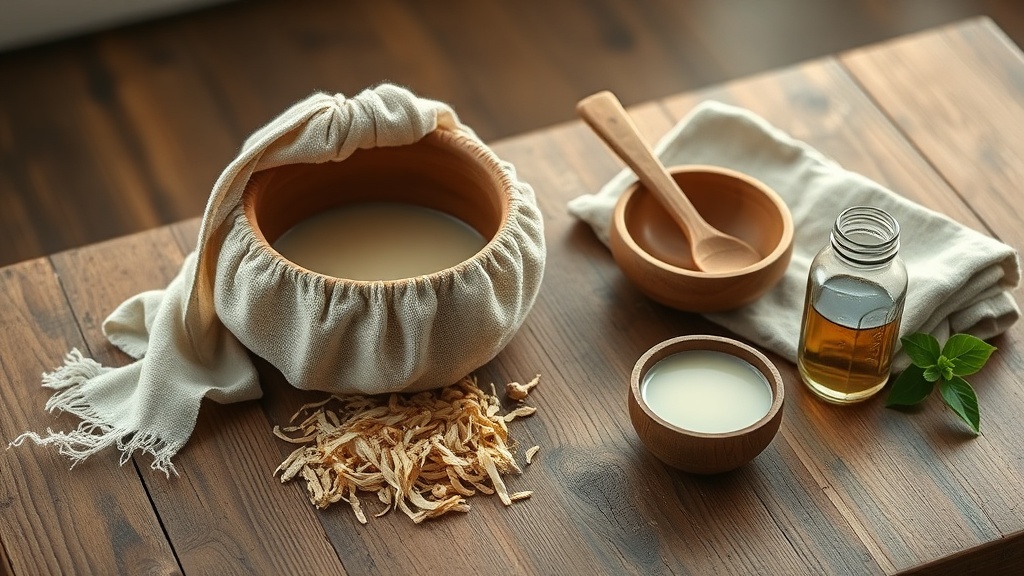
Preparing kava the right way takes more than just root powder and water. Whether you’re mixing your first batch or you’ve been at this for years, a handful of well-chosen tools can turn a messy process into something closer to a ritual — one that pays respect to the traditional methods this plant comes from while also giving you a more consistent cup.
Straining technique, water temperature, storage — each step affects how your kava turns out. Get the right gear for each one, and you’ll notice the difference in both taste and potency.
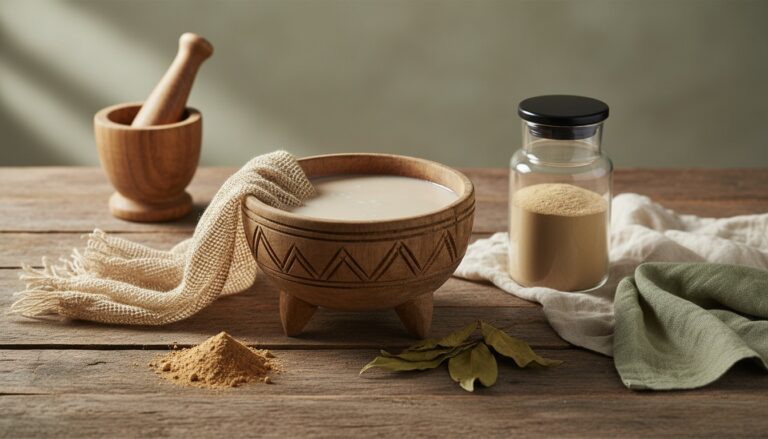
1. A Traditional Strainer Bag (Muslin or Cheesecloth)
Good kava starts with good straining. A quality bag separates the liquid from the fibrous root material, and muslin or fine cheesecloth does this well — dense enough to filter out the woody bits that can upset your stomach, loose enough to let the active compounds through.
Look for a tight weave, somewhere around 100-200 thread count. It needs to hold up to repeated kneading and squeezing, since that’s how you pull the kavalactones out of the fiber. Reusable muslin bags tend to be the better choice over disposable ones — they hold together through many uses and clean up easily.
2. A Mixing Bowl (Stainless Steel or Glass)
The bowl you use matters more than most people expect. Stainless steel and glass are the better options here since neither absorbs odors or flavors, and both clean up thoroughly. Plastic, by contrast, tends to hold onto kava’s earthy smell and can interact with the plant compounds over time.
Size matters too. You want enough room to knead without splashing everywhere — a bowl holding at least 4-6 cups gives you space to work. Some people like bowls with sloped sides, which make it easier to work the mixture and pour cleanly once you’re done.
3. A Digital Scale
Consistency comes down to measurement. A digital scale that reads in grams lets you nail down your kava-to-water ratio every time. As a starting point, most people use about 2-4 tablespoons — roughly 14-28 grams — of kava root per cup of water.
Precise measuring also means you can track what actually works for you. Try different ratios, write down the results, and you’ll end up with more predictable sessions. A scale accurate to 0.1 grams is worth the small extra cost.
Not all kava powders behave the same way — it’s worth trying a few different noble strains to find one that fits your preferred preparation and effects.
4. A Thermometer
Temperature gets overlooked constantly, but it matters. Water that’s too hot can break down kavalactones before you even get to drink the stuff; water too cool won’t pull them out of the root effectively. Aim for 80-100°F (27-38°C) — warm enough to extract, cool enough not to degrade the active compounds.
A basic digital thermometer removes the guesswork. Some longtime users skip warm water altogether, using room-temperature water with a longer steeping time instead, on the theory that it preserves more of the beneficial compounds.
5. A Fine-Mesh Strainer for a Second Pass
Even with a good strainer bag, small particles sometimes make it through. Running your kava through a fine-mesh strainer afterward smooths things out — useful if you’re sensitive to plant material or just prefer a cleaner drink.
Stainless steel mesh holds up best over time and cleans easily. Pick one fine enough to catch small debris but not so fine it turns straining into a slow, frustrating process. A comfortable handle helps too, especially with larger batches.
6. A Glass Pitcher or Storage Container
How you store prepared kava affects both its shelf life and its potency. Glass is the material of choice here — it doesn’t react with kava’s compounds, and it lets you see the liquid clearly enough to spot any changes or settling.
If you’re batch-preparing, a dedicated container keeps kava fresh in the fridge for about 2-3 days. Go with a tight-fitting lid to avoid contamination, and consider a container with measurement markings if portioning matters to you.
7. A Coconut Shell Cup (Bilo)
Drinking kava from a traditional coconut shell cup, or bilo, isn’t strictly necessary for preparation, but it connects you to where this drink comes from. There are practical upsides too — coconut shells don’t conduct heat well, so they’re comfortable to hold, and they’re naturally antimicrobial.
The size works in your favor as well. A traditional bilo holds around 4-6 ounces, which happens to be a solid serving size for gauging how much you’re drinking. Plenty of users say the ritual of sipping from a bilo adds something to the whole experience that a regular cup doesn’t.
Putting the Workflow Together
With these seven items on hand, you’ve got what you need for consistent kava. Start by weighing your root on the scale, then load it into your strainer bag. Check your water temperature before combining it with the kava in your mixing bowl.
Knead for 10-15 minutes, then run the mixture through your fine-mesh strainer into a glass storage container. What you’re left with should be smooth and potent, without the gritty plant material that ruins the drink for some people. Pour into your bilo and enjoy the results of the work you put in.
The process matters as much as the final cup. Taking the time to prepare kava carefully, with decent tools and some respect for the traditional method, tends to make for a better experience overall. If you’re weighing traditional prep against extracts, it’s worth reading up on how the two compare before deciding which suits you.
Frequently Asked Questions
Do I need all seven of these to enjoy kava?
No. A strainer bag and a bowl will get you started. The rest just improve consistency and quality as you go.
Can I use a regular kitchen strainer instead of a strainer bag?
Not really — the holes are usually too large and let plant material through. Muslin or cheesecloth does a much better job.
How long do these accessories last?
Strainer bags typically hold up for 6-12 months with regular use. Stainless steel and glass items can last years if you take care of them. Replace a strainer bag once it develops holes or gets hard to clean.
Is a real bilo worth buying, or will any cup do?
Any cup works functionally. A bilo adds cultural context, resists microbes naturally, and is sized right for a proper serving.
What should beginners buy first?
Start with a good strainer bag. It’s the one tool that makes the biggest difference early on — everything else you can add as your routine develops.