


Spend any time in kratom forums or wellness groups, and one pairing keeps surfacing: turmeric and kratom. People swear by it, describing longer-lasting effects and a smoother overall experience. What’s interesting is that this isn’t just anecdotal chatter — there’s a real biological mechanism behind it, and it lines up with practices that go back centuries.
Here’s a look at why these two botanicals get mentioned together so often, and what’s actually happening when you combine them.
The Science Behind the Pairing
The interest in this combination comes down to something called potentiation. When kratom enters your body, your liver breaks it down using an enzyme known as CYP3A4. Curcumin — the compound that gives turmeric its color and much of its reputation — slows that enzyme down.
Slower metabolism means kratom stays active in your system for a longer stretch. Users describe this as extended effects, and some find they need less kratom to get the experience they’re after, since less of it gets processed and cleared right away.
That practical angle — using less to achieve the same result — is probably the biggest reason this pairing has spread so widely among regular users.
Not a New Idea
What’s easy to miss is that this combination has roots stretching back long before anyone talked about enzymes or bioavailability. Turmeric and kratom both come from South and Southeast Asia, where each has a long history in traditional wellness practices.
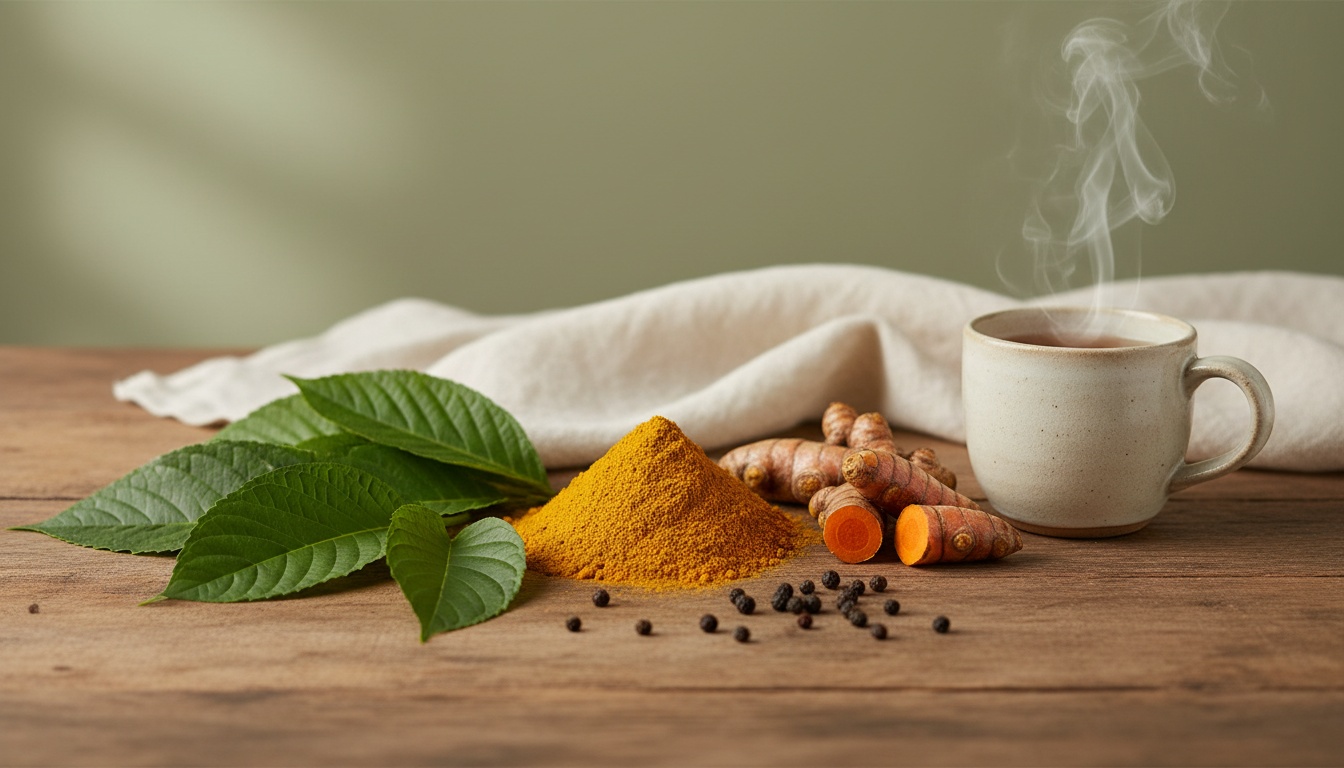
Traditional Indian cooking, for instance, almost never uses turmeric alone. It’s typically paired with black pepper and some form of fat — a combination that happens to boost how much curcumin the body actually absorbs. The average diet in India includes roughly 2 to 2.5 grams of turmeric a day, and even at that modest amount, pairing it with the right ingredients makes a measurable difference.
In other words, modern science is mostly catching up to something people figured out through generations of cooking and daily use.
Adding Black Pepper to the Mix
As people have experimented more with this combination, many have started adding a third ingredient: black pepper.
On its own, curcumin is poorly absorbed. The body just doesn’t take up much of it. Black pepper changes that in a big way — its active compound, piperine, can boost curcumin absorption by as much as 2,000% when just 20mg of piperine is paired with 2 grams of curcumin, with the effect showing up within about 45 minutes.
That sets off a chain reaction. Black pepper helps the body absorb more curcumin. The extra curcumin then has a stronger effect on the enzyme that metabolizes kratom. Research backs this up: black pepper has been shown to extend curcumin’s half-life from about 2.2 hours to 4.5 hours, meaning it stays active in the body — and available to interact with kratom — for roughly twice as long.
So the “trio” of kratom, turmeric, and black pepper isn’t a random add-on. It’s a logical extension of how these compounds actually work together.
Turmeric’s Benefits Beyond Kratom
Part of the appeal here is that turmeric doesn’t need kratom to be worthwhile. It has benefits on its own.
Curcumin has been shown to raise glutathione levels significantly — increases of 211% and 245% have been reported at certain concentrations in research. Glutathione plays a central role in the body’s defense against oxidative stress, so that’s a meaningful effect independent of anything related to kratom.
Turmeric also contains small amounts of vitamin B6, vitamin C, niacin, manganese, iron, and potassium, all while being low in calories. Add in the anti-inflammatory properties associated with curcumin, and it’s easy to see why plenty of people use turmeric in their daily routine for reasons that have nothing to do with kratom at all.
How People Are Combining Them in Practice
A fairly consistent approach has emerged among people who use this combination regularly:
- Timing: Most take 500mg to 1,000mg of turmeric about 30 to 45 minutes before their kratom, giving the enzyme-inhibition effect time to kick in first.
- Black pepper: Even a small amount — around 1/20 of a teaspoon — makes a noticeable difference in how much curcumin the body absorbs.
- Fat: Because curcumin is fat-soluble, many people mix turmeric powder with a bit of coconut oil or another fat source to improve absorption further.
As always, it’s smart to start with smaller amounts and see how your body responds. Metabolism, body weight, and general sensitivity all play a role in how strongly someone feels this interaction. Once you have a sense of your own response, you can adjust the ratios and timing from there.
Quality Makes a Real Difference
When you’re combining botanicals that interact at a metabolic level, consistency matters more than usual.
Turmeric products vary a lot. Standard turmeric powder generally contains 2% to 5% curcumin by weight, while concentrated extracts can go as high as 95%. Higher curcumin content means a stronger, more predictable effect on enzyme inhibition.
The same logic applies to kratom. Lab-tested, wild-harvested kratom processed in GMP-certified facilities tends to have more consistent alkaloid levels batch to batch. When two components are interacting with each other in your system, variability in either one makes the whole experience harder to predict.
At Amazing Botanicals, every batch of kratom goes through third-party lab testing for purity and potency, whether it’s powder, capsules, extract, or tea. That kind of consistency matters more, not less, when you’re pairing kratom with something like turmeric.
Why This Combination Has Staying Power
This isn’t just a passing trend — it reflects a shift toward more thoughtful, informed use of plant-based wellness tools. People are moving past single-ingredient routines and paying attention to how different botanicals interact, guided by both traditional practices and current research.
The CYP3A4 mechanism gives a scientific explanation for what many users already report experiencing. The pairing may allow for smaller kratom amounts with a longer-lasting effect, and turmeric brings its own set of benefits regardless of whether it’s combined with anything else.
As more people try this combination, the conversation keeps evolving — new users share their results, experienced users refine their methods, and researchers continue to look more closely at the underlying mechanisms.
Frequently Asked Questions
How much turmeric should I take with kratom?
Most people use 500mg to 1,000mg, taken 30 to 45 minutes beforehand. Start low and adjust based on how your body responds. A pinch of black pepper helps absorption considerably.
Can I take turmeric and kratom at the same time?
You can, but many experienced users prefer taking turmeric first, giving it time to start inhibiting the relevant enzyme before kratom enters the system.
Do I need a special form of turmeric?
No. Both regular turmeric powder and concentrated curcumin extracts work — the difference is potency. Powder runs 2% to 5% curcumin, while extracts can reach up to 95%. Choose based on how strong an effect you’re looking for.
Will this work the same way for everyone?
Not necessarily. Metabolism, body weight, and individual sensitivity all affect how noticeable the interaction is. Start with modest amounts and adjust from there.
Why do people add black pepper to turmeric?
Piperine, the active compound in black pepper, can increase curcumin absorption by up to 2,000%. Even a small amount — about 1/20 teaspoon — makes turmeric considerably more effective, both on its own and as part of this combination.