



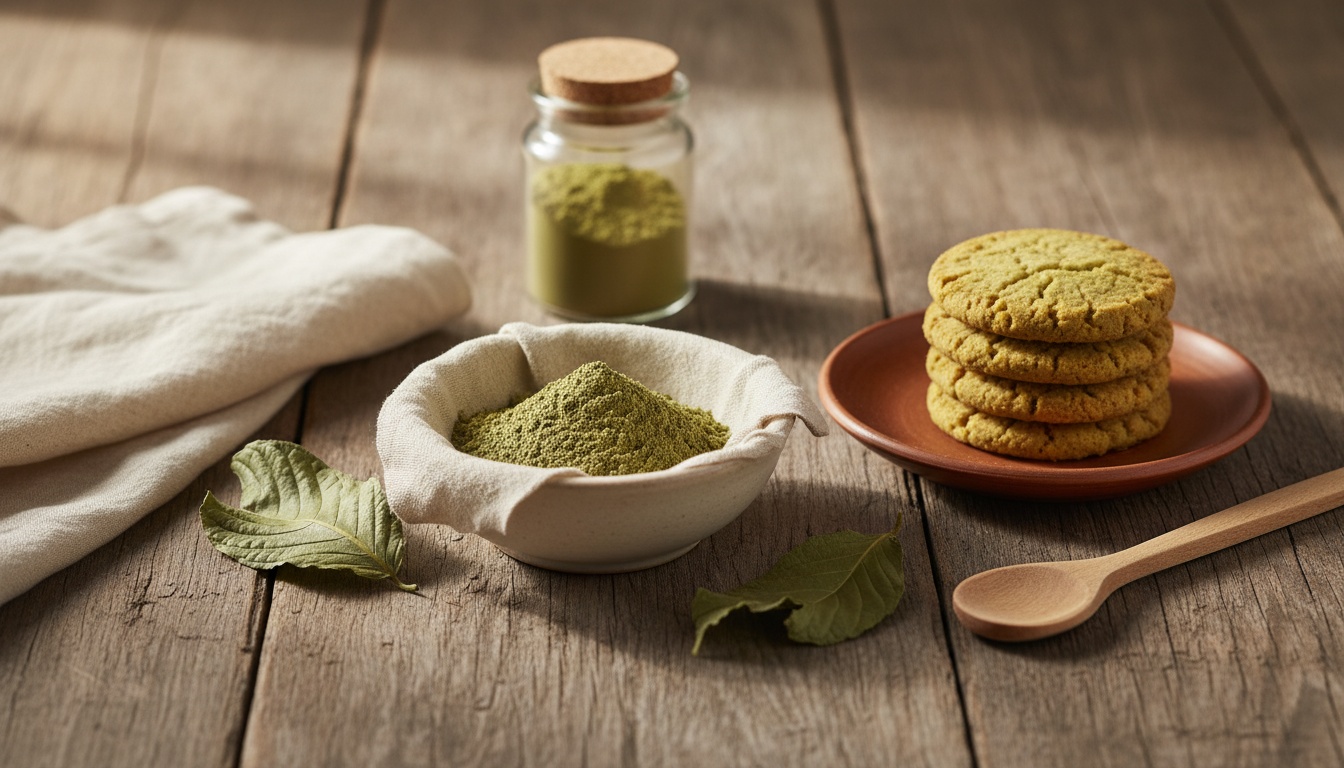
Kratom powder does what it’s supposed to do. But nobody’s pretending it tastes good. It’s bitter, earthy, and hard to enjoy straight.
Baking it into cookies changes that. Suddenly you’ve got something you actually want to eat, not just choke down. Before you start mixing dough, though, it helps to know what heat does to kratom’s active compounds — because that knowledge will shape how you bake and what you can expect.
What Heat Does to Kratom’s Alkaloids
Temperature isn’t a minor detail when you’re baking with plant alkaloids. A study in the Journal of Analytical Toxicology looked at how heat affects kratom’s main compounds, and the results give some useful guardrails.
Mitragynine, kratom’s primary alkaloid, holds up well — it stays stable at temperatures up to 104°F. That’s good news for most preparation methods.
7-hydroxymitragynine is more fragile. It starts breaking down noticeably at 104°F and above, especially with prolonged exposure.
The catch is that ovens run much hotter than that. Standard cookie recipes call for 325°F to 375°F, well above the point where these compounds start to degrade.
Why Cookies Still Work Despite the Heat
Here’s the part that makes cookies practical: baking time is short. Most cookies spend just 10 to 15 minutes in the oven — nothing like the 8-hour exposure windows used in the degradation studies.
There’s also the dough itself. Kratom powder gets surrounded by fat and sugar, which insulate it from direct heat. The inside of a cookie never reaches the oven’s actual temperature setting, even if the outside browns nicely.
Because of this, plenty of people who bake with kratom report effects similar to what they get from powder or capsules. What changes is the timing, not necessarily the strength.
Edibles tend to kick in slower and last longer. Digestion turns the cookie into a kind of time-release dose, spreading the effect out instead of delivering it all at once.
Three Things Cookies Solve at Once
Turning kratom into a cookie isn’t just about flavor. It solves a few practical problems in one move.
- Taste. Dark chocolate and peanut butter don’t just cover up kratom’s earthiness — they work with it. The bitterness gets folded into flavors that were already assertive to begin with.
- Convenience. Cookies don’t need measuring, mixing, or prep once they’re baked. Grab one, eat it, done. They also hold up fine at room temperature, so you can carry them without worry.
- Duration. Because digestion slows the release, many people find the effects last noticeably longer than powder or capsules — sometimes by several hours.
Keep in mind the onset isn’t instant. Depending on your metabolism and what else you’ve eaten, it can take anywhere from 30 minutes to 2 hours to feel anything. Plan accordingly.
How to Protect the Alkaloids While Baking
A few adjustments can help preserve more of kratom’s active compounds without ruining your cookies.
Try dropping your oven to around 300°F and adding three to five extra minutes of bake time. This keeps the interior of the cookie cooler while still cooking it through.
Timing also matters in the mixing stage. Add kratom powder after any step that involves melted butter or warm chocolate — wait until those ingredients cool to room temperature first.
If you’d rather sidestep heat altogether, no-bake options work well too. Cookie dough balls, energy bites, and refrigerator cookies skip the oven entirely while still delivering the format’s benefits.
The point isn’t perfection — it’s building something that’s both effective and something you’ll actually want to eat.
Picking Flavors That Actually Mask the Bitterness
Kratom’s flavor is strong, so it needs equally strong partners.
Chocolate is a natural match. Cacao and kratom’s alkaloids interact in similar ways in the body, which may be part of why the pairing feels so intuitive.
Peanut butter brings fat, which can support absorption, along with a bold flavor that doesn’t get pushed aside by kratom’s taste.
Citrus zest adds a bright note without adding much liquid, so it won’t throw off your dough’s texture.
What doesn’t work: delicate flavors like vanilla or almond extract. They just disappear. Stick with ingredients bold enough to hold their ground.
Getting the Dose Right
Weigh your kratom powder before you mix it into the dough. Then do simple math: divide the total powder by the number of cookies in the batch.
For example, a standard batch might yield 12 to 24 cookies. Use 12 grams of powder across 12 cookies, and each one contains roughly 1 gram.
Label everything. Kratom cookies look exactly like regular cookies, and mix-ups are easy to avoid with a clear marker and a note on the container.
As for how much to use — stick with your usual kratom amount. The format changes when you feel it, not how much you need.
Why Edibles Appeal to More People
Not everyone gets along with kratom powder. Some people don’t like the taste, the texture, or the ritual of mixing it into water. Others just don’t want to swallow capsules.
Cookies sidestep all of that. They’re familiar. They fit into a normal day without drawing attention or requiring any extra steps.
If baking isn’t your thing, ready-made kratom candy offers a similar experience without the oven. That said, there’s something to be said for making it yourself — choosing the ingredients, taking your time, and building a small ritual around it. It can shift how you think about the whole process, from a chore into something you look forward to.
This same approach — baking a botanical into food rather than taking it raw — works for other plants too, including kava and blue lotus.
Building a Solid Recipe
A few foundational choices make a real difference in both taste and texture.
Start with real cocoa powder or good chocolate chips rather than artificial flavoring — the difference is noticeable.
Add peanut butter or almond butter for richness. Natural versions, without added oils, tend to work better than the processed kind.
You’ll need a binder — eggs or flax eggs both work — to hold the dough together and get the right texture.
Oats are optional but useful. They add chewiness and a bit of nutritional value.
Mix your kratom powder into the dry ingredients before adding anything wet. This spreads it evenly through the dough instead of leaving pockets of concentrated powder.
Storing Your Cookies
Kept at room temperature in an airtight container, kratom cookies stay good for 3 to 5 days.
Refrigeration stretches that to 1 to 2 weeks. They’ll firm up in the fridge but soften again once they warm back up.
For longer storage, freeze them. Wrap each cookie individually in plastic, then store in a freezer bag — they’ll keep for up to 3 months this way.
Wherever you store them, keep them out of direct sunlight and away from heat sources. A cool, dark spot works best.
Making the Method Work for You
A few principles sum up what matters most here.
Watch your baking temperature — 300°F or below preserves more of the compounds you’re trying to keep intact.
Adjust your expectations around timing. Edibles take longer to kick in but stick around longer once they do.
Pick flavors deliberately. The right pairing determines whether you’ll actually want to eat what you bake.
And start with good ingredients. Lab-tested kratom powder, real chocolate, and natural nut butters all make a difference in the final product. Sourcing from a verified supplier is worth the extra effort if you’re not sure where to start.
Final Thoughts
Kratom cookies work well once you understand the basic mechanics: heat affects the alkaloids, but short baking times and a bit of temperature control keep enough intact to matter.
The slower, longer-lasting effect suits certain situations better than powder or capsules — a long workday, for instance, or an extended activity where you don’t want to redose.
Start with a simple batch. See how it goes. Adjust from there based on what you actually notice, not just what you expect.
If you’re baking or making candy in larger quantities, buying kratom wholesale can bring the cost down while still giving you quality ingredients to work with. Whether cookies become your go-to method or just an occasional change of pace, you’re now equipped to approach them with a clear sense of what’s happening — and why.
Frequently Asked Questions
Does baking destroy kratom’s alkaloids?
Short baking sessions — around 10 to 15 minutes at 300°F — cause only minor alkaloid loss. The dough shields the kratom from full oven heat, so the interior stays cooler than the temperature setting suggests.
How long do kratom cookies take to work?
Onset generally falls between 30 minutes and 2 hours, depending on metabolism and recent food intake. Effects tend to last longer than with powder or capsules.
Can I taste the kratom in cookies?
With the right pairings — chocolate and peanut butter especially — the kratom flavor mostly fades into the background. Bold ingredients work with it rather than just masking it.
How should I store kratom cookies?
Room temperature works for 3 to 5 days in an airtight container. Refrigeration extends that to 1 to 2 weeks. Freezing individually wrapped cookies keeps them good for up to 3 months.
Do I need to change my kratom dose for cookies?
No — use your normal amount. The format shifts when you feel the effects, not how much kratom you need. Divide your total powder by the number of cookies to know the dose per cookie.