
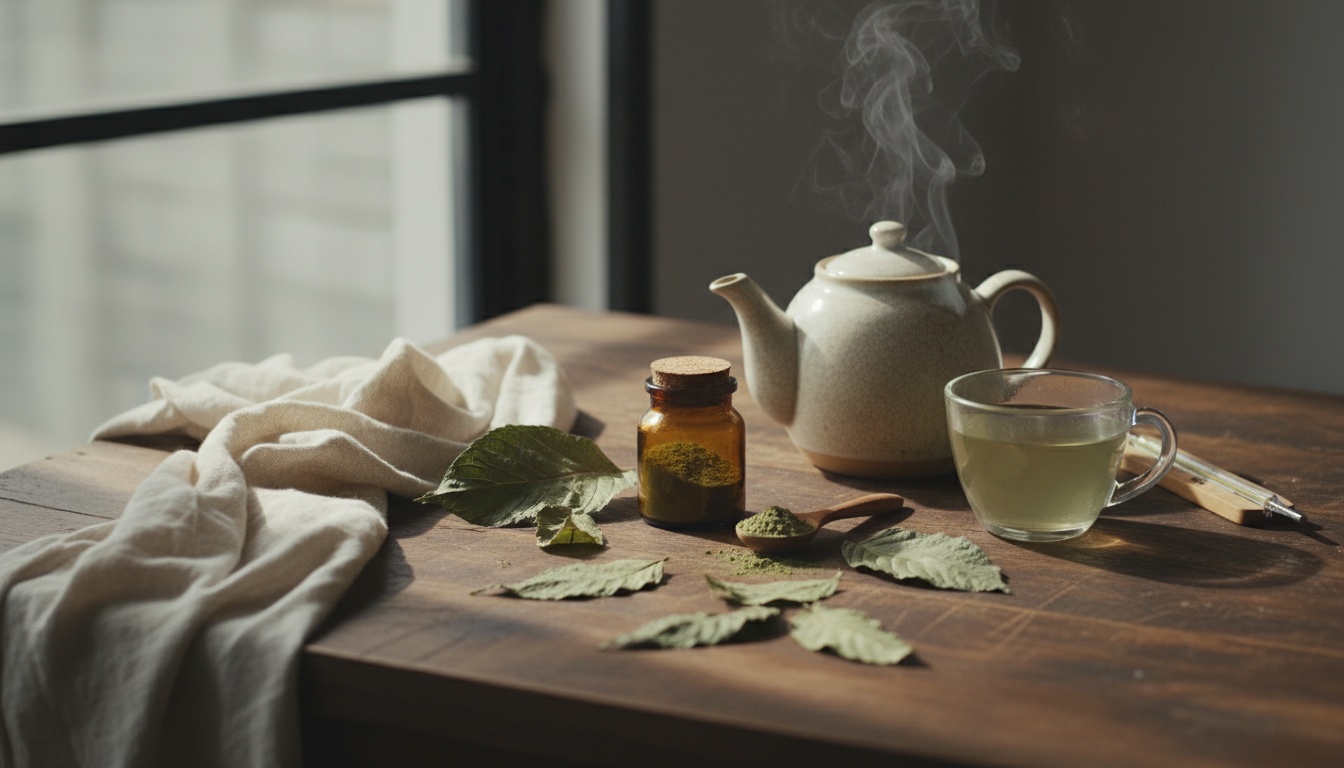
Heat changes kratom more than most people realize. Not overnight, and not in some dramatic way — but steadily, through everyday habits like leaving your stash near a sunny window or brewing tea at a rolling boil. Over time, those small choices chip away at potency without you noticing until the effects feel weaker than they used to.
The compounds responsible for kratom’s effects are more sensitive to temperature than most users assume. Once you understand how heat interacts with them, you can store and prepare kratom in ways that keep it working the way it’s supposed to.
What’s Actually Happening at the Molecular Level
Kratom contains dozens of alkaloids, but two do most of the heavy lifting: mitragynine and 7-hydroxymitragynine. They don’t respond to heat the same way.
Mitragynine is the more abundant of the two and holds up reasonably well under normal conditions. At room temperature, it stays fairly stable and doesn’t break down quickly during typical storage.
7-hydroxymitragynine is a different matter. It’s far more potent than mitragynine — roughly 46 times stronger, by some estimates — which makes it one of the most important compounds in the plant. It’s also the first to degrade when things heat up.
So when your kratom is exposed to warmth, this is often the compound you lose first. And because it’s disproportionately responsible for potency, its loss changes the whole character of the product, even if the total alkaloid count looks fine on paper. This doesn’t happen instantly — it’s a gradual process — but poor storage or careless brewing adds up over weeks and months.
The Temperature Numbers Worth Knowing
Research published in the Journal of Analytical Toxicology looked at how these alkaloids hold up under different temperatures over time, and the results give some useful benchmarks.
7-hydroxymitragynine starts breaking down once temperatures climb above 104°F (40°C). Mitragynine is tougher — it stays stable around that same 40°C mark but starts degrading at higher temperatures, somewhere between 140-176°F (60-80°C), especially in acidic conditions.
Put that in context: normal indoor room temperature runs anywhere from 68 to 77°F depending on the season and where you live. That’s already close to the danger zone for the more fragile alkaloid. For strains high in 7-hydroxymitragynine, it’s worth aiming for storage under 70°F rather than treating “room temperature” as automatically safe. The warmer your home gets in summer, the faster that quiet degradation happens.
Storing Kratom to Protect Its Potency
Good storage doesn’t take much effort — it just takes a little consistency.
Keep it cool. Aim for a spot that stays reliably under 70°F. A cupboard away from the stove, dishwasher, or direct sun beats an open shelf every time.
Watch where you stash it. Cars, garages, and sheds are bad news, even if their average temperature seems okay. Repeated swings between hot and cool speed up alkaloid breakdown faster than a steady, slightly-warm temperature would.
Don’t ignore humidity. Mold thrives above 70°F with humidity between 60-70%, so controlling temperature does double duty — it slows degradation and cuts down contamination risk at the same time.
Seal it tight. Airtight containers limit exposure to oxygen and moisture, both of which speed up decay. Glass jars with good seals or vacuum-sealed bags both work well.
Consider the fridge for long-term storage. Cold slows degradation noticeably, which helps if you’re holding onto a larger supply. Just make sure the container is fully sealed so condensation doesn’t get in when you take it out.
One easy mistake: mixing different strains in the same container. It happens during reorganizing, but it defeats the purpose of tracking potency and effects strain by strain — whether you’re dealing with powder, capsules, or another form.
Brewing Tea Without Cooking Away the Good Stuff
If you make kratom tea, or prepare edibles and candy at home, brewing method matters more than people think. It’s true that heat can hurt potency, but the idea that boiling “ruins everything” oversimplifies it.
Both mitragynine and 7-hydroxymitragynine start to degrade around 140°F, but that degradation takes time to add up. A short burst of heat during tea prep isn’t nearly as damaging as leaving kratom in a warm cupboard for weeks.
A gentle simmer, somewhere around 185-200°F, extracts alkaloids efficiently without pushing things into the range where breakdown happens fast. You still get a hot, effective cup without unnecessary losses.
Brewing longer doesn’t help much either. Most of the extraction happens in the first 15-20 minutes. After that, you’re mostly just holding your alkaloids at high heat for no extra benefit.
One trick that actually helps: add a splash of lemon juice or apple cider vinegar to your brewing water. The acidity seems to buffer the alkaloids against heat damage while also helping pull them out of the plant material — so it protects and extracts at the same time. It’s likely why traditional preparations often include something acidic; people worked this out through trial and error long before anyone understood the chemistry.
For more detail on technique, see our full guide on how to make kratom tea.
Situations People Often Overlook
Storage and brewing get most of the attention, but heat can sneak in through other channels too.
- Shipping: Packages left in hot delivery trucks or on a sunny porch can heat up fast. Arrange deliveries for when you’re home, or have them sent somewhere climate-controlled.
- Travel: Never leave kratom in a hot car, and avoid packing it in checked luggage that might sit on a hot tarmac. Carry it with you instead.
- Buying in bulk: Larger quantities save money, but only if you can store them properly. If your storage space is limited, smaller, more frequent orders may actually preserve quality better. (Retailers can check our wholesale program for guidance on commercial storage.)
- Seasonal shifts: A storage spot that works fine in winter might get too warm in summer, especially without air conditioning. Reassess it as the seasons change.
- Vendor handling: How kratom was stored and shipped before it reached you matters just as much as what you do at home. Kratom that sat in a hot warehouse may already have lost potency by the time it arrives.
Why Storage Practices Matter to Us
At Amazing Botanicals, we keep our inventory in temperature-controlled storage from the moment it arrives to the moment it ships.
Our kratom is wild-harvested, lab-tested, and processed in AKA GMP-certified facilities — but we don’t stop caring about quality once testing is done. Careful handling afterward is what keeps the product consistent with what was actually tested.
We also work to move inventory quickly. Direct relationships with Indonesian farms and high turnover mean less time sitting in storage where degradation can creep in. This applies across our lineup, from kratom powder and extracts to other botanicals like kava and blue lotus.
Testing tells you what a product started as. Proper handling is what keeps it that way until you use it.
Quick Reference
Storage: Keep below 70°F, use airtight containers, avoid fluctuating environments, and consider refrigeration for longer-term stock.
Tea: Simmer at 185-200°F, add lemon juice or vinegar, and brew no more than 15-20 minutes.
Travel: Keep it with you in climate-controlled spaces — never in a hot car.
Buying: Choose vendors with solid storage practices, and match order size to your own storage setup.
The Bigger Picture
Paying attention to temperature doesn’t need to complicate your routine — a few small habits go a long way. When potency stays consistent, it’s easier to judge how a strain or dose actually affects you, because you’re not fighting hidden variables.
This also says something broader about plant-based products in general: active compounds are often more fragile than people expect, and the same care you’d give to medication or supplements applies here too. Temperature, moisture, and light exposure all play a role in how long a product stays effective.
Once you understand that, you can judge vendors by more than just their lab results — you can factor in how they store and ship their products, too. And you can adjust your own habits to fit your climate and how often you use kratom. It’s not complicated science, but it does make a real difference in the results you get.
Frequently Asked Questions
Does boiling water destroy kratom alkaloids?
It can degrade them, but brief exposure during tea prep won’t wipe them out. Stick to a simmer around 185-200°F and add a bit of lemon juice for extra protection.
What’s the best temperature to store kratom?
Under 70°F, in a cool, dry spot. Refrigeration works well for longer storage, as long as the container is airtight.
Can I tell if my kratom has lost potency from heat?
Not by looking at it. The main sign is that effects feel weaker than they used to — which is exactly why proper storage matters from the start.
Is it safe to leave kratom in my car?
No. Car interiors can hit 130-170°F on a warm day, well past the point where alkaloids start breaking down quickly. Bring it inside with you.
How long does kratom stay fresh with proper storage?
Kept below 70°F in an airtight container, it can hold potency for several months to over a year. Refrigeration extends that further.