



Standing in the security line with CBD oil tucked in your carry-on, watching an agent scrutinize the bottles ahead of you, can make anyone’s pulse quicken. But that anxiety is largely avoidable. Once you understand the actual rules and come prepared, flying with CBD oil is a straightforward process.
The Legal Baseline
Hemp-derived CBD oil with less than 0.3% THC is federally legal to fly with domestically. The 2018 Farm Bill set that threshold and gave travelers a clear legal standard to work from.
That said, being legal on paper doesn’t guarantee a smooth trip through security. Agents still need a way to confirm your product actually meets that federal limit. Show up without proof, and even a fully compliant bottle of CBD oil can get flagged or taken away.
Why Your Certificate of Analysis Matters So Much
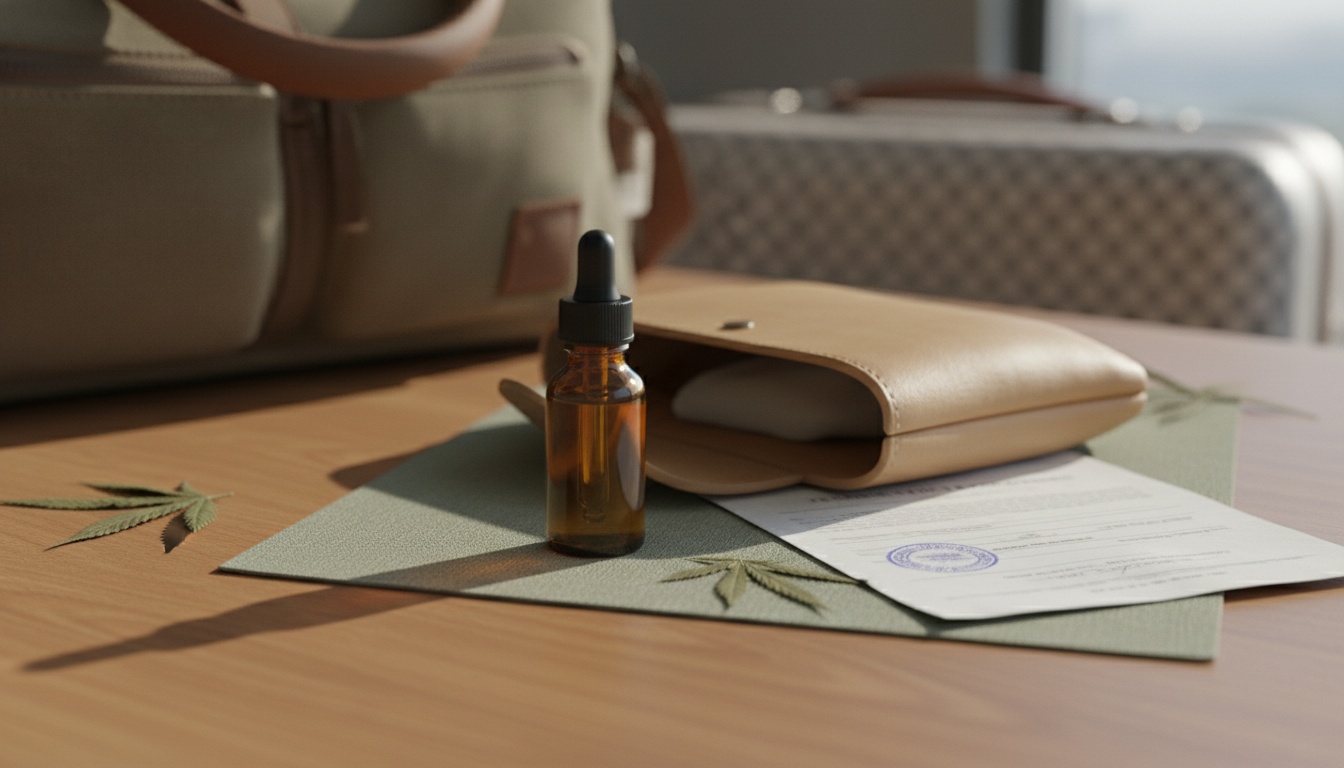
A missing or unclear Certificate of Analysis (COA) is one of the most common reasons CBD products get confiscated at airports. Think of the COA as your product’s ID card — it verifies the THC level, confirms the oil comes from hemp, and ties directly to your specific batch.
With that document in hand, an agent can check your product quickly instead of guessing. Keep it somewhere easy to grab, not buried at the bottom of a suitcase. A printed copy tends to move faster through screening than a PDF on your phone, though either works.
What TSA Actually Requires
TSA permits CBD products with no more than 0.3% THC by dry weight, or those approved by the FDA.
Since CBD oil is a liquid, it falls under the standard 3-1-1 carry-on rule: containers of 3.4 ounces or less, all fitting inside a quart-sized bag. Bigger bottles need to go in checked luggage — though in practice, keeping smaller bottles in your carry-on tends to cause fewer hiccups during inspection.
State Laws Can Still Complicate Things
Federal approval doesn’t erase the patchwork of state rules underneath it.
The airport you’re leaving from might take a relaxed view of hemp products. Your destination might not. And if you have a layover, that’s one more jurisdiction to account for. It’s worth checking the laws in every state along your route, including anywhere you’ll be changing planes, since some airports run tighter screening than others regardless of what federal law says.
International Trips Raise the Stakes
Crossing borders with CBD is a different situation entirely, and it demands more homework.
A lot of countries treat any cannabis-derived product as illegal, no matter how little THC it contains. Others permit CBD but only with specific paperwork or a medical justification. Even if your final destination is CBD-friendly, a layover in a country with strict cannabis laws can still land you in trouble — confiscation or worse.
Choosing the Right Product for Travel
Not all CBD oils carry the same travel risk.
Isolate-based oils, which contain zero THC, remove the biggest source of concern since there’s no chance of testing over the federal limit due to manufacturing variance. If you’re still getting familiar with the different types of CBD products, it’s worth reading up on the basics before you buy.
Broad-spectrum oils strip out THC while keeping other beneficial compounds, landing somewhere in the middle in terms of risk.
Full-spectrum oils, even when technically compliant, carry more risk because they contain trace THC. Slight inconsistencies in a given batch could push that level above 0.3%.
Packaging Makes a Difference
Original, professionally labeled packaging goes a long way toward reassuring security staff that your product is legitimate.
Look for bottles with the manufacturer’s name, a clear ingredient list, batch numbers, dosage instructions, and any required regulatory language. Don’t pour your CBD oil into a travel bottle or unmarked container — doing so raises red flags immediately and makes it much harder for anyone to verify what’s inside.
Don’t Wait Until the Last Minute
Check your documentation well ahead of your trip. COAs are tied to specific batches and can become outdated, so oil you bought months ago may need a fresh lab report before you fly.
If your current COA is stale, reach out to the manufacturer — most reputable companies will send updated documentation to customers who ask. And give yourself some buffer time at the security checkpoint, since CBD products sometimes draw extra scrutiny even when everything is in order.
A Growing Market, Changing Standards
CBD’s popularity keeps climbing, and that means more people are flying with these products than ever before. As demand grows, airports and security agencies are gradually adjusting how they screen and handle botanical products.
Over time, industry standards should make travel with CBD simpler and more predictable. Until then, doing your own homework is still the best way to avoid problems. If you’re looking for a relaxation option with a different regulatory profile, some travelers explore alternatives like blue lotus, which may face fewer restrictions.
Other Botanicals Worth Knowing About
CBD isn’t the only wellness product people bring on trips.
Kratom, for instance, comes with a messier set of rules. It’s legal in many states but banned in others, and international travel with it carries real risk.
The format matters too. Kratom capsules in their original packaging usually draw less attention than loose powder. Concentrated products like extracts or shots can prompt more questions simply because of how potent they look. Kratom tea, which resembles a familiar herbal product, tends to be an easier sell at security — but every kratom product still requires checking local laws before you travel.
The common thread across all of these: know the rules for where you’re going, carry solid documentation, and stick with brands that label their products clearly.
Sourcing Matters More Than You’d Think
Pick CBD manufacturers who understand what travelers need.
Brands with GMP certification and independent lab testing tend to produce better documentation and design packaging with travel in mind. Look for companies that make their COAs easy to find and offer support if you have travel-related questions.
Steer clear of products with vague sourcing, no batch numbers, or manufacturing practices that raise questions. These small gaps can turn into big headaches at the airport.
A Simple Pre-Flight Checklist
A few habits can save you a lot of stress:
- Confirm your CBD oil tests below 0.3% THC using a current COA
- Make sure the packaging shows manufacturer details and batch numbers
- Look up the laws for your departure city, destination, and any layovers
- Print relevant regulations if you want something to reference at security
- Pack your oil according to TSA’s liquid rules based on bottle size
If Security Stops You
Stay calm and cooperative. Hand over your COA and, if needed, briefly explain that the product falls under federal hemp guidelines. Most agents are familiar with CBD regulations and just want documentation to back up what you’re telling them.
If your product still gets confiscated despite everything being in order, ask to speak with a supervisor and write down what happened. Some manufacturers will reimburse you if their product was wrongly taken.
Doing Your Homework on International Destinations
Before any international trip, look into that specific country’s stance on CBD.
Some places require a prescription or wellness documentation. Others ban cannabis-derived products outright, treating hemp and marijuana the same way under the law. Checking with an embassy or consulate is a good way to get current information, since these rules shift often and outdated advice can get you into real trouble.
Where CBD Travel Rules Are Headed
Things are getting clearer, if slowly. More airport staff are being trained on CBD regulations, and as the industry matures, travel rules should become more consistent across different jurisdictions.
Manufacturers that care about quality are already adjusting their products and paperwork to make life easier for traveling customers, and that trend should keep building as more people bring CBD along on trips.
With the right preparation, flying with CBD oil doesn’t have to be stressful. Understanding the rules, keeping your documentation current, and buying from trustworthy brands handles most of the potential problems before they start.
Frequently Asked Questions
Can I bring CBD oil on a plane?
Yes. Hemp-derived CBD oil with less than 0.3% THC is legal for domestic flights, but you should carry a current Certificate of Analysis to back it up.
Does CBD oil count as a liquid for TSA?
Yes, it follows the standard 3-1-1 rule. Containers need to be 3.4 ounces or smaller for carry-on; anything bigger goes in checked luggage.
What documents do I need to travel with CBD oil?
Bring a current COA showing THC content under 0.3% that matches your product’s batch. Keep it within easy reach during screening.
Can I travel internationally with CBD oil?
It’s more complicated. Some countries ban CBD outright, others require special documentation. Always check your destination’s laws before you go.
What’s the safest type of CBD oil for travel?
Isolate-based oils with zero THC carry the least risk. Broad-spectrum is a reasonable second choice; full-spectrum carries more risk due to trace THC.
What happens if TSA finds my CBD oil?
With proper documentation, it should pass through without issue. Stay calm, show your COA if asked, and be aware that undocumented products risk confiscation.
Should I pack CBD oil in carry-on or checked luggage?
Bottles of 3.4 ounces or less can go in your carry-on liquids bag. Larger bottles need to go in checked luggage, though carry-on placement is usually simpler when possible.
Do I need original packaging for travel?
Yes. Original packaging with clear labeling and batch numbers helps establish legitimacy. Avoid transferring CBD oil into unmarked containers.