



You open the package, and the powder looks fine. The price seemed reasonable. But something nags at you.
In a market with no consistent regulation, that gut feeling might be all you have to go on — and it’s not enough. FDA testing on a batch of kratom products turned up dangerous levels of lead and nickel, well above safe daily limits. A separate investigation found Salmonella in half the samples checked. This isn’t a fluke. It’s a recurring issue.
The problem goes beyond bacteria and heavy metals, too. Some products marketed as kratom actually contain synthetic compounds far stronger than the plant’s natural alkaloids. In July 2025, the FDA sent warning letters to companies selling concentrated 7-hydroxymitragynine, a synthetic version reported to be up to 13 times more potent than morphine at the same receptors.
None of this is visible to the naked eye. You can’t see adulterants, smell heavy metals, or taste Salmonella. But you can build a habit of checking your kratom systematically, before problems show up. Here’s how.
What “Fake Kratom” Actually Covers
Fake kratom isn’t a single issue — it’s a few different ones.
Diluted kratom is mixed with fillers like flour, starch, or other ground plant material. It won’t necessarily hurt you, but you’re paying full price for a weaker product.
Adulterated kratom contains undisclosed additives: synthetic alkaloids, pharmaceutical compounds, or heavy metals. This is the category that carries real health risk — unexpected side effects, dangerous interactions, or long-term damage.
Low-quality kratom is technically the real plant, Mitragyna speciosa, but it’s stale, poorly stored, or made from inferior leaves. Users often notice it barely works, and it can cause stomach discomfort.
Each type calls for slightly different detective work, but the goal is the same: protect your money and your health.
Check for Vendor Certification First
The best verification happens before you ever place an order.
Look for vendors certified under the American Kratom Association’s Good Manufacturing Practice (GMP) program. This isn’t a one-time badge — it requires independent audits every year. Certified vendors follow standardized manufacturing steps, maintain clean facilities, and document their quality control process.
Think of it like a restaurant health inspection: ongoing oversight, outside verification, and real consequences for cutting corners. It won’t guarantee a flawless product every time, but it cuts the odds of contamination or mislabeling significantly.
If a vendor isn’t GMP certified, ask why. How they answer tells you a lot.
Ask for Third-Party Lab Results
Lab testing shouldn’t be optional — it’s the foundation of a trustworthy product.
Every batch of quality kratom should be tested by an independent lab, and reputable vendors will show you the certificate of analysis (COA) before you buy. A solid COA covers:
- Heavy metals (lead, arsenic, mercury, cadmium)
- Microbial contamination (Salmonella, E. coli, yeast, mold)
- Alkaloid content (mitragynine and 7-hydroxymitragynine levels)
- Batch traceability (a specific batch number and test date)
Watch out for vendors who post generic lab results that aren’t tied to a specific batch. That tells you almost nothing about the product in your hands. If a vendor can’t produce current, batch-specific results, treat that as a warning sign — testing costs money, and skipping it usually means cutting corners somewhere else.
Dig Into the Vendor’s Reputation
Numbers and reviews tell a story if you read them carefully.
Check multiple platforms for independent reviews, looking for consistent feedback about product quality and how the vendor handles problems. Pay close attention to how they respond to negative reviews — or whether they respond at all.
Red flags include:
- Mostly vague five-star reviews with no real detail
- No vendor response to legitimate complaints
- Claims that sound too good to be true
- Prices well below the market average
- Little to no information about sourcing
A vendor with years of consistent, positive feedback has a reputation to protect. A brand-new seller with aggressive marketing and no history has little to lose by disappearing after a bad batch. It’s also worth checking whether a vendor has faced FDA warning letters, recalls, or documented contamination — this information is often public.
Look Closely at the Packaging
Professional packaging usually signals a professional operation.
Quality kratom should arrive sealed and labeled with a batch or lot number, packaging or expiration date, strain name and vein color, accurate net weight, vendor contact details, and storage instructions.
Handwritten labels, missing information, or inconsistent branding don’t automatically mean the product is fake, but they raise real questions about quality control. If something goes wrong, can the vendor trace the batch back to its source? If they can’t, you have no way to hold them accountable.
Packaging also protects the product itself. Moisture-resistant, light-blocking packaging preserves alkaloid content. Thin plastic bags speed up degradation.
Inspect the Powder
Pure kratom has a recognizable look once you know what to check for.
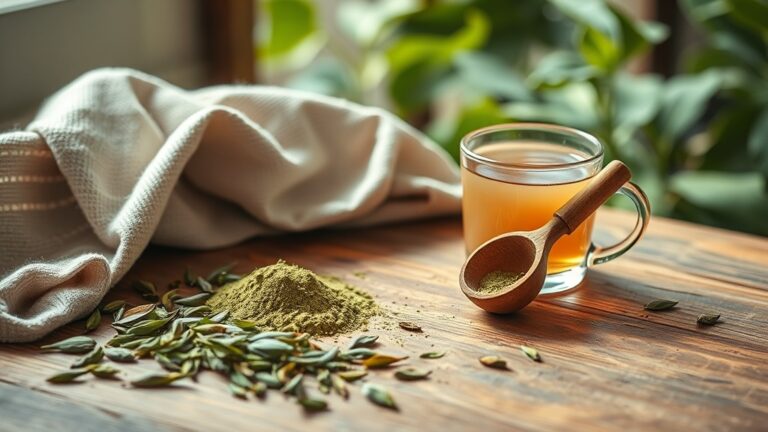
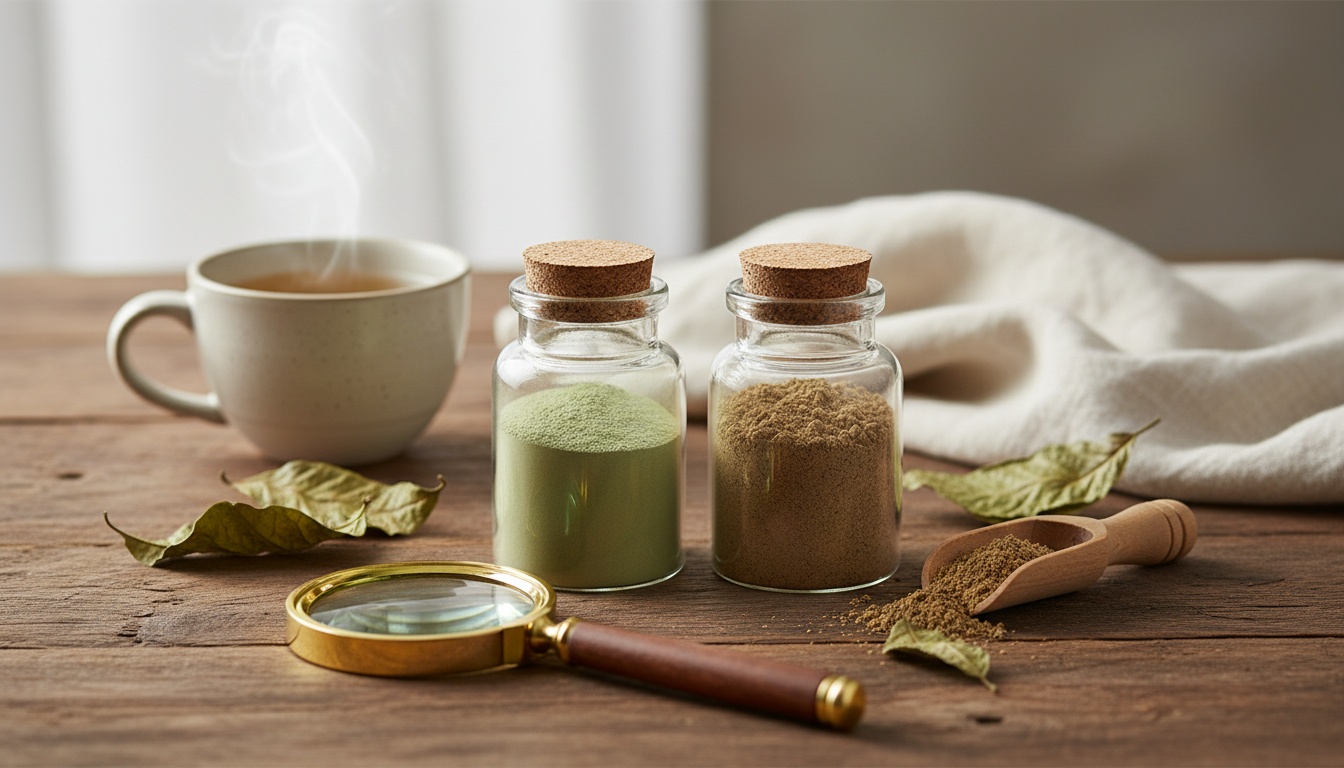
It should be finely and evenly ground, similar in texture to matcha or good cocoa powder. Color depends on strain, ranging from light sage to deep forest green, with red vein strains often showing a rust or brownish tint and white vein strains leaning lighter and brighter.
Be cautious if you notice:
- A coarse, gritty texture with visible stems
- Odd colors like neon green, gray, or yellow
- Clumping or caking (a sign of moisture exposure)
- Foreign debris
- Uneven coloring within the same bag
Scoop from a few different spots in the package — it should look the same throughout. If it doesn’t, that suggests poor processing or mixing with fillers.
Trust Your Nose
Kratom has a distinct, earthy smell that’s easy to recognize once you’ve encountered the real thing. Think dried leaves with a bitter, herbal edge — something close to green tea or fresh-cut hay.
Be suspicious of:
- No smell at all (often a sign of old or poorly stored product)
- Chemical or artificial odors (possible adulteration)
- Musty or moldy smells (contamination)
- Sweet or perfume-like scents (added substances)
Your sense of smell is good at picking up on spoilage and contamination, even before you can explain why something feels off. If it smells wrong, don’t ignore that.
Taste It Carefully
Real kratom is bitter — noticeably, unmistakably bitter. That bitterness comes from the same alkaloids responsible for its effects, so if your kratom tastes mild or even pleasant, something’s off. It could be heavily diluted, badly degraded, or not kratom at all.
Take a small amount, less than half a gram, and let it sit on your tongue briefly. You should feel an intense bitterness that lingers. Strains vary slightly — reds can taste a bit earthier, whites a bit sharper — but the baseline bitterness should always be there.
Pay Attention to the Effects
This is your last check, and it comes with a caveat: effects vary a lot from person to person, strain to strain, and even day to day. What you’re really looking for is whether the effects roughly match what that strain is known for.
Red vein strains are generally associated with relaxation. Greens tend to sit in the middle. Whites are usually linked to energy and focus. If a red strain leaves you wired and uneasy, or a white strain makes you drowsy, something may be mislabeled or adulterated.
When trying a new vendor, start with a smaller dose than usual and pay attention over the next few hours. Unusual effects — or no effects at all — are worth investigating further. Just keep in mind this is your last line of defense, not your first; by the time you notice a problem, you’ve already consumed the product.
When to Just Walk Away
Some situations don’t need more investigation — they need you to leave.
Walk away if a vendor refuses to share lab results, can’t explain their sourcing, makes specific health claims about kratom, prices their product far below market rate, has a history of contamination complaints, or pushes you to buy on the spot.
These aren’t small issues. They’re basic failures of transparency, and there are enough legitimate vendors out there that you never have to settle for one that raises these flags.
Putting a System Together
Verification works best as a habit, not a one-time check.
Start with the vendor: GMP certification, third-party lab testing, a solid reputation, and clear communication. This filters out most of the risk before you even open the package.
Next, check the product itself when it arrives — packaging, appearance, smell, and taste. This takes a few minutes and adds another layer of confidence.
Finally, watch how your body responds, especially with a new vendor or strain, starting with a lower dose. If a product passes vendor checks but fails the sensory test, you’ll know before you consume it. If it passes both but still causes odd effects, you have a clear signal something’s wrong.
Keeping simple notes on vendors, strains, and batches over time can help you spot patterns and avoid repeat mistakes.
The Bigger Picture
There’s no regulatory body currently guaranteeing that kratom products are safe and accurately labeled. That means the responsibility falls on two groups: consumers who verify what they buy, and vendors who choose to hold themselves to a higher standard even without being forced to.
The market is slowly improving. Certification programs like AKA’s GMP standard are giving it some structure, and more buyers are asking the right questions. But contaminated and adulterated products still turn up, and low-quality kratom still gets sold to people who don’t know what to look for.
Your best defense is knowing what good kratom looks, smells, tastes, and feels like — and being willing to walk away when something doesn’t add up.
Frequently Asked Questions
What’s the fastest way to check kratom quality before buying?
Look for AKA GMP certification and ask for batch-specific lab results. Those two things address most of the common risks.
Can I trust kratom sold at gas stations?
Be careful. Many of these products skip lab testing and have unclear sourcing, and some have been tied to contamination. Check for certification and test results no matter where you’re buying.
How do I know if my kratom has gone bad?
Watch for a fading smell, color shifting toward brown or gray, clumping, a musty odor, or effects that seem much weaker than before. Stored properly, kratom typically holds up for one to three months, sometimes longer.
Does a higher price mean better quality?
Not automatically. Price reflects testing, sourcing, and overhead, but it’s not proof of quality on its own. Rely on the verification steps above rather than the price tag alone.
What should I do if I think my kratom is contaminated?
Stop using it right away. Contact the vendor with specifics. If they brush you off, report it to the American Kratom Association or your state’s consumer protection office.
Is there a visual test that proves kratom is authentic?
No single look, smell, or taste test can confirm it on its own. Lab testing is the only way to verify alkaloid content and rule out contamination — everything else is supporting evidence.