



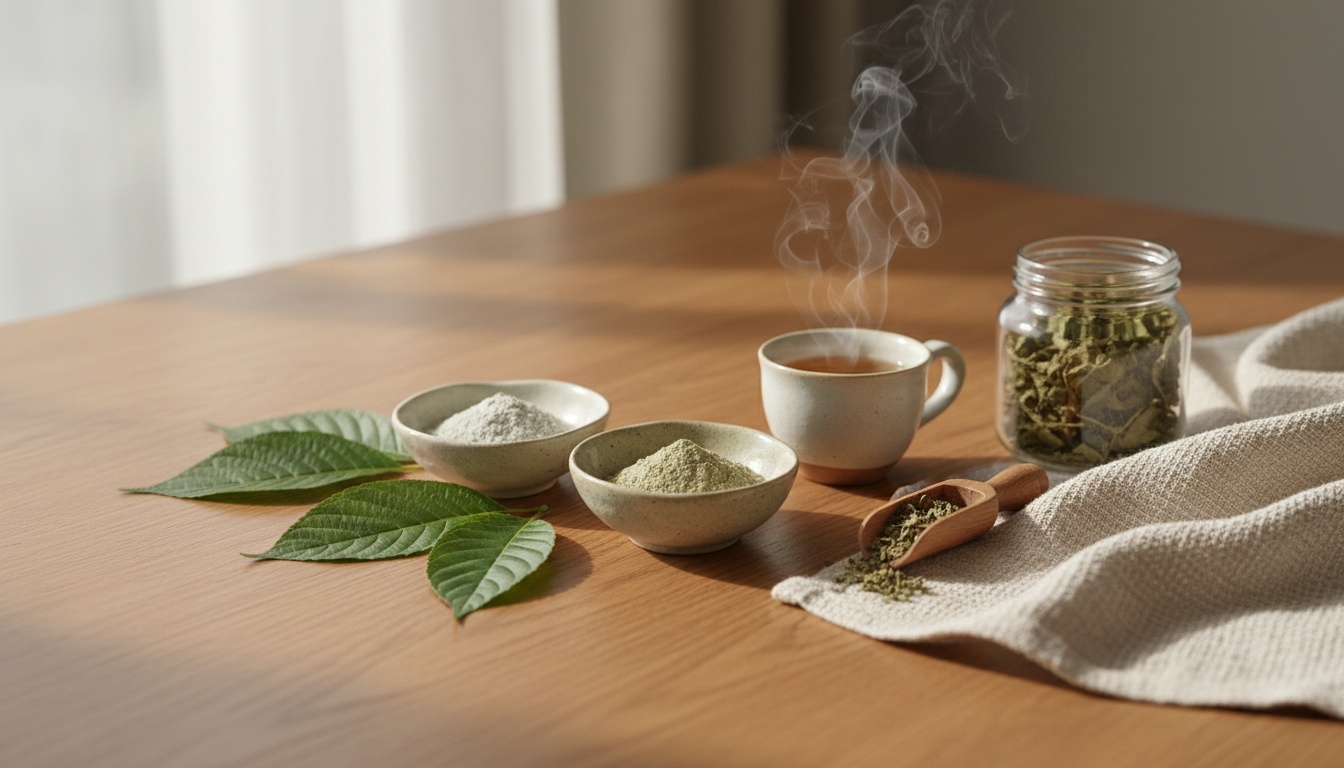
If you’re building a morning kratom routine, chances are White Maeng Da and White Thai have both crossed your radar. They’re the two go-to white vein strains for energy and focus, but they don’t behave the same way. Knowing what separates them can save you from picking the wrong one for what you actually need.
Here’s a closer look at how these strains differ and where each one fits best.
Where They Come From
White Maeng Da traces back to central Thailand, where growers developed it through selective breeding. The name itself — “Maeng Da,” roughly translated as “pimp grade” — signals top-tier quality in Thai tradition.
These days, most Maeng Da on the market actually comes from Indonesian farms working with Thai genetic stock. Growers there time their harvests and refine their processing specifically to boost alkaloid levels.
White Thai, on the other hand, sticks closer to how kratom has always been grown in Thailand. It thrives naturally in the country’s humid south, near the Malaysian border, and farmers there tend to favor traditional methods over the hybrid techniques used for Maeng Da.
Alkaloid Content: Where the Real Differences Lie
The gap between these two strains really comes down to chemistry.
White Maeng Da usually packs more mitragynine — often somewhere between 1.2% and 1.8% — along with elevated paynantheine and speciogynine. That combination is a big reason users describe it as more intense than most other white strains.
White Thai runs a bit lower, typically 1.0% to 1.4% mitragynine, but its alkaloid ratios stay fairly consistent from batch to batch. Research from the Journal of Wellness-focused Chemistry points out that these ratios — not just raw alkaloid totals — largely determine how a strain actually feels.
How People Have Traditionally Used Them
White Maeng Da has long been linked to physically demanding work in Southeast Asia. Laborers reportedly leaned on it to power through long shifts that required sustained energy.
Common uses people report today include:
- Morning productivity pushes
- Physical tasks that need stamina
- Work requiring sharp mental focus
- Long stretches of sustained activity
White Thai served a different role historically — more tied to social life and community gatherings than manual labor.
People often reach for it during:
- Social events where alertness matters
- Creative or artistic work
- Light-to-moderate physical activity
- Afternoons when energy tends to dip
Onset, Peak, and Duration
Timing is another place these strains part ways.
White Maeng Da tends to kick in fast — many users notice effects within 15 to 30 minutes — and peaks hard for about 4 to 6 hours. That intensity is real, but it can also fade faster than some other white strains.
White Thai takes its time, usually 30 to 45 minutes before reaching full effect. But it sticks around longer, often 5 to 7 hours, with a smoother rise and fall. For users who want a steadier experience without sharp peaks and drops, that’s a meaningful difference.
Processing Differences That Affect Quality
How each strain is processed shapes what ends up in your jar.
White Maeng Da typically goes through more intensive processing — specific drying and fermentation steps designed to push alkaloid concentration higher. Good-quality Maeng Da should look light green to off-white and grind into a fine powder.
White Thai usually sticks with traditional sun-drying, which helps preserve its natural alkaloid balance and tends to produce more consistency batch to batch. Premium White Thai has a pale green tint and a slightly coarser texture than Maeng Da.
Dosage: How Much to Use
Because the alkaloid profiles differ, so do the amounts people typically use.
White Maeng Da’s higher potency means less is usually needed. New users often start around 1-2 grams, while more experienced users might go up to 2-4 grams.
White Thai generally calls for a bit more — new users starting near 2-3 grams, with experienced users at 3-5 grams. Its gentler profile gives more room to adjust dosing without tipping into overwhelming territory.
Whichever strain you choose, start low. Tolerance varies a lot from person to person, and there’s no harm in working up gradually. For more detail, check our kratom dosage guide.
Which One Fits You Better
White Maeng Da makes sense if you:
- Want fast, strong effects
- Prefer a shorter effect window
- Care most about potency per gram
- Already have experience with kratom
White Thai makes sense if you:
- Prefer something gentler that lasts longer
- Want a predictable, steady experience
- Are new to white vein strains
- Need energy that holds up through the day
Sourcing Matters More Than the Strain Name
No matter which strain you pick, quality sourcing makes or breaks the experience. Look for vendors that provide:
- Third-party lab testing
- AKA GMP certification
- Clear strain and origin information
- Transparent sourcing practices
The American Kratom Association notes that proper testing is what actually confirms product safety and alkaloid accuracy — strain names alone don’t guarantee anything. Vendors like Amazing Botanicals build their reputation on maintaining these standards for both White Maeng Da and White Thai, backed by lab testing and GMP-certified processing.
Keeping It Fresh
Storage matters just as much as sourcing. Keep kratom in an airtight container, away from light, heat, and moisture, and it should hold its potency for 1 to 2 years.
Worth noting: White Maeng Da’s higher alkaloid concentration can degrade a bit faster if storage conditions aren’t ideal. White Thai’s more stable profile tends to hold up longer, even under less-than-perfect conditions.
Bottom Line
Picking between these two really comes down to what you need and how much kratom experience you have.
White Maeng Da delivers strong, fast effects for people who want intensity. White Thai offers a gentler, longer experience better suited for all-day use or for anyone still getting familiar with white strains.
If you’re new to this category, White Thai is the safer starting point. You can always work up to White Maeng Da once you know how your body responds. Either way, quality sourcing and proper testing matter more than which name is on the label.
Frequently Asked Questions
Which strain is stronger, White Maeng Da or White Thai?
White Maeng Da generally has higher alkaloid concentrations, making it more potent gram for gram. That said, “stronger” is relative — it depends on your tolerance and what effects you’re after.
Can I mix White Maeng Da and White Thai together?
Yes, plenty of users blend the two to balance intensity with longer duration. Start with small amounts of each and adjust the ratio until it feels right.
How long do the effects last for each strain?
White Maeng Da typically runs 4 to 6 hours; White Thai usually lasts 5 to 7 hours. Your actual experience will depend on dosage and tolerance.
Which strain is better for beginners?
White Thai is usually the better starting point — its onset is gentler and its effects are more predictable.
Does regular use lead to tolerance?
Yes, with any kratom strain. Rotating strains and taking occasional breaks helps keep things working effectively.
What’s the best time of day to use these?
Morning or early afternoon works best for both. Avoid using them in the evening, since their energizing effects can interfere with sleep.