



Mimosa Hostilis shows up often in ethnobotanical circles, usually trailing a mix of curiosity and confusion. You may have seen it sold online, mentioned alongside kratom, or referenced in discussions about plant-based wellness.
Here’s the part sellers tend to gloss over: Mimosa Hostilis has real traditional roots, but it also comes with regulatory baggage that’s hard to ignore. Knowing what the plant actually is, how it’s traditionally been used, and where the risks lie will help you think through any decision about it clearly.
What the Plant Actually Is
Mimosa Hostilis — botanically Mimosa tenuiflora — is a perennial tree or shrub native to Brazil, with populations spreading through parts of Central and South America. It grows in tropical and subtropical zones with seasonal rain, reaching 4 to 5 meters tall, and produces clusters of small white flowers along cylindrical spikes.
Indigenous groups in northeastern Brazil have known the plant for generations, calling it “jurema-preta” or simply “jurema.” Communities such as the Kariri-Shoko have used it to prepare a psychoactive drink called Jurema, brewed for spiritual and healing ceremonies that predate Portuguese colonization by centuries.
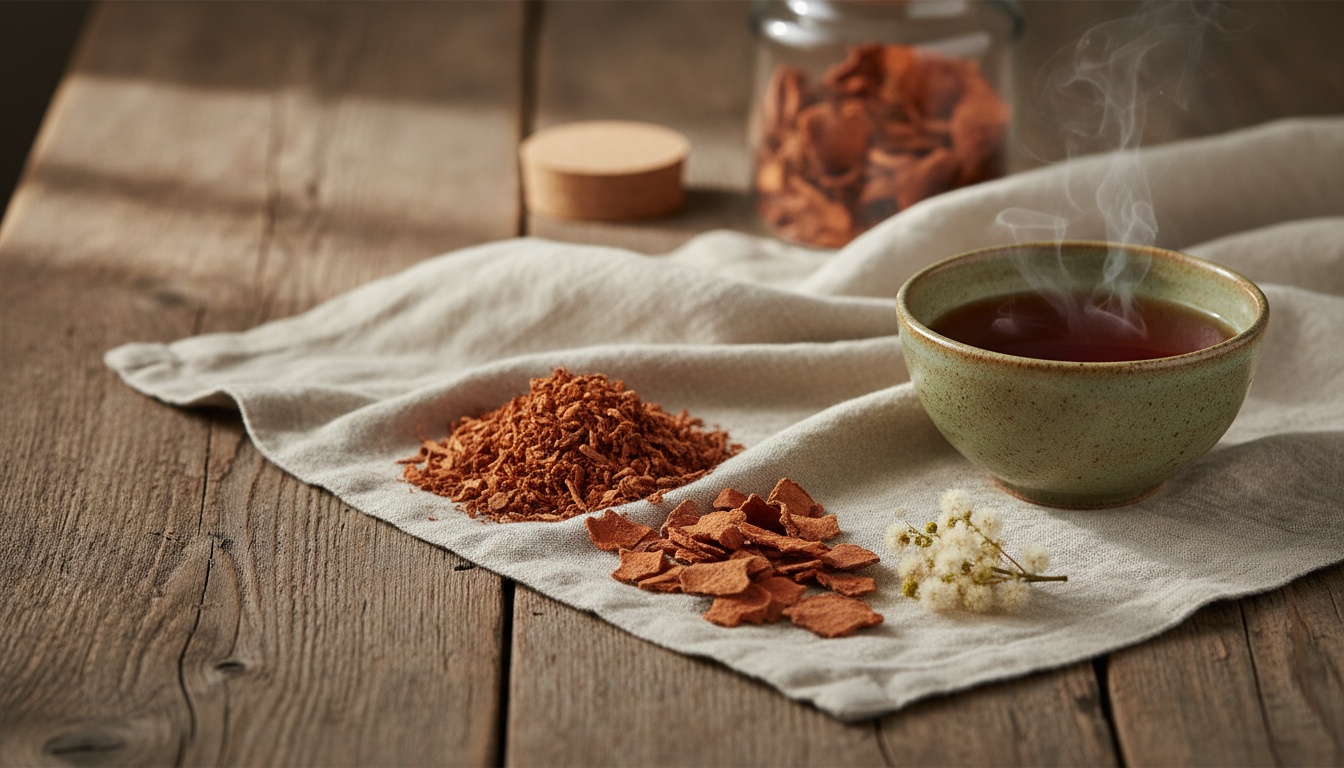
Most commercial products focus on the root bark, since that’s where the plant’s active compounds concentrate most heavily.
How It Has Traditionally Been Used
Jurema ceremonies aren’t the only traditional application. Indigenous healers have long used the bark to treat wounds, burns, and other skin conditions. Interest in this use grew wider in the 1980s, when researchers in Mexico documented its apparent effectiveness on burns and skin lesions.
Some communities made poultices or infusions for topical use. Others consumed it internally, though methods and dosing varied a great deal from one region and tradition to the next. Ceremonial preparation of Jurema, in particular, follows specific steps handed down over generations — a far cry from how the plant is packaged and sold commercially today, often without any of that cultural context.
What’s Actually in the Plant
Mimosa Hostilis bark contains a dense mix of compounds: roughly 16% tannins, along with saponins, alkaloids, lipids, phytosterols, and glucosides like xylose, rhamnose, and arabinose. It also contains lupeol, methoxychalcones, and labdane diterpenoids.
The compound that changes the conversation entirely, though, is DMT.
Dried root bark from Mexican Mimosa hostilis can contain around 1 to 1.7% DMT (dimethyltryptamine), a potent psychedelic. The stem bark carries far less — about 0.03%. DMT sits in Schedule I under U.S. federal law, meaning regulators consider it high-risk for abuse with no accepted therapeutic use. That classification alone creates legal complications for anything derived from this plant.
Researchers have also found a compound called yuremamine, identified in 2005, which belongs to a previously undescribed class of phytoindoles. It may explain why DMT appears orally active in traditional Jurema drinks, though the research on this is still thin.
Where the Evidence on Benefits Stands
Most of the research on Mimosa Hostilis centers on wound care rather than its psychoactive side. It’s become one of the more studied plants in this area, with some clinical work pointing to strong results for skin lesions, including venous leg ulcers.
The wound-healing effect seems tied to the bark’s high polyphenol content and a group of triterpenic saponins called mimonosides A, B, and C, which show anti-inflammatory and antimicrobial activity in lab studies.
Traditional users report benefits for various skin issues, but solid clinical evidence remains limited, and most of what does exist applies to topical use rather than ingestion. The DMT-related effects are a separate matter altogether — one tied to legal risk and safety concerns rather than any therapeutic benefit.
Safety Concerns Worth Knowing
DMT content is the main safety issue here. Home extraction methods that pull DMT from Mimosa hostilis roots typically yield unpurified products with no reliable data on composition or toxicity. Anyone using these extracts is essentially taking an unknown substance.
Unlike botanicals with established testing standards, Mimosa Hostilis products sold in the U.S. rarely get independent lab verification. That leaves buyers with little way to confirm what’s actually in the package.
Psychedelic compounds bring their own risks — unpredictable psychological reactions, potential interactions with medications, and complications for people with certain health conditions. Without standardized dosing, those risks are harder to manage.
Even topical use isn’t risk-free. Traditional applications suggest reasonable safety when used externally, but commercial products today can vary widely in strength and purity.
The Legal Gray Zone
Mimosa Hostilis sits in an odd legal spot in the U.S. The plant material isn’t explicitly scheduled, even though it contains a Schedule I substance. That gap exists partly because the 1971 Convention on Psychotropic Substances allows exceptions for traditional use by small, clearly defined groups practicing religious or ceremonial rites — language that has kept the plant from being banned outright.
Extracting DMT from it, though, is unambiguously illegal. And possessing the plant with intent to extract DMT can carry serious legal consequences.
This uncertainty puts both sellers and buyers in a tricky position. Enforcement priorities can shift with little warning, and anyone involved with the product could suddenly find themselves exposed.
How It Stacks Up Against Other Ethnobotanicals
Context helps here. Kratom, sourced from trees in Southeast Asia, contains alkaloids like mitragynine that act on the body through different mechanisms — and critically, without any psychedelic effect. The kratom industry has also moved toward more consistent testing, with third-party lab verification and GMP-certified processing becoming more common.
Kava works through kavalactones and offers a relaxing effect, with a long history of traditional use and a clearer legal standing. Blue Lotus carries cultural significance from ancient use and has mild psychoactive properties, but draws far less regulatory attention.
What sets Mimosa Hostilis apart is the combination of a Schedule I compound and very little industry oversight. Other botanicals have built testing standards and transparency over time. Mimosa Hostilis hasn’t caught up.
Things Worth Weighing Before Trying It
A few points deserve real thought if you’re considering this plant:
- Legal exposure. The gray area could tighten at any point, and what’s fine today may not be tomorrow.
- Unverified products. Without standardized testing, there’s no reliable way to know potency or purity.
- Thin safety data. Traditional topical use looks reasonably safe, but modern products lack clinical backing, especially for internal use.
- Intent matters legally. Buying plant material for extraction crosses a clear legal line, and even simple possession can become an issue depending on where you live.
Options With Clearer Standards
You don’t have to accept regulatory uncertainty to explore plant-based wellness. Kratom, for instance, has a more established path — transparent sourcing, third-party lab testing, and GMP-certified processing that lets you actually verify what you’re buying.
At Amazing Botanicals, every batch goes through testing before it reaches a customer. We source from trusted farms in Indonesia and process everything in AKA GMP-qualified facilities. Our lineup includes multiple kratom strains in powders, capsules, extracts, and edibles, along with other botanicals like Kava and Blue Lotus.
The core difference is accountability — you get lab results, you know what’s in the product, and you’re making a choice based on real information instead of guesswork.
Common Questions
Is Mimosa Hostilis legal in the U.S.?
The plant occupies a gray zone. It isn’t explicitly scheduled, but it contains DMT, which is Schedule I. Possessing the plant is technically legal; extracting DMT from it isn’t. That status could shift without notice.
How is it different from kratom?
Mimosa Hostilis contains DMT, a psychedelic. Kratom contains alkaloids like mitragynine that don’t produce psychedelic effects and has more established testing and regulatory clarity.
Can it help with wound healing?
Some research supports topical use for wounds and skin lesions, including venous ulcers. But commercial products today vary in quality, and there’s little standardization to confirm potency or purity.
Where can I find lab-tested botanicals instead?
Amazing Botanicals offers third-party tested kratom and other botanicals made in GMP-certified facilities, with every batch checked for purity and potency before it ships.
Final Thoughts
Mimosa Hostilis has real traditional value, especially around topical wound care, and a documented history that goes back centuries. But the DMT content complicates things well beyond simple botanical curiosity — legal risk, inconsistent quality, and unknown safety profiles all factor into any decision to use it.
If you’re looking at ethnobotanicals for wellness, it’s worth asking what matters more to you: traditional use with legal ambiguity, or established quality standards with clearer legal footing. The market will keep evolving — some plants moving toward transparency, others staying stuck in uncertainty.
Pick products you can actually verify, and suppliers willing to back up their claims with real testing. That clarity is worth more than convenience.
[…] situation isn’t unique. When a product sits in legal gray areas, mainstream retailers tend to step back, and specialty sellers step in to fill the gap — often […]
[…] appeal to people who want a range of effects and don’t mind dealing with more complexity and legal gray areas. Matcha fits people who want dependable, gentle energy backed by a long cultural tradition and […]