


Kratom comes in several forms — powder, capsules, tea, extracts, and shots — and each one behaves differently. Onset speed, potency, and how easy the dose is to control all shift depending on which form you pick. Choosing the right one, and using it correctly, is what separates a smooth first experience from a rough one. This guide walks through each form, how to prepare it, and the decisions that matter most for new users.
The short version: start with 1–2 grams and give it 45 minutes before deciding whether it’s working. Powder kicks in within 15–30 minutes; capsules take longer, usually 30–60 minutes, because the shell has to dissolve first. An empty stomach makes effects stronger and faster, so eat something light beforehand if you’re prone to nausea. Never take a second dose while you’re still waiting for the first one to peak. Extracts are much more concentrated and build tolerance faster, so they’re not a good starting point. Green vein tends to be the easiest strain for beginners.
The Different Forms of Kratom
Picking a form is the first real decision, since it shapes onset time, how precisely you can dose, and how forgiving the whole experience is.
| Form | Onset | Dose Control | Best For | Drawbacks |
|---|---|---|---|---|
| Powder | 15–30 min | Excellent (scale to 0.1g) | Precision dosing, experienced users, flexibility | Bitter taste; needs a scale |
| Capsules | 30–60 min | Good (pre-measured) | Convenience, no taste, consistency, travel | Slower onset; more capsules needed for higher doses |
| Tea | 20–40 min | Variable (depends on brewing) | Gentle onset, lower nausea risk | Takes time to prepare; yield depends on method |
| Extracts | 15–25 min | Difficult (potent, small margin for error) | Experienced users with specific needs | Faster tolerance buildup; higher overdose risk |
| Shots | 10–25 min | Fixed per bottle | Fast, grab-and-go use | Costs more per dose; same tolerance risk as extracts |
If you’re new to kratom, stick with capsules or measured powder at a low dose. Both give you control over exactly how much you’re taking, which matters more than anything else when you’re still learning how your body responds.
Using Kratom Powder
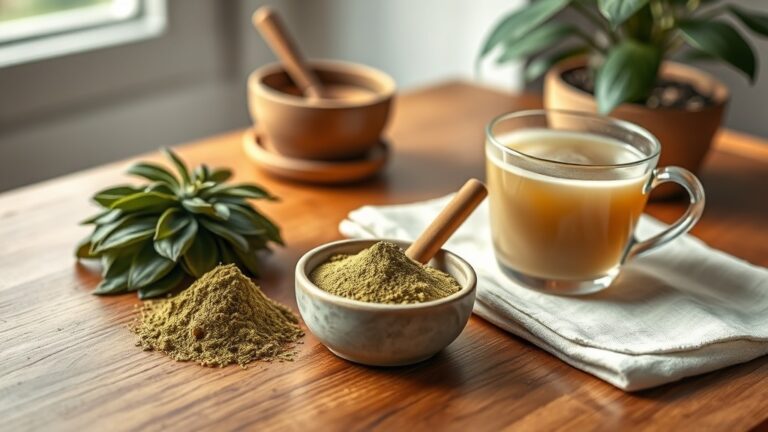
Kratom powder is simply dried, ground leaf — a fine, slightly fibrous product ranging from green to brown. It’s the most flexible form, and with a scale accurate to 0.1 grams, it’s also the easiest to dose precisely.
Toss and wash is the most common approach: measure your dose, place it on your tongue or toward the back of your throat, and immediately wash it down with water or juice. The trick is not to let it sit in your mouth — the taste is bitter and earthy, and chasing it quickly keeps contact with your taste buds to a minimum.
Mixing into liquid works too. Stir your measured dose into 4–8 ounces of juice or a flavored drink and drink it down before the powder settles. Acidic liquids like orange juice or lemonade help keep it suspended and may aid absorption slightly. Skip protein shakes or milk — the fat content slows things down and changes your onset timing.
Oblate discs are another option: thin, tasteless starch sheets that you fill with 2–3 grams of powder, fold, and swallow like a capsule. Many experienced users prefer these because they avoid the taste of toss-and-wash without the slower onset of a gelatin capsule.
What you’ll need:
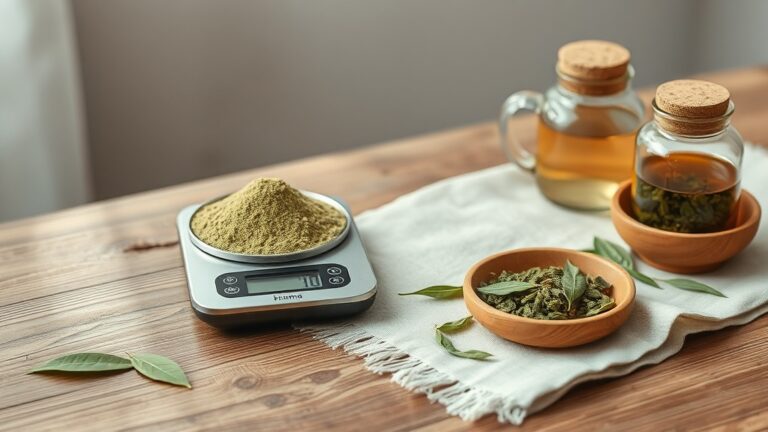
- A digital kitchen scale accurate to 0.1 grams. Don’t eyeball it with a teaspoon — a level teaspoon of kratom powder is roughly 2–2.5 grams, but that varies by grind and product, and the effective dose range (2–5 grams) is narrow enough that guessing isn’t a good idea.
- Something acidic to chase it with, like citrus juice.
How Kratom Capsules Work
Capsules are pre-filled with measured kratom powder, usually 0.5 grams each, though some vendors offer 0.7g or 1g sizes.
The main thing to understand about capsules is the delay. The shell — gelatin or vegetable cellulose — has to dissolve in your stomach before the powder inside can be absorbed. That adds 15–30 minutes compared to loose powder, pushing full onset out to 30–60 minutes instead of 15–30. Pharmacokinetic research on commercial kratom products (Tanna et al., 2022) has shown that time-to-peak concentration varies by formulation, which lines up with what users experience.
This delay is also behind the most common capsule mistake: assuming nothing is happening and taking more. At the 45-minute mark, if you don’t feel anything, you’re probably still in the rising phase — not at a plateau. Give it the full hour before deciding the dose wasn’t enough.
To figure out your dose in capsules: if each one is 0.5 grams, a 3-gram target means six capsules. Keep track as you go — it’s easy to lose count. For a first try, 3–4 capsules (1.5–2 grams) is a reasonable starting point.
Making Kratom Tea
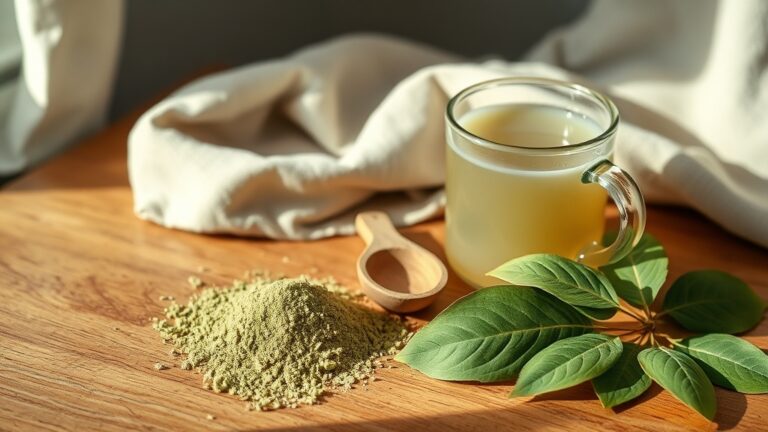
Tea is the oldest method of taking kratom — steeping the powder or crushed leaf in hot water and straining out the plant matter. It’s been used this way in Southeast Asia for generations, and many people find it easier on the stomach than toss-and-wash at an equivalent dose.
Basic steps:
- Measure your dose, same as you would for powder.
- Add it to a pot with 2–3 cups of water and bring it to a low simmer — not a rolling boil. Too much heat for too long can break down the alkaloids.
- Add 1–2 tablespoons of lemon juice or citric acid per cup. The acidity helps pull more mitragynine out of the plant material.
- Simmer for 15–20 minutes, stirring now and then.
- Strain through cheesecloth or a fine mesh strainer.
- Drink warm, and sweeten with honey if you like.
How much alkaloid content you get depends on brewing temperature, time, and acidity — tea typically captures somewhere around 70–85% of what you’d get from the raw powder. Onset runs 20–40 minutes, and the effect is usually described as smoother and more gradual than toss-and-wash.
If you use crushed leaf instead of fine powder, you’ll get a cleaner tea with less sediment and easier straining, though yield may be a touch lower due to less surface area — simmering a bit longer helps offset that.
Extracts and Shots: What’s Different
Extracts are kratom products where the alkaloids have been concentrated, either by reducing tea down to a thicker liquid or solid, or through solvent-based extraction. A small amount — a gram of extract powder or an ounce or two of liquid shot — can carry the alkaloid content of several grams of regular leaf.
A few things follow from that:
- They’re much stronger per gram. A 10x extract has roughly ten times the alkaloid concentration of standard leaf, so the same volume hits much harder.
- Tolerance builds faster. Higher concentrations per dose speed up receptor downregulation. Research by Smith et al. (2022) found that higher effective doses correlate with faster tolerance and more pronounced dependence.
- Dosing is trickier. Because the effective volume is so small, the gap between “the right amount” and “too much” narrows considerably.
- New users should avoid them. Get familiar with how your body responds to plain leaf before moving to anything concentrated.
Kratom shots — brands like MIT45 or Club 13 — are liquid extracts sold in small bottles. They act fastest of any commercial form, usually within 10–25 minutes, since the alkaloids are already dissolved. But they carry the same tolerance risks as any other extract.
Finding the Right Starting Dose
Start lower than feels necessary. This is probably the single most useful piece of advice for anyone new to kratom, even though it goes against the instinct to take “enough to actually feel something.” The dose-response curve is steep — what seems like nothing at 1.5 grams on an empty stomach can turn into an overwhelming experience at 4 grams, especially with no tolerance built up yet. Research by Prozialeck et al. (2012) documented this same steep, biphasic pattern, where the shift from stimulating to sedating effects happens across a fairly narrow dose window.
A large survey of regular U.S. kratom users conducted by Grundmann in 2017, covering over 8,000 people, found wide variation in what users considered an “effective” dose — with newer users consistently reporting lower thresholds than long-term daily users who had built up tolerance. In other words, what a daily user calls a moderate dose might be too much for someone just starting out.
A reasonable starting protocol:
- First session: 1.5–2 grams (3–4 capsules at 0.5g each, or an equivalent measured powder dose). Wait a full 45–60 minutes before judging the effect. If you feel something mild, that’s useful — you’ve found your threshold.
- Second session (a day or more later): if the first session did nothing, try 2.5–3 grams. If it produced mild effects, stay around 2 grams or nudge up to 2.5.
- Don’t go past 4 grams in your first week, even if early sessions seem underwhelming. You’re still establishing your baseline.
- Green vein is the easiest starting strain for most people — it tends to be balanced, without the stronger stimulation of white vein or the heavier sedation red vein can bring at higher doses.
Keeping your dose low matters beyond just the first week, too. Lower, consistent doses build tolerance more slowly and keep your effective dose useful over time. Users who jump quickly to 6–8 grams often find that even that stops working, and they’ve lost the 2–4 gram range that used to be effective.
Timing: When and How Often to Take It
Timing shapes both how the experience feels and how quickly tolerance builds.
Food matters:
- Empty stomach (2+ hours since eating): fastest onset, strongest peak, but higher nausea risk above 4 grams
- Light snack beforehand: slightly slower onset, less nausea — a good middle ground for most people
- Full meal within the last hour: much slower absorption, lower peak, effects may feel muted
Frequency is the bigger long-term factor. Daily use is the main driver of tolerance and dependence. A study by Swogger et al. (2015) found that users who reported the most positive, sustainable experiences with kratom used it less often than those who reported struggling with tolerance and dependence. General guidance from harm-reduction resources and experienced users breaks down roughly like this:
- 1–3 times per week: low tolerance risk, effects stay consistent
- 4–6 times per week: moderate risk, requires rotating strains and managing dose carefully
- Daily use: meaningful risk of tolerance and dependence; most long-term daily users eventually need breaks to keep the dose effective
Time of day matters too:
- White and green vein work best earlier in the day — the stimulating effect can interfere with sleep if taken in the evening
- Red vein fits better in the afternoon or evening, given its more sedating profile
- Avoid taking kratom within 4–5 hours of bedtime, especially at doses above 3 grams
Common Mistakes to Avoid
- Re-dosing too early. This is probably the leading cause of accidental overdose. Powder takes 15–30 minutes to kick in, capsules 30–60. If you feel nothing at 30 minutes, you’re likely still waiting on the first dose, not experiencing a lack of effect. Taking a second dose here often means you end up with double what you intended.
- Measuring with a spoon instead of a scale. Powder density varies by grind and brand, so volumetric measuring is unreliable. A $10 digital scale accurate to 0.1 grams removes the most common source of accidentally high doses.
- Starting with extracts. Concentrates have a steep dose-response curve. Someone new who takes an extract shot expecting regular-powder effects may end up with 3–5 times their intended dose.
- Increasing dose to fight tolerance. Tolerance from daily use reduces effects, but taking more just accelerates more tolerance — it doesn’t restore the original effect. A break or lower dose is the better fix.
- Taking kratom on a full stomach and assuming it doesn’t work. A large meal can cut peak concentration by 40–60%. Plenty of people who think kratom “does nothing” for them took it right after eating. Try again on a lighter stomach before ruling it out.
- Skipping water. Kratom is mildly dehydrating, and not drinking enough water can worsen side effects like headache, constipation, and brain fog — symptoms people often blame entirely on the kratom itself. An extra 16–24 ounces of water on days you use it helps.
- Mixing with other substances without checking. Kratom affects liver enzymes (CYP3A4, CYP2D6) involved in metabolizing many medications and supplements. Check for interactions with anything else you’re taking, especially CNS depressants, opioids, benzodiazepines, and blood thinners.
Closing Thoughts
Most bad first experiences with kratom come down to a handful of avoidable issues: dosing too high, redosing too soon, skipping the scale, or jumping straight to concentrates. Start small, use a form that lets you measure accurately, and give each dose time to fully kick in before deciding it isn’t working. The rest comes down to paying attention to how your own body responds and adjusting from there.
Frequently Asked Questions
How should I store kratom powder?
Kratom’s alkaloids break down with exposure to light, heat, air, and moisture. Keep it in an airtight container — a glass jar or sealed Mylar bag — somewhere cool and dark, like a cabinet, not a windowsill or near the stove. Stored properly, kratom powder holds most of its potency for 1–3 years.
Can I mix kratom powder into food?
Yes, though it changes the onset timing. Mixing it into a smoothie, yogurt, or applesauce is a common workaround for the taste. Fat and protein slow absorption, so expect a longer, gentler curve rather than the quicker effect of toss-and-wash on an empty stomach. Avoid heating kratom above 212°F (100°C) for long periods, since sustained heat can degrade the alkaloids.
How do I know if my kratom is working?
Early signs usually include mild warmth, a slight mood lift, more talkativeness or mental clarity, and a general sense of ease. These typically show up 15–45 minutes after taking it, depending on form and whether you’ve eaten. If you feel nothing after 60–75 minutes for capsules, or 45 minutes for powder on an empty stomach, the dose was probably too low. Wait for a full session to pass before adjusting — don’t top up mid-session.
Can you mix kratom strains?
Yes. Blending green and red, or white and green, is common and produces effects somewhere between the two. Some users also rotate strains across sessions specifically to vary the alkaloid ratio and slow down tolerance buildup. There’s no safety concern with blending different strains from the same source, and it’s a practical way to add variety without constantly buying new products.
What should I do if I took too much?
Signs of taking too much include nausea, dizziness, a spinning sensation, sweating, and mental fog. If this happens, lie down, drink water, and don’t take anything else. Nausea usually peaks around the same time effects do (1.5–2.5 hours in) and fades as the effects wear off. Don’t try to push through it by taking more of anything. If symptoms are severe, or include difficulty breathing, seek medical help — especially if other substances were involved.
Can I use kratom every day?
You can, but daily use is the main reason people develop tolerance and physical dependence. Constant stimulation of the same receptors leads to downregulation, which reduces effectiveness over time and can cause discomfort when a dose is skipped. If you do use it daily, plan on regular breaks and watch for signs of dependence. Most harm-reduction guidance suggests capping use at 4–5 days a week, with at least two consecutive days off.
Is there a way to reduce kratom’s bitter taste?
Citrus juice — orange juice or lemonade — is the most effective fix, since the acid both masks bitterness and helps pull more alkaloids out during extraction. Chase toss-and-wash with cold citrus juice right away. Capsules skip the taste issue entirely, and oblate discs let you wrap powder for a taste-free swallow. Kratom tea with honey and lemon is another common approach — the brewing process changes some of the bitter compounds along the way.