




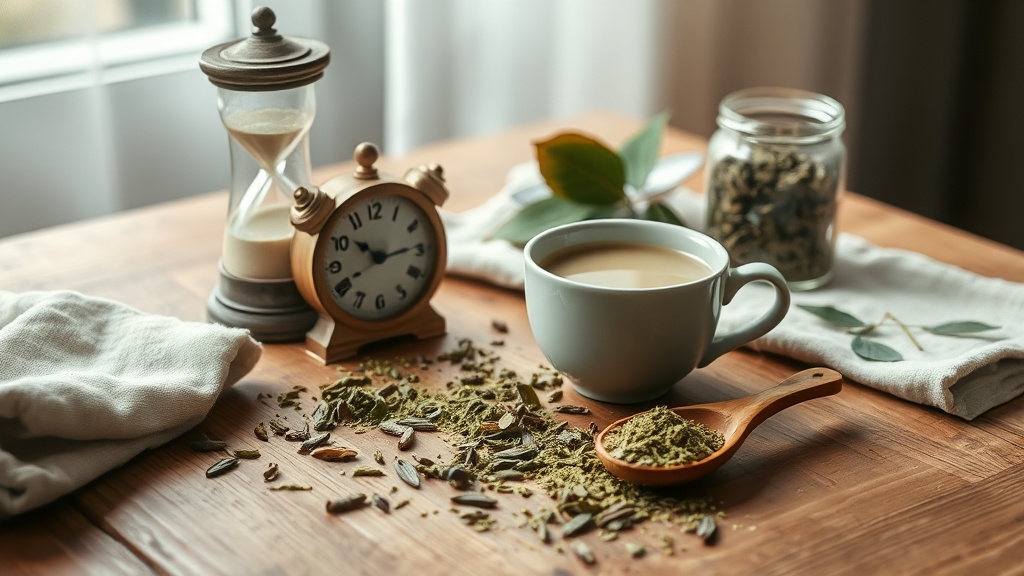
Most people feel kratom’s effects for somewhere between three and six hours at a standard dose. Onset usually starts 15 to 45 minutes after taking it, with peak effects hitting around the 1.5- to 2.5-hour mark. But that range isn’t fixed — how much you take, what form you use, the vein color, whether you’ve eaten, and your own body chemistry all push that window shorter or longer.
This guide walks through what shapes kratom’s timeline: dosing, product form, strain, and the everyday factors that speed things up or slow them down. It also draws a clear line between how long the effects last and how long kratom actually stays in your system, since those are two very different clocks.
The Typical Effects Timeline
Kratom’s timeline traces the path of its main alkaloid, mitragynine, through the bloodstream. Research on single oral doses has shown that peak blood concentration typically shows up around 90 minutes after ingestion — which lines up almost exactly with what users describe as the “peak” of the experience. A later pharmacokinetic study using commercial kratom products found similar timing in more real-world conditions.
Here’s roughly what most people experience at a moderate dose (3–5g of standard powder):
| Phase | Timing | What Happens | Notes |
|---|---|---|---|
| Onset | 15–45 min | First effects appear — mild alertness, warmth, mood shift | Faster on an empty stomach; slower after a big meal |
| Rising | 45 min–1.5 hr | Effects build steadily | Re-dosing here is a common mistake — give it time |
| Peak | 1.5–2.5 hr | Full effect, matching peak blood concentration | Most describe this as the main “window” |
| Tapering | 2.5–5 hr | Effects ease off gradually, no sharp cutoff | Sedative (red vein) effects tend to fade more slowly than stimulating ones |
| Baseline | 4–6 hr | Most people feel back to normal, maybe some lingering warmth | Higher doses push this to 6–8 hours |
These numbers are averages. Qualitative research on kratom users has consistently found wide variation in reported duration, tied to both individual biology and the specific product used.
How Dose Changes the Timeline
Dose is the single biggest factor in how long kratom effects stick around. Studies looking at self-reported dosing among regular users have found a clear pattern: more kratom means both stronger and longer effects.
| Dose | Typical Duration | Effects | Onset Speed |
|---|---|---|---|
| 1–2 g | 2–3 hours | Mild stimulation, subtle mood lift | 15–25 min |
| 3–5 g | 3–5 hours | Full effects — energizing or relaxing depending on strain | 20–40 min |
| 5–8 g | 5–7 hours | Strong sedation and pain relief; little stimulation | 25–45 min |
| 8 g+ | 6–8+ hours | Heavy sedation, higher side-effect risk | Variable; nausea can precede or blur effects |
It’s not just about length, either — dose changes the character of the experience. At low doses, kratom acts mostly on adrenergic pathways, producing alertness and talkativeness. At higher doses, it leans more heavily on opioid receptors, bringing on sedation and reduced mental clarity. That extended duration at high doses comes at a cost: nausea, dizziness, and constipation show up far more often above 5g. Sticking to the lowest dose that gets the job done is almost always the better move.
How Form Affects Duration
The way you take kratom mostly changes how fast it kicks in, and to a lesser extent, how long it lasts. What matters is how quickly mitragynine gets into your bloodstream.
- Powder (mixed in liquid or taken straight): fastest onset of the common forms, usually 15–30 minutes, since loose powder dissolves and absorbs quickly. Lasts around 3–5 hours at moderate doses.
- Capsules: onset is 15–30 minutes slower than powder because the shell has to dissolve first — expect 30–60 minutes before you notice anything. Once it kicks in, duration is similar to powder, often with a smoother ramp-up.
- Tea: timing depends on brewing method. Acidic liquids like lemon juice pull more alkaloids out during brewing, and duration tends to run 3–5 hours.
- Extracts and enhanced powders: much higher alkaloid concentration per gram means smaller amounts produce stronger, longer effects. A 10x extract taken at a dose equivalent to 5g of standard powder might run 1–2 hours longer than plain leaf. These also build tolerance faster with regular use.
- Shots: pre-dissolved liquid format, typically the fastest onset of all — 10–25 minutes — with duration similar to an equivalent powder dose.
Formulation and dosing route directly affect how much mitragynine reaches the blood and how fast, which in turn shapes both the intensity and the felt length of the experience — not just how quickly it starts.
Does Strain or Vein Color Matter?
Vein color shapes the character of the experience more than the total time it lasts, but there are still real differences in how long specific effects hang around within that window.
- White vein: leans stimulant. Energy peaks quickly but may feel shorter overall (3–4 hours), since adrenergic effects fade faster than opioid-driven ones. Often described as “cleaner” but briefer.
- Green vein: a middle ground — moderate stimulation early, more balanced relaxation later. Typically runs 4–5 hours, and works well for daytime use.
- Red vein: the most sedating profile. Relaxation and pain relief tend to linger longest, often 5–6 hours. The comedown is usually gentler and more gradual.
- Yellow/gold: processed or dried differently, which changes alkaloid ratios. Duration tends to fall in the green-to-red range (4–6 hours) but varies more from batch to batch.
These differences come down to alkaloid chemistry — different vein colors and processing methods yield different mitragynine levels and secondary alkaloid ratios, which shifts the balance between stimulating and sedating effects.
What Makes Kratom Last Longer or Shorter
Things that extend it:
- A higher dose — each extra gram tends to add roughly 30–60 minutes
- An empty stomach — faster absorption can also stretch the overall window slightly
- Naturally slower metabolism
- Extracts or enhanced products, thanks to higher alkaloid concentration
- Taking it with fatty food, which slows and smooths absorption
Things that shorten it:
- Daily-use tolerance — the biggest factor by far. Research on chronic kratom users has found that regular users often need higher doses and report shorter apparent duration as tolerance builds, a result of receptor downregulation.
- Taking it after a big meal — slower gastric emptying lowers peak concentration, making effects feel weaker and shorter
- Dehydration, which can reduce how efficiently alkaloids distribute through the body
- High caffeine intake the same day — competing stimulation can make kratom’s effects feel like they fade faster
Effects Duration vs. Detection Time
These two get confused often, but they’re not the same thing at all. Effects wind down once mitragynine drops below the level needed to activate receptors noticeably — generally three to six hours after a standard dose. Detection, on the other hand, depends on when mitragynine metabolites fall below what a lab test can pick up, which can be days after you’ve stopped feeling anything.
- Effects wear off: 3–6 hours (standard dose), up to 8 hours (high dose)
- Blood clearance: 24–48 hours for the parent compound
- Urine metabolites: 1–9 days, depending on how often you use it
Feeling completely normal six hours after your last dose doesn’t mean kratom has fully cleared your system.
Closing Thoughts
Kratom’s duration isn’t one fixed number — it shifts with dose, form, strain, and your own body’s response. Most people can expect somewhere in the three-to-six-hour range at a reasonable dose, with onset and peak following a fairly predictable pattern. Paying attention to dose size, what you’ve eaten, and how often you use it will tell you more about your own timeline than any general chart can.
Frequently Asked Questions
Why did kratom stop working after 2 hours?
A few likely reasons: the dose was too low for your current tolerance, you ate a large meal beforehand that slowed absorption, the product had less mitragynine than expected, or daily use has built up your tolerance and compressed the effective window. Try it on an empty stomach, check the mitragynine percentage on the product’s lab report, and consider a short break if tolerance seems to be the issue.
Does kratom last longer on an empty stomach?
Usually it hits faster and stronger on an empty stomach, with a more pronounced peak. Whether that means longer total duration varies — some people get a slightly extended window, others just get a sharper, quicker cycle that clears at about the same overall length, roughly 3–5 hours. The trade-off is a higher chance of nausea, especially above 4g.
Can I take more kratom to extend the effects?
You can, and people do, but it’s not free. Re-dosing while the first dose is tapering — around three to four hours in — will stretch the session, but the combined dose is now higher than either dose alone, raising side-effect risk and speeding up tolerance. If effects consistently feel too short, it’s usually better to adjust the initial dose or form rather than stack doses.
Does kratom last longer for beginners than experienced users?
Generally, yes. New users have full receptor sensitivity, so a moderate dose tends to produce a longer, stronger effect. Regular daily users, whose receptors have downregulated from repeated exposure, often find the same dose feels milder and wears off sooner. Getting the original duration back usually means increasing dose (which builds more tolerance) or taking a break to let receptors reset.
Why do different vendors’ kratom feel different in how long it lasts?
Mostly it comes down to mitragynine content. A 5g dose at 1.2% mitragynine delivers 60mg of the alkaloid; the same 5g at 1.7% delivers 85mg — a substantial difference in effective dose. Higher-mitragynine batches last longer and feel stronger. Without a lab report showing alkaloid percentages, you’re essentially guessing at your actual dose.
How long do kratom extracts last compared to plain powder?
Extracts typically run 1–2 hours longer than an equivalent dose of plain powder, since the concentrated alkaloids produce a higher, more sustained blood level. The catch is that extracts build tolerance faster, which is why many experienced users save them for occasional use rather than daily rotation.
Does mixing kratom strains affect how long it lasts?
Blending strains — say, green and red — tends to shape the arc of the experience rather than dramatically changing total length. You might get the greens’ quicker early lift combined with the reds’ longer taper. Total alkaloid content sets the overall window; the mix of alkaloids shapes what that window feels like.
Is a longer-lasting kratom experience better?
Not automatically, and chasing duration can lead to escalating doses that cause more problems than they solve. A clean four-hour window at a lower dose usually beats a foggy seven-hour window at a high one. The real goal is finding the smallest dose that gives you the effect you’re after — not stretching the clock as far as possible, since longer duration at high doses usually comes bundled with more side effects.


[…] Does kratom get you high like weed or alcohol? Not really. It’s subtler and more functional — most people describe it as a mood and energy shift, not intoxication. […]