



People ask this a lot, so let’s clear it up right away: kratom contains no caffeine. Not a trace, not a small amount hiding in the mix. None.
So why does the assumption persist? And if caffeine isn’t behind kratom’s energizing reputation, what is? Both questions have straightforward answers once you look at the plants involved.
Where the Confusion Comes From
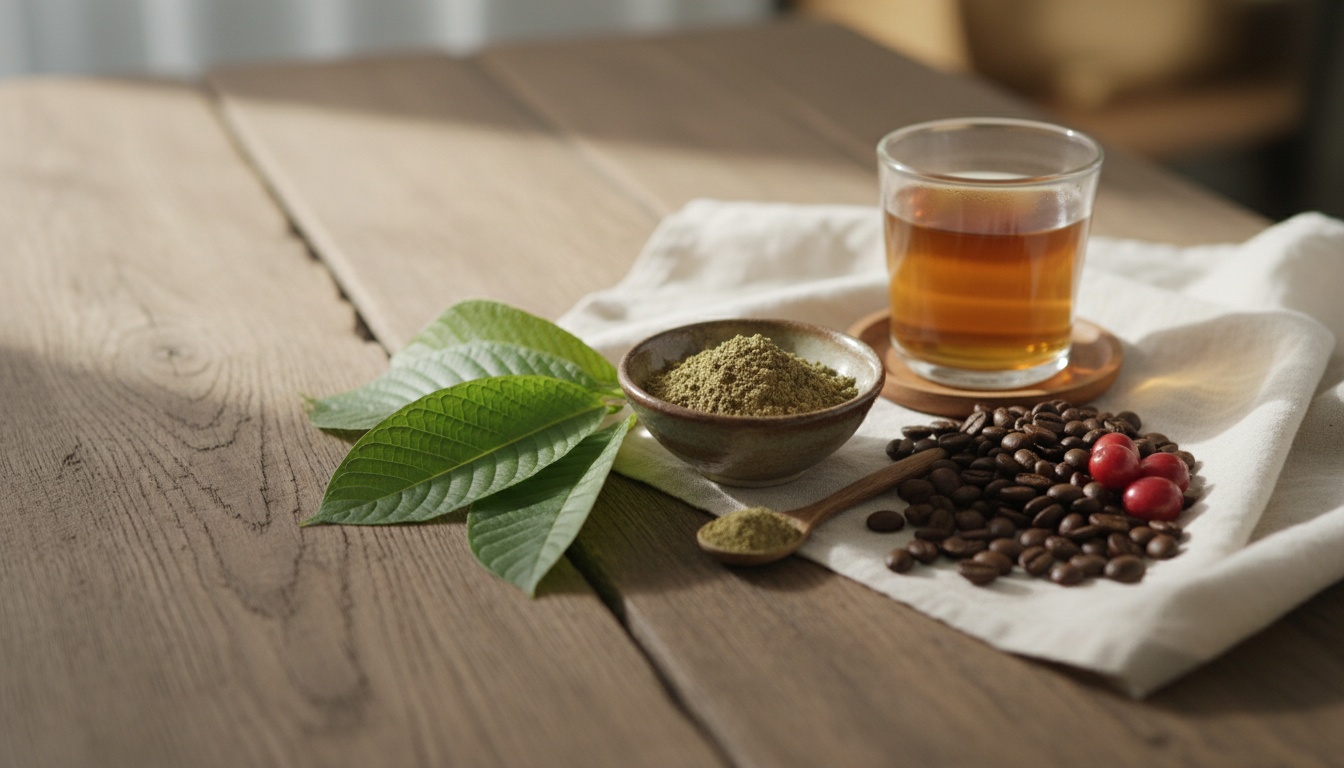
Kratom and coffee are botanical cousins. Both belong to the Rubiaceae family, a group that includes more than 13,000 plant species. That shared lineage is probably why people lump them together and assume similar chemistry.
They’re not similar at all.
Coffee’s stimulating punch comes from caffeine. Kratom leaves rely on a different set of compounds entirely — alkaloids, mainly mitragynine and 7-hydroxymitragynine. Coffee doesn’t contain these alkaloids, and kratom doesn’t contain caffeine. Same family tree, but the two plants produce entirely different active ingredients that work through different mechanisms.
Knowing this matters if you’re deciding between the two, or thinking about using them together.
What Actually Gives Kratom Its Energy
Kratom’s alkaloid makeup is what drives its effects.
Mitragynine, the main alkaloid, usually accounts for 1-2% of the dry leaf’s weight and makes up roughly two-thirds of the total alkaloid content. 7-hydroxymitragynine shows up in smaller amounts but still contributes.
These compounds interact with several receptor systems in the body — not just one. They engage certain alkaloid receptors, but also touch adrenergic and serotonergic pathways. That combination produces a profile that doesn’t line up neatly with either classic stimulants or sedatives. Because alkaloid levels can vary between batches, reputable suppliers test each batch to confirm potency and purity.
Caffeine, by contrast, works through a single, well-understood pathway. It blocks adenosine receptors, the ones that signal fatigue to your brain. Block that signal, and you feel more alert. One target, one mechanism, fairly predictable results every time.
Kratom’s multi-receptor approach is messier — but that complexity is also what makes it behave so differently depending on how much you take.
Why Dose Changes Everything
This is where kratom really diverges from caffeine.
At smaller amounts — generally under 5 grams — kratom tends to produce more stimulating effects: alertness, physical energy, sharper focus. Push the dose higher, into the 5-15 gram range, and the experience often shifts toward relaxation or sedation. Same plant, same alkaloids, different outcome based purely on quantity.
Caffeine doesn’t work like that. More caffeine just means more stimulation, up until it turns into jitters and discomfort. The type of effect stays constant; only the intensity changes.
Kratom’s dose-dependent nature makes it flexible, but it also means you can’t treat it like a cup of coffee you top off without thinking. Paying attention to dosage is the difference between getting the effect you want and getting something else entirely.
How Long the Effects Stick Around
Duration is another place the two part ways.
Caffeine usually peaks within 30 to 60 minutes and lasts around 3-5 hours total. Many people feel a noticeable crash as it wears off, especially after several cups in a day.
Kratom tends to last longer — often 4 to 8 hours, depending on the strain, the vein color, and individual metabolism. The comedown is generally smoother too; most users don’t report the sudden drop-off that caffeine can cause.
That longer window means fewer doses spread across the day, but it also means timing matters more. Taking kratom late in the afternoon could affect your sleep in a way that an afternoon coffee might not.
Combining Kratom and Caffeine
Plenty of people mix the two, and there are practical reasons for it.
Coffee helps cover kratom’s bitter taste, which can be hard to get past when the powder is just mixed with water. Beyond flavor, some people find the combination works well functionally — caffeine gives a fast lift, kratom adds a steadier, longer-lasting layer of energy, and together they can smooth out caffeine’s jittery edge.
That said, mixing stimulating substances calls for some caution. Effects don’t just add up — they can compound. If you’re sensitive to either one, combining them might push things further than you’d like.
If you want to try it, start with lower doses of each and give your body time between them rather than taking both back-to-back. Stacking them too close together raises the odds of jitters, a racing heart, or feeling overstimulated.
So Which Should You Use?
It depends on what you need.
- Quick, short-term alertness: caffeine is the simpler choice — fast onset, predictable wear-off.
- Longer, steadier energy: kratom tends to suit full workdays or extended activities better, thanks to its longer duration and gentler comedown.
- Taste masking or a combined effect: pairing them can work, as long as you’re mindful of dose and timing.
Quality Matters More Than People Realize
Whichever you choose, quality shapes the experience.
This is especially true for kratom. Alkaloid content can swing widely between suppliers and even between batches from the same supplier. Lab-tested, properly sourced kratom from GMP-certified facilities gives you a much clearer picture of what you’re actually taking — potency, purity, and freedom from contaminants.
Lower-quality product is a gamble. You might get strong effects one day and weak ones the next from the exact same amount, simply because the alkaloid content wasn’t consistent. Choosing suppliers who test every batch and can show you the results is the best way to avoid that kind of unpredictability.
The Bottom Line
Kratom has no caffeine in it. Its energizing and calming effects both trace back to alkaloids — mitragynine and 7-hydroxymitragynine — that operate through pathways completely separate from caffeine’s.
Knowing this helps you pick the right tool for the job, whether that’s a quick jolt from coffee, longer-lasting energy from kratom, or a carefully dosed combination of both. Neither substance is better across the board — they just do different things.
What matters most is knowing what you’re taking, understanding how it works, and choosing sources that are transparent about testing and quality.
Frequently Asked Questions
Does kratom have any caffeine at all?
No. Its energizing effects come from alkaloids like mitragynine, not caffeine.
Why do people assume kratom contains caffeine?
Kratom and coffee share a botanical family, Rubiaceae, but their active compounds are completely different.
Can I mix kratom with coffee?
Yes, and many people do — mainly to mask kratom’s taste and to blend the two effects. Start with lower doses of each and space them out rather than taking them together.
Which lasts longer, kratom or caffeine?
Kratom generally lasts 4-8 hours; caffeine lasts 3-5 hours. Kratom’s comedown also tends to be gentler.
Is kratom stronger than caffeine?
They’re hard to compare directly since they work differently. Kratom’s effects shift with dose — from stimulating to sedating — while caffeine stays consistently stimulating regardless of amount.