


Right now, sitting in that clear bag or plastic tub, your kratom is losing strength. Light gets in. Air seeps through. Temperature swings up and down. And with each passing day, the alkaloids that make kratom worth buying in the first place start to break down.
Most people treat storage as an afterthought. They pick out a good batch of powder or capsules, then toss it wherever’s convenient — a kitchen drawer, a shelf by the window, whatever. But how you store kratom has as much impact on its long-term quality as where it came from. Research on plant alkaloids shows that changes in light exposure alone can shift alkaloid concentrations by more than double. That means the premium Red Bali you paid good money for could lose half its punch just from sitting in the wrong spot.
Here’s what’s actually happening inside that container, and what you can do to stop it.
Why Kratom Breaks Down
Kratom contains more than 40 alkaloids, but two get most of the attention: mitragynine and 7-hydroxymitragynine. These are the compounds responsible for the effects people associate with kratom.
The problem is that these compounds are chemically unstable. When mitragynine reacts with oxygen, it converts into a different compound called mitragynine pseudoindoxyl — a weaker version of the original. UV light speeds up this reaction. Heat pushes it along even faster. And humidity introduces a separate risk: mold, which can ruin a batch outright.
The upside is that this decline isn’t inevitable. Kratom stored the right way can hold its alkaloid content for two years or longer without measurable loss.
Five Things That Wreck Kratom
Light. Photodegradation breaks alkaloids down over time. Clear jars and sunny counters make it worse, and even ordinary room lighting adds up over months.
Air. Every time you open a container, oxygen gets in and starts oxidizing the powder. Big containers with lots of empty space inside give oxygen more room to work.
Temperature swings. Kratom that moves repeatedly between warm and cold environments degrades faster than kratom kept at a steady temperature.
Humidity. Moisture above roughly 60% invites mold and changes the powder’s texture. Bathrooms and kitchens near stoves are common — and bad — storage spots.
Odors. Kratom powder absorbs smells easily. Store it near cleaning supplies or strong spices, and it can pick up those scents along with subtle changes to its character.
What Good Storage Actually Looks Like
The best setup addresses all five problems at once, and it starts with the container.
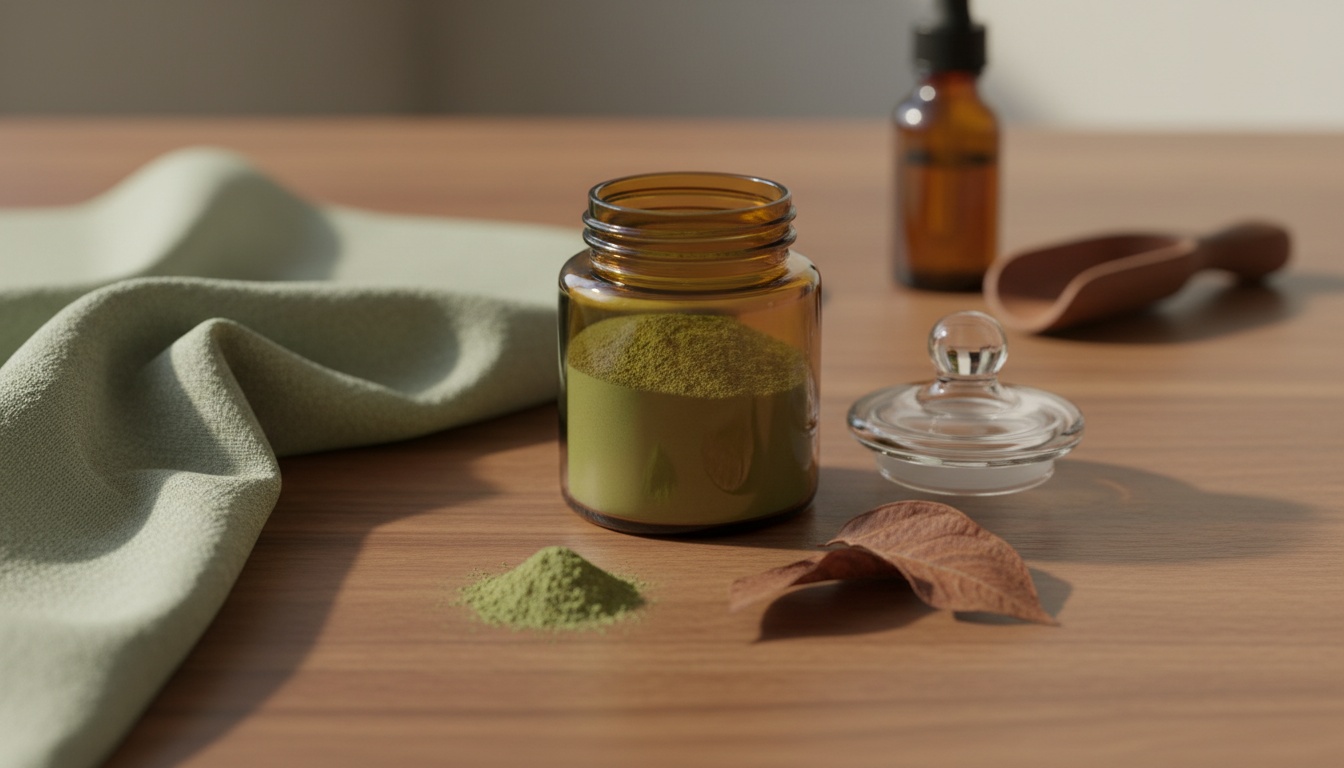
Airtight, opaque containers made of glass or food-grade stainless steel are your best bet. Both materials block light completely and don’t react chemically with the powder. Dark glass jars — mason jars work fine — are cheap, easy to clean, and do the job well. Stainless steel containers are another solid choice: fully opaque, sturdy, and good at holding an airtight seal.
Skip plastic for anything beyond short-term use. Over time it can interact with the kratom itself, and most plastic containers let in more air than you’d expect.
Don’t Use One Giant Container
A single large container might seem efficient, but it works against you. Every time you open it, the entire supply gets a dose of air and light — not just the portion you’re using.
Split your kratom into smaller batches instead. Keep one small container for everyday use and store the rest in bulk containers you open less often. And when you fill a container, pack it as full as reasonably possible — less empty air space means less oxidation.
Pick a Better Spot to Store It
The container matters, but location counts just as much. Look for somewhere cool, dark, and steady in temperature — a kitchen cupboard away from the stove, a closet, or a pantry shelf all work well.
Stay away from places with big temperature shifts, like garages, attics, or anywhere near a heating vent. Some people keep kratom in the fridge for long-term storage, and that’s fine as long as you let containers warm to room temperature before opening them — otherwise condensation can form and invite mold.
Bathrooms, windowsills, and cars are all bad choices. Between the humidity, sunlight, and heat, they hit every weak point at once.
Extra Steps for Long-Term Storage
If you’re storing kratom in bulk or planning to keep it for a long stretch, a few extra measures help:
- Vacuum sealing removes air entirely, which stops oxidation cold. Good for stock you won’t touch often.
- Humidity packs placed inside containers help keep moisture at a stable, safe level.
- Double containment — storing your main container inside a second, opaque one — adds another layer of protection from light and temperature swings.
- Rotation matters too. Label containers with the date you stored them, and use the oldest batches first.
Signs Your Kratom Has Already Degraded
Sometimes the damage is done before you realize it. Watch for:
- Color shifts — faded powder or brown spots usually mean the alkaloids have broken down.
- Texture changes — clumping or hardening points to moisture getting where it shouldn’t.
- Off smells — kratom should smell earthy and consistent; anything unusual suggests contamination or absorbed odors.
- Weaker effects — if kratom seems less effective than it used to, storage is often the real culprit, not tolerance.
Putting It All Together
Building a good storage system doesn’t need to be complicated. Start with airtight, opaque containers sized to how you actually use kratom — small for daily grabs, larger for bulk. Find a cool, dark spot with steady temperature. Keep containers sealed when you’re not using them, and don’t leave them open longer than necessary.
If you’re storing kratom long-term or in bulk, layer in vacuum sealing or humidity packs for extra insurance.
None of this takes much effort, but it makes a real difference. Kratom stored properly holds onto its potency for months or years instead of fading within weeks. Good kratom is worth the small amount of care it takes to keep it that way.
Frequently Asked Questions
How long does kratom last if I store it properly?
In airtight, opaque containers kept cool and dark, kratom can hold its potency for two years or more with no measurable loss.
Can I keep kratom in the fridge?
Yes. Just let containers reach room temperature before opening them, so condensation doesn’t form and cause mold.
What’s the most common storage mistake?
Using clear containers or plastic bags. Light and air exposure break down alkaloids fast — potency can drop by as much as half.
How can I tell if my kratom has gone bad?
Look for fading color or brown spots, clumping or hardened texture, unusual smells, or a noticeable drop in effectiveness.
Should different strains be stored separately?
Yes. Keeping each strain in its own airtight container prevents cross-contamination of scent and keeps each one’s character intact.